Essaouira doesn't try to impress you — and that is exactly why travellers fall for it. Three hours west of Marrakech by bus, this whitewashed Atlantic town sits where Morocco's coastal road simply runs out. The medina is a UNESCO-listed grid of 18th-century streets rather than the usual maze, the ramparts are battered by the same trade wind that makes the town Africa's windsurf capital, and the working fishing port serves up the freshest — and cheapest — grilled seafood in the country.
Nicknamed the "Wind City of Africa," Essaouira is the anti-Marrakech: no honking motorbikes in the medina, no hard sell, just sea air, Gnawa rhythms drifting out of cafés, and a pace set by the tides. It is the easiest side trip in Morocco, but it deserves more than a day — here is how to spend two.
Day one: the ramparts, the port and the medina
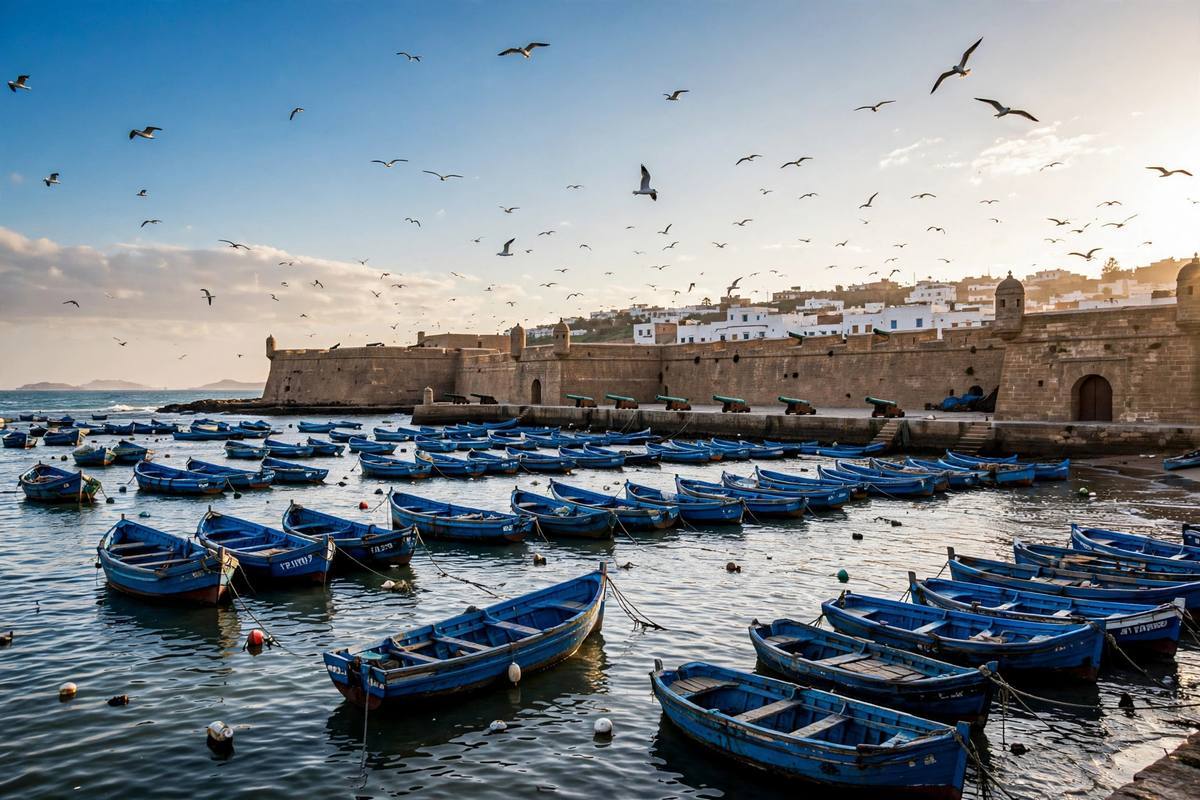
Start at the Skala de la Ville, the long sea-facing rampart that defines Essaouira's skyline. A row of 18th-century bronze cannons — some cast in Seville and Barcelona — still points out over the Atlantic, and the walk along the top opens the town's best panorama: the medina's white cubes on one side, breaking surf on the other. Entry costs a few dirhams, and early morning is quietest.
From there, follow the rampart north to the Skala du Port, the harbour bastion, and descend into the working port itself. Go before 10 am and you will see the day's catch coming in — sardines, sole, sea bass and the occasional ray — while clouds of blue-grey gulls squabble over the scraps. The wooden boats, all painted the same weathered blue, make the port one of Morocco's most photographed places.
Buy your fish at the port stalls and take it to the row of grills on the harbour square — they cook it to order with bread, olives and salad for a small fee. A full plate of grilled sardines costs around 30-40 dirhams; a mixed grill of sole, calamari and prawns runs 80-120 dirhams. It is the best-value meal in Morocco.
After lunch, lose an afternoon in the medina. Unlike Fes or Marrakech, Essaouira's old town was laid out on a grid by a French architect in the 1760s, so it is easy to wander. Browse the jewellers' lane near the clock tower, watch thuya wood artisans carve their marquetry boxes in tiny workshops, and take a mint tea on Place Moulay Hassan, the café square facing the port gates where fishermen and travellers share the same plastic chairs.
Day two: the beach, the wind and Sidi Kaouki
Essaouira's long sandy beach curves south from the port for kilometres, and it is made for walking — especially at low tide, when the hard-packed sand is at its widest. Swimming is possible, but the town's nickname exists for a reason: the afternoon trade wind builds from midday and the water stays brisk most of the year. Mornings are calmest if you want a dip.
The wind, though, is the beach's real gift. Essaouira is one of the world's great beginner kitesurf and windsurf spots: steady onshore wind, a huge shallow bay, and schools lined up along the beach. A two-hour beginner lesson typically costs 400-500 dirhams with equipment included; many schools run half-day packages. Camel and horse rides along the surf are also on offer, and polite haggling is expected.
The alize trade wind is strongest on summer afternoons — July and August can feel cool at 22°C despite the sun. Pack a light windbreaker or fleece even in July, plus a scarf for sand blown across the corniche. If you are a kitesurfer, this is your season: April to October is prime.
With a second afternoon, take a taxi or local bus 25 minutes south to Sidi Kaouki, a wilder surf beach with a shipwreck on the sand and beach shacks serving grilled fish. It is where Essaouira's surfers escape the crowds, and the sunset walk back along the dunes is one of the coast's quiet pleasures.
Where to stay and what it costs
Stay inside the medina if you can — small family-run riads and guesthouses put the ramparts and port within a few minutes' walk, and rooftops over the Atlantic are common. Budget rooms start around 300-450 dirhams a night, comfortable mid-range riads run 600-1,000 dirhams, and sea-view suites on the rampart side climb past 1,500. Outside the walls, the corniche has larger modern hotels with pools, often cheaper per square metre but a 15-minute walk from the old town.
Beyond the port grills, try the fish restaurants along the harbour — a whole grilled sea bass with sides for 70-100 dirhams — and sample the local chebakia sesame cookies and argan-oil amlou at breakfast. Essaouira's argan cooperatives are among the most trustworthy places in Morocco to buy the real thing.
Getting there and away
Almost everyone arrives from Marrakech: CTM and Supratours run direct buses in about three hours for 70-90 dirhams, with several departures daily from early morning. Grand taxis make the same trip faster when full, at roughly 150 dirhams a seat. There is no train to Essaouira — the line ends at Marrakech — so bus or private transfer are your options, and booking the return a day ahead in summer is wise.
Supratours also connects Essaouira to Agadir and to Casablanca via Marrakech — an easy stop on any Atlantic coast route.
Plan your Morocco trip
Turn this guide into a booked trip: compare stays, flights and car rental across Morocco below.
Some links on this page are affiliate links. If you book through them, we may earn a commission at no extra cost to you — it keeps these guides free.
Frequently asked questions
How many days do you need in Essaouira?
Two full days is the sweet spot: one for the ramparts, port and medina, and one for the beach and a trip to Sidi Kaouki. You can see the highlights on a long day trip from Marrakech, but you would miss the harbour at dawn and the port-grill dinner that make the town special.
Can you swim in Essaouira?
Yes, on the main beach - mornings are calmest, before the afternoon trade wind picks up. The water is refreshing rather than warm for most of the year. Essaouira is better known as a windsurf and kitesurf destination than a swimming beach.
How do I get from Marrakech to Essaouira?
Direct CTM and Supratours buses cover the 175 km in about three hours, with several daily departures for 70-90 dirhams. Grand taxis do the same route when full for roughly 150 dirhams a seat. There is no train to Essaouira.
Is Essaouira worth a day trip from Marrakech?
It is doable - buses leave early and return by evening - but a day trip is rushed. Staying overnight lets you see the port at dawn, eat at the harbour grills after dark, and experience the medina without the day-trippers, which is when the town is at its best.
What is Essaouira known for?
Its fortified 18th-century medina and ramparts, the working fishing port with its blue boats, grilled seafood, a steady Atlantic wind that makes it a world-class kitesurf spot, and the Gnaoua World Music Festival held each June.