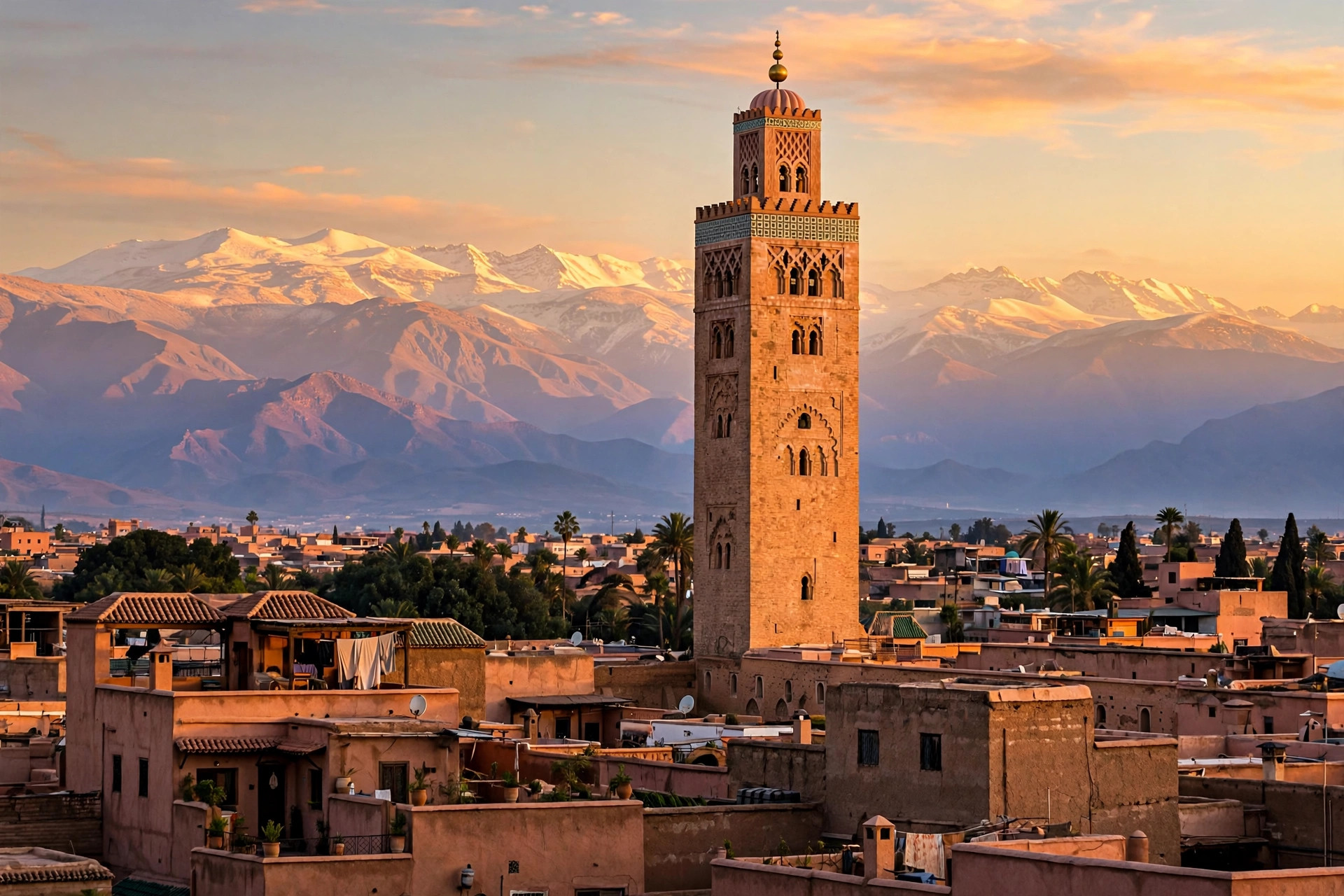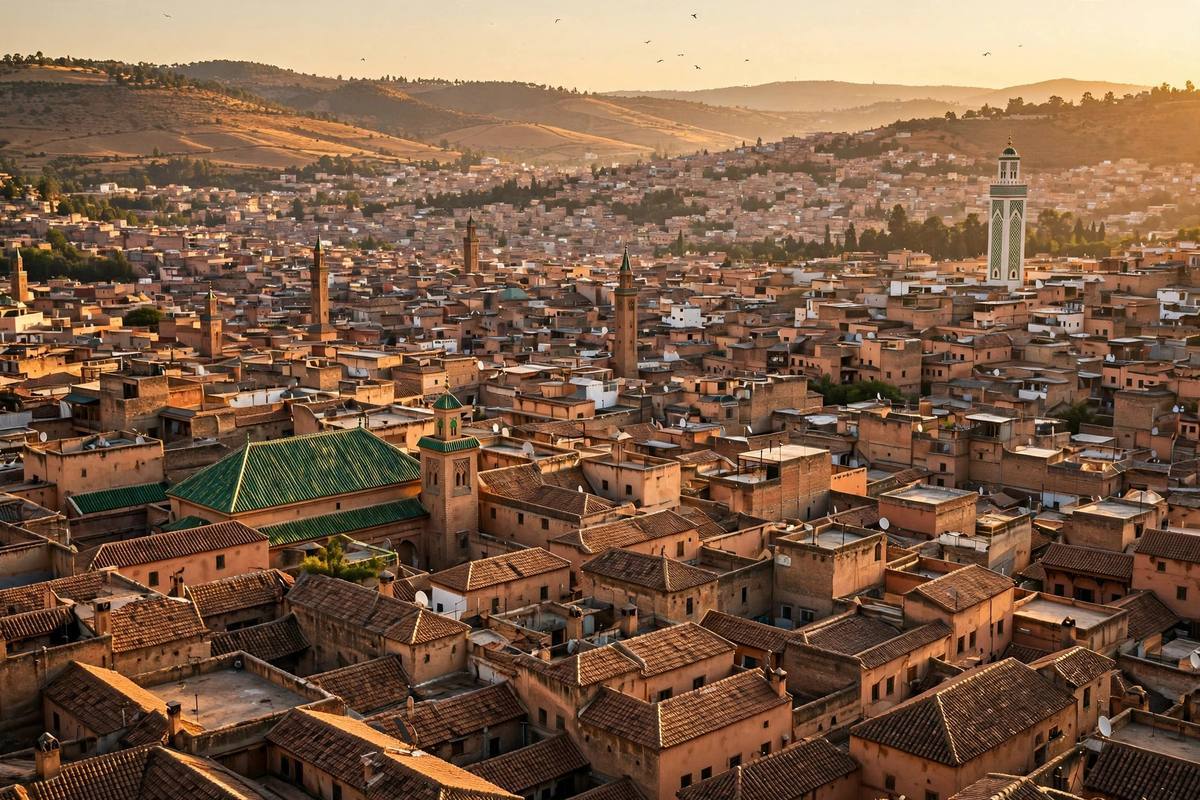
Fes is Morocco's oldest imperial city, founded in 789 AD, and it wears its age unlike anywhere else in the country. Marrakech dazzles; Fes endures. The medina of Fes el-Bali — a UNESCO World Heritage site — is the largest living medieval city on earth: some 9,400 alleyways, no cars, and daily life that would still be recognisable to a 12th-century visitor. This is also the home of Al-Qarawiyyin, founded in 859 AD, the oldest continuously operating university in the world. Four days is the sweet spot: the great sights, plus time to learn the medina's rhythm.
Day 1 — The Blue Gate and the tanneries
Start at Bab Bou Jeloud and walk down Talaa Kebira into the medina. Your first destination is the Chouara tannery: the classic view is from the terraces of the surrounding leather shops — a shopkeeper will usher you up, hand you mint against the smell, and expect you to browse the goods after. (tip 10–20 MAD).
Visit mid-morning, when the dye vats are at their most colourful.
Lunch near the tannery — skewers or harira with msemen, 25–45 MAD. In the afternoon, visit the Bou Inania Madrasa (entry around 20 MAD): zellige tilework, carved cedar, a courtyard so perfect it feels staged. Non-Muslims can also peer at the Al-Qarawiyyin Mosque through its great wooden doors — the prayer hall is closed to non-Muslims, but the view of the courtyard and minaret is worth the stop.
Day 2 — Madrasas, artisans and a hammam
Begin at the Al Attarine Madrasa beside the spice souk — smaller than Bou Inania but, in our opinion, even more beautiful. Then wander to Place Seffarine, the coppersmiths' square, and the dyers' souk, where skeins of wool dry in impossible colours overhead.
Book a hammam in the late afternoon: a public one costs about 20 MAD plus a tip; a private session runs 150–300 MAD.
Day 3 — The Merenid tombs, Fes el-Jdid and the gardens
Take a taxi up to the Merenid tombs for the classic panorama of Fes el-Bali below. Walk back down into Fes el-Jdid, the "new" 13th-century city — the Royal Palace gates, the Mellah (old Jewish quarter) and the tiny Ibn Danan synagogue. finish in Jnan Sbil, the walled garden between the two cities — shaded, quiet, free. Return to the tombs for sunset: the light on the medina is the best free sight in Fes.
Day 4 — Volubilis and Meknes, or a slow day
The ambitious option: Volubilis, Morocco's best-preserved Roman ruins — arches, mosaic floors — about an hour away (entry around 70 MAD), combined with Meknes and the monumental Bab Mansour gate. A private taxi for the day costs 600–800 MAD. The unhurried alternative is a slow Fes day: a morning cooking class (350–500 MAD, and you eat what you make) and a long rooftop lunch.
Where to stay and practical tips
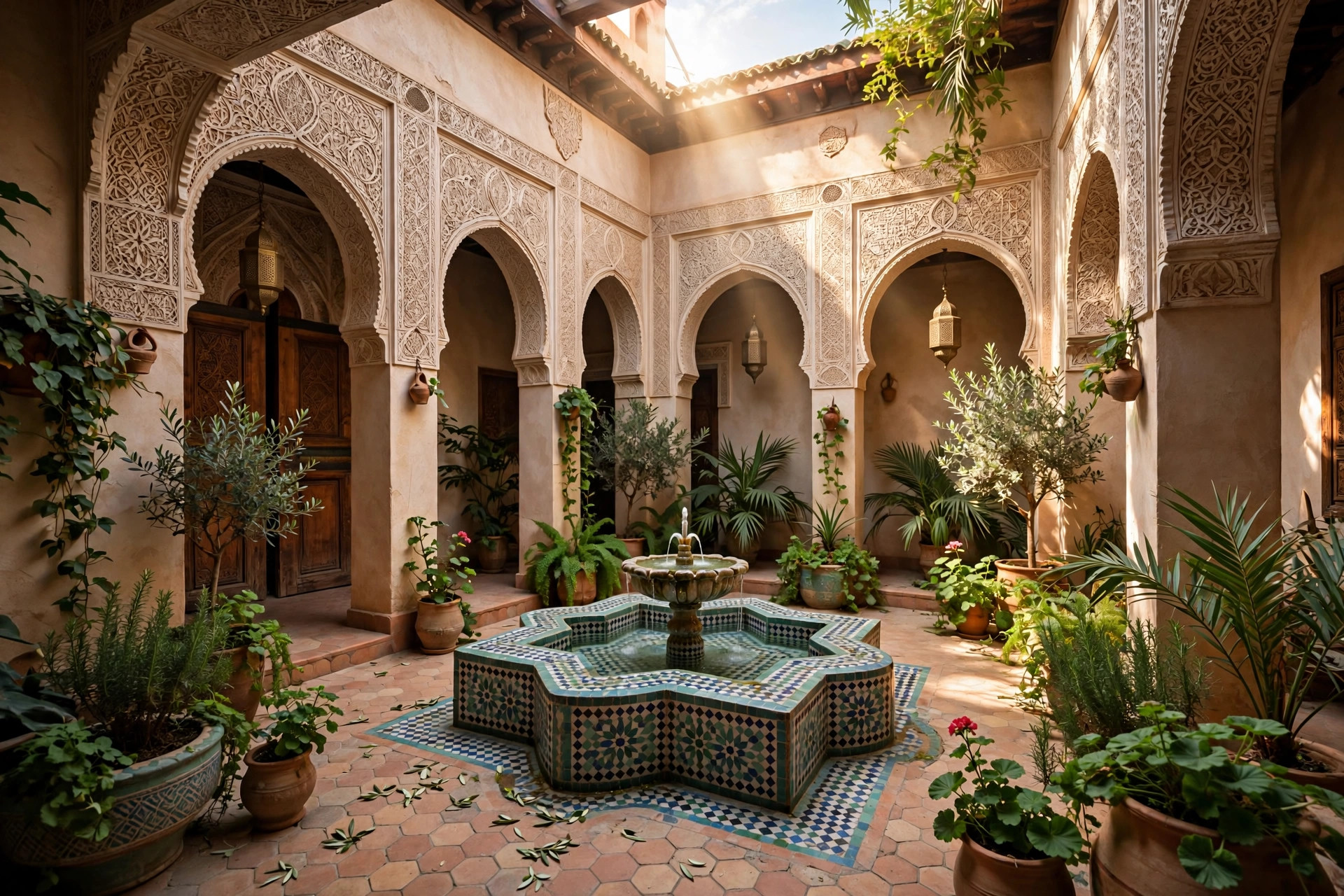
Stay inside Fes el-Bali if you can — a riad with a courtyard fountain and rooftop terrace is the whole experience, 300–900 MAD a night. Book ahead in spring and autumn.
- The "guides": unofficial guides will try to attach themselves to you — a polite, firm "la, shukran" works. A licensed guide through the tourist office (around 200–300 MAD for a half day) is worth it once.
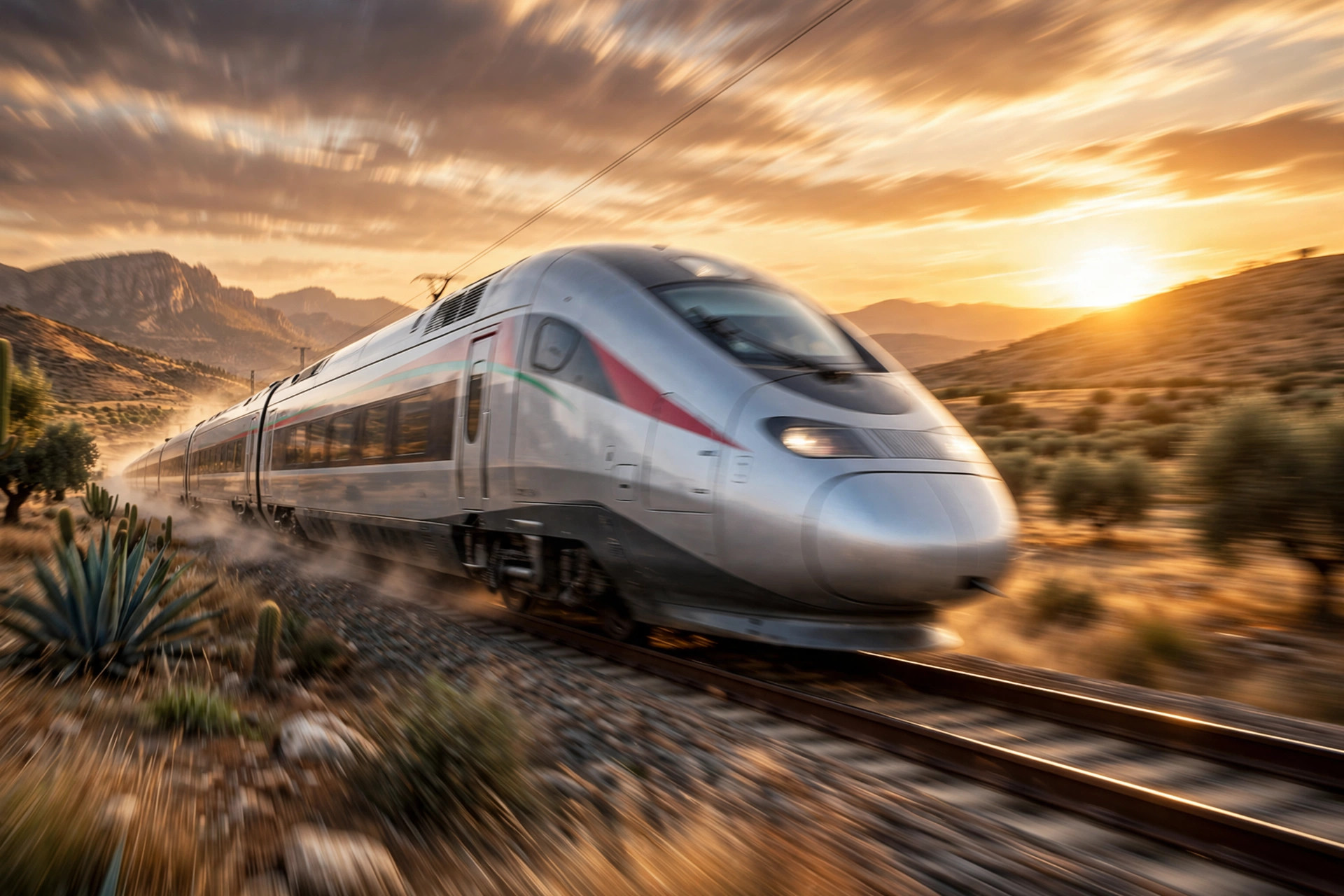
- Getting in: Fes–Saïss airport is 15 km out; a taxi to the medina costs about 150 MAD (agree the price first). By train, Casablanca–Fes takes 4–5 hours, roughly 170 MAD in second class.
- Haggling: offer about half the asking price, settle around two-thirds. Keep it friendly.
- When to go: March to May and September to November are ideal. Summer is genuinely hot; winter mornings in the medina need a jacket.
- Cash: ATMs are scarce inside the medina — withdraw near Bab Bou Jeloud before diving in.
Fes is a conservative city — dress modestly out of respect, especially around mosques and residential quarters. It is also one of the safest-feeling cities in Morocco; the medina's reputation is worse than the reality.
Plan your Morocco trip
Turn this guide into a booked trip: compare stays, flights and car rental across Morocco below.
Some links on this page are affiliate links. If you book through them, we may earn a commission at no extra cost to you — it keeps these guides free.
Frequently asked questions
How many days do you need in Fes?
Three days covers the essentials — the medina, the tanneries and the great madrasas. Four days adds Volubilis and Meknes, or time to slow down. Two days feels rushed in a city this dense.
Is Fes safe for tourists?
Yes. Petty theft is rare in the medina; the main annoyance is unofficial "guides" who try to attach themselves to visitors, not crime. Keep valuables out of sight and agree taxi prices upfront.
Can non-Muslims visit the Al-Qarawiyyin Mosque in Fes?
The prayer hall is closed to non-Muslims, as with most mosques in Morocco. But you can admire the courtyard, fountain and minaret through the great wooden doorways, and the nearby Bou Inania and Al Attarine madrasas are fully open to everyone.
What is Fes famous for?
The medieval medina of Fes el-Bali, the Chouara leather tanneries, the oldest university in the world (Al-Qarawiyyin, 859 AD), its madrasas and blue pottery. Many Moroccans also call it the country's culinary capital.
How do I get from Fes to Chefchaouen?
CTM buses take about 4 hours for roughly 75 MAD — book a day ahead in high season. A grand taxi is faster (about 3 hours) at 400–500 MAD for the whole car, which makes sense for groups. The road through the Rif is scenic but winding.