Every World Cup final needs a stage — and the 2030 World Cup final stadium race is shaping up to be one of the most fiercely contested decisions in tournament history. Three arenas in three countries are vying to become the tournament's 2030 World Cup final venue: Morocco's 115,000-seat Grand Stade Hassan II, Real Madrid's Santiago Bernabéu and Barcelona's rebuilt Spotify Camp Nou.
Here is the state of play as of October 2026: FIFA has not yet made a final decision, despite loud claims from both sides of the Mediterranean. This guide breaks down the three candidates, the arguments for and against each, and what travelling fans should do while the decision hangs in the balance.
The three 2030 World Cup final stadiums in the race
1. Grand Stade Hassan II — Benslimane, near Casablanca
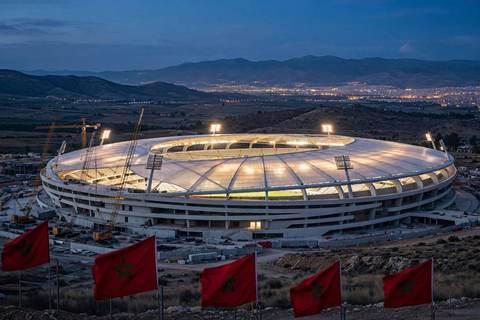
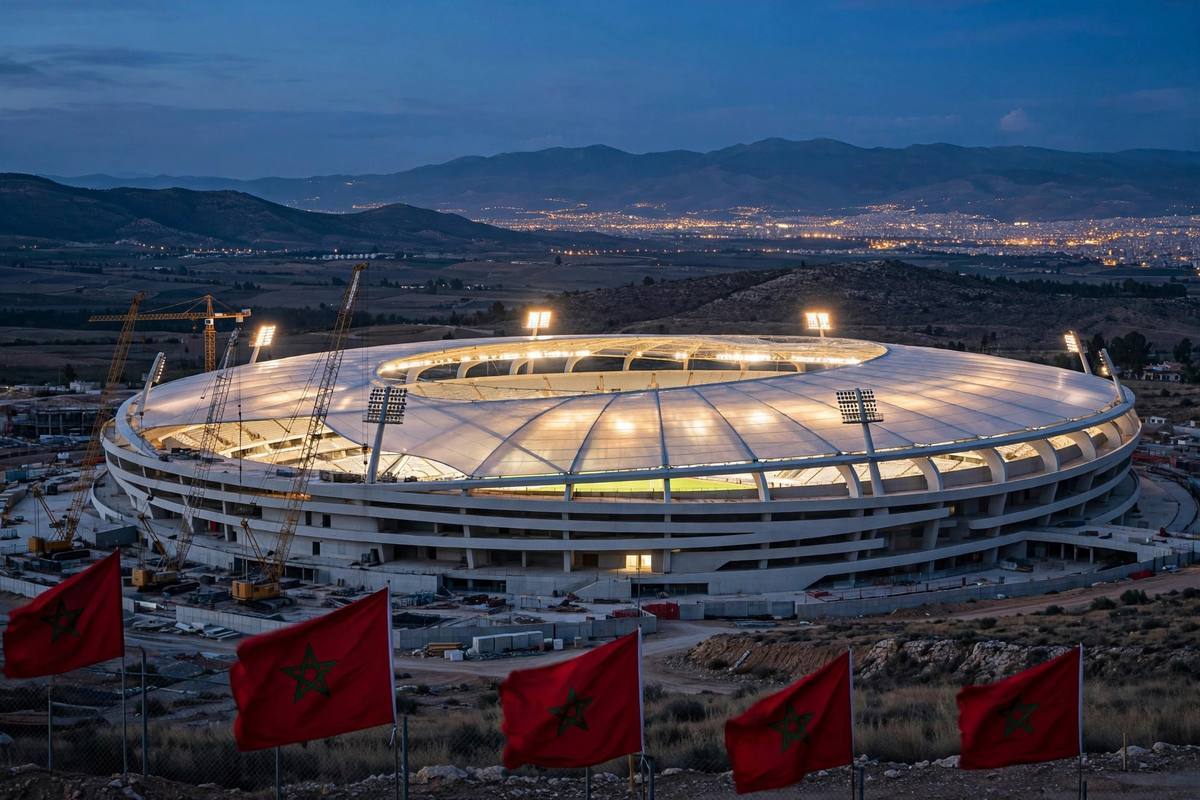
Morocco's trump card is sheer scale. The Grand Stade Hassan II, under construction in Benslimane province just east of Casablanca, is planned to hold 115,000 spectators — which would make it the biggest football stadium on the planet and by far the biggest 2030 World Cup stadium. Designed as the crown jewel of Morocco's 2030 bid, the arena is being built for the tournament itself and is aimed for completion well ahead of kick-off.
Morocco's football authorities have pushed hard: Royal Moroccan Football Federation president Fouzi Lekjaa has publicly said that Benslimane will host the final. For fans, the appeal is obvious — a brand-new, record-breaking arena on the African continent, a short ride from Casablanca's Mohammed V International Airport.
2. Santiago Bernabéu — Madrid
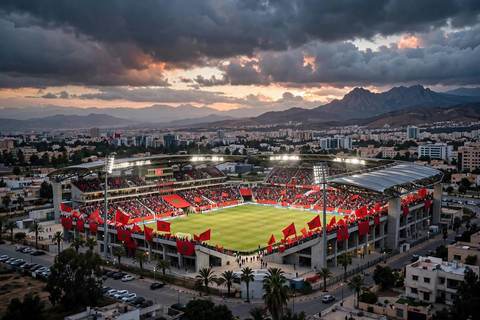
History's candidate. Real Madrid's renovated home seats around 85,000 and carries more football mythology than almost any venue on Earth. In August 2026, Spain's Radio Nacional de España reported that FIFA had chosen the Bernabéu for the final — a claim quickly challenged by FIFA itself, which said no final decision had been made. Former Real Madrid manager José Mourinho publicly backed Madrid as the logical choice.
One wrinkle reported by Spanish media: FIFA's final-stadium rules reportedly require around 80,000 net spectator seats (excluding press and FIFA allocations), a bar the Bernabéu — at roughly 85,000 total seats — is said to sit close to. Some Spanish outlets described the final in Madrid as a done deal, but FIFA has confirmed nothing.
3. Spotify Camp Nou — Barcelona
The middle ground. Barcelona's rebuilt Camp Nou is planned to hold around 105,000 spectators, comfortably above any reported FIFA minimum. FIFA's own bid evaluation gave Camp Nou the same 4.2-out-of-5 score as the Bernabéu and the Hassan II Stadium — a three-way technical tie. The rebuild was scheduled to finish during 2026, so by 2030 it would be a modern giant with a fresh coat of paint.
How the race developed: a short timeline
- 2024 — the bid is set: FIFA publishes its evaluation of the joint Spain–Morocco–Portugal bid, listing the Bernabéu, Camp Nou and Grand Stade Hassan II as the three stadiums proposed for the final. The proposed tournament period runs from 13 June to 21 July 2030.
- December 2024 — hosts confirmed: the Spain–Portugal–Morocco bid is awarded the 2030 World Cup, with Argentina, Paraguay and Uruguay each staging one centenary match to mark 100 years since the 1930 tournament in Montevideo.
- August 2026 — Madrid claims victory: Radio Nacional de España and the sports daily Marca report that FIFA has chosen the Santiago Bernabéu, describing an agreement with Real Madrid as essentially done.
- September 2026 — Morocco answers back: FRMF president Fouzi Lekjaa tells supporters at a rally that "the city of Benslimane will host the World Cup final" — and hopes Morocco itself will play in it.
- September 2026 — FIFA calls time: a FIFA spokesperson clarifies that no final decision has been made and that the governing body will decide "in due course," dismissing both sides' victory laps.
Has FIFA decided? Not officially
This is the crucial point for fans booking trips: no, FIFA has not announced a decision. The governing body's September 2026 statement is the only official word — everything else, from Lekjaa's rally speech to Spanish media's "sure thing" reports, is a claim, not a fact.
Spain's federation president has argued that his country, "currently the leading football nation," should host the final, while Morocco points to its brand-new, record-breaking arena. Portugal, with no stadium large enough, is effectively out of the final race — which keeps the fight a Spain-versus-Morocco duel.
Head-to-head: the case for each 2030 World Cup final stadium
- Hassan II Stadium: the biggest (115,000), the newest, a symbol of Morocco's World Cup ambitions — but still under construction, which carries delivery risk.
- Santiago Bernabéu: the most famous, in the country its federation calls the world's leading football nation — but the smallest of the three, close to the reported 80,000-seat net threshold.
- Camp Nou: the compromise — huge (around 105,000), technically tied at 4.2/5 with its rivals, and modern — but without the Bernabéu's aura or Hassan II's record-breaking scale.
What FIFA looks for in a final stadium
Beyond capacity, FIFA's bid evaluation examined infrastructure, transport, security and fan experience — and all three finalists scored an identical 4.2 out of 5, an unusually even technical contest. FIFA's published list of 2030 World Cup stadiums names 20 venues — 11 in Spain, six in Morocco and three in Portugal — but only three were ever proposed to host the final. The 2030 tournament is uniquely complex: Spain, Portugal and Morocco host the main event, while three South American nations stage centenary matches.
Of all the 2030 World Cup cities and stadiums on FIFA's list, none carries more symbolic weight than the final. Politics will matter as much as blueprints. The final is football's biggest single prize for a host nation, and both Morocco and Spain have campaigned openly for it — which is exactly why the official announcement, whenever it comes, will be a major event in its own right.
What travelling fans should do now
Until FIFA announces the final venue, keep your 2030 plans flexible:
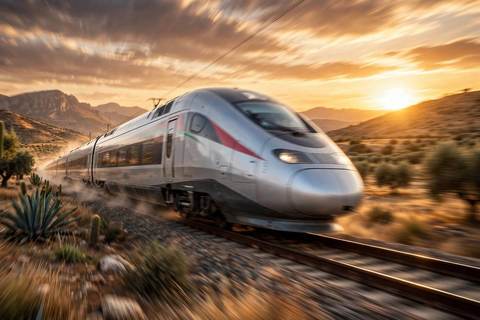
- If the final is in Morocco: fly into Casablanca's Mohammed V International Airport; Benslimane is a short hop from the city. Base yourself in Casablanca or Rabat — 90 minutes away by Al Boraq high-speed train — and read our Morocco World Cup 2030 host cities guide.
- If the final is in Spain: Madrid and Barcelona are both major air hubs with huge hotel capacity — book refundable rates now and decide later.
- Tickets: final tickets will be the scarcest of the tournament. See our World Cup 2030 tickets guide for how FIFA's sale phases work and how to plan.
- Between countries: Morocco and Spain sit just 35 minutes apart by fast ferry across the Strait of Gibraltar, so a two-country trip is realistic — see getting around Morocco.
Do not lock in non-refundable hotels or flights for one final-city scenario. Book flexible fares and keep two plans ready: a Casablanca final night or a Madrid final night. The moment FIFA announces the 2030 World Cup final stadium, prices in the winning city will spike.
Plan your Morocco trip
Turn this guide into a booked trip: compare stays, flights and car rental across Morocco below.
Some links on this page are affiliate links. If you book through them, we may earn a commission at no extra cost to you — it keeps these guides free.
Frequently asked questions
Has FIFA decided where the 2030 World Cup final will be played?
No. As of October 2026, FIFA says no final decision has been made and that it will decide "in due course". Competing media reports have claimed the final for Madrid's Santiago Bernabéu or for Casablanca's Grand Stade Hassan II, but FIFA has dismissed both as unconfirmed.
Which stadiums are competing to host the 2030 World Cup final?
Three: the Santiago Bernabéu in Madrid (about 85,000 seats), the rebuilt Spotify Camp Nou in Barcelona (about 105,000 planned) and Morocco's Grand Stade Hassan II in Benslimane, near Casablanca (115,000 planned). FIFA's bid evaluation scored all three 4.2 out of 5. Portugal's stadiums are too small to be in the final race.
When will the Grand Stade Hassan II be finished?
The stadium is under construction in Benslimane province, east of Casablanca, and is aimed for completion well before the 2030 tournament — with reports suggesting it should be ready by late 2027. Until it opens, its final delivery date remains the main risk in Morocco's bid for the final.
What is the capacity of the Hassan II Stadium?
The planned capacity is 115,000 spectators, which would make it the largest football stadium in the world — ahead of the rebuilt Camp Nou (about 105,000) and the Santiago Bernabéu (about 85,000).
How can fans plan travel for a 2030 World Cup final in Morocco?
Fly into Casablanca's Mohammed V International Airport, stay in Casablanca or Rabat (connected by the Al Boraq high-speed train), and keep bookings flexible until FIFA announces the final venue. If the final goes to Spain instead, Madrid and Barcelona are both major air hubs.