Casablanca does not try to charm you the way Marrakech or Fes do. Morocco's biggest city — Dar el-Beida, "the White House" — is a working port metropolis of 3.5 million people, and most travellers arrive expecting a stopover and leave surprised. Give it two days and you get striking contrasts: one of the world's grandest mosques standing half over the Atlantic, Africa's finest collection of Art Deco boulevards, a 1930s "new medina", and a seaside corniche that comes alive after dark.
The Hassan II Mosque: the city's unmissable landmark
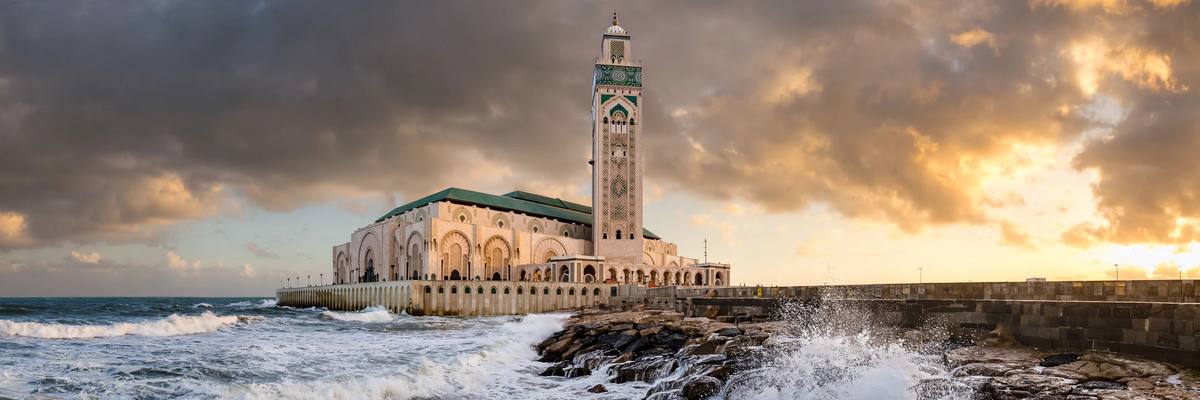
Start where every Casablanca visit should start: the Hassan II Mosque, built between 1986 and 1993 on a promontory reclaimed from the sea — legend says the throne of God was set upon the water, so the king's mosque would be too. Its minaret rises 210 metres, one of the tallest on earth, and the prayer hall holds some 25,000 worshippers with another 80,000 in the courtyard. Inside, zellige tilework, carved cedar ceilings and granite columns were executed by around 10,000 Moroccan artisans.
This is one of the very few mosques in Morocco that non-Muslim visitors can enter. Visits are by guided tour only (English and French), running roughly hourly from 9am to 4pm, with a long Friday break — tickets cost about 120 MAD for adults, 60 MAD for students and children. Mid-morning tours often sell out, so book online the day before.
Come twice if you can: once for the midday tour, and again at dusk, when the minaret is floodlit and locals gather on the esplanade. Dress modestly — shoulders and knees covered — out of respect.
Art Deco boulevards around Place Mohammed V
During the French Protectorate, the administration rebuilt Casablanca as a showcase modern city, and the streets around Place Mohammed V hold what many consider Africa's finest concentration of Art Deco and early modernist architecture. Walk Boulevard Mohammed V, Rue du Prince Moulay Abdellah and Avenue Hassan II and look up: curved corner facades, zellige-tiled entrances and geometric stonework from the 1930s to the 1950s.
Highlights are free to admire from the square: the grand Hôtel de Ville, the Palais de Justice with its horseshoe arches, and the striking white cube of the Cathédrale Sacré-Cœur — deconsecrated in 1956 and now used for exhibitions; its Art Deco interior is worth the small entry fee.
The Habous quarter and the old medina
For souk shopping without the hard sell, head to the Habous — the "new medina" the French built in the 1930s. Its arcaded streets and the Marché des Habous offer kaftans, olives, ceramics and argan oil at calmer prices than the old medina, and the Mahkama du Pacha (the old pasha's court, a masterpiece of Moroccan craftsmanship) can be visited with a guide.
The old medina north of Place des Nations Unies is small and working-class rather than touristy; its walls, the Sqala fortress café with sea views, and the fishing port are worth a wander — keep valuables tucked away as in any big city.
The Corniche at Ain Diab
By late afternoon, follow the locals west to the Corniche at Ain Diab. This 3-kilometre seafront promenade is Casablanca's social heart: joggers and families before sunset, then beach clubs, shisha lounges and seafood restaurants as night falls. The Atlantic here is chilly with strong currents — locals paddle and surf, but few swim far out. Dinner options line the whole strip, from grilled sardines at simple fish stalls to upscale brasseries.
Where to eat (and drink)
- Rick's Café — the re-creation of the film's bar (the movie was shot entirely in Hollywood) is touristy but beautifully done, with an Atlantic view upstairs.
- Seafood on the Corniche — grilled calamari, sole and red mullet at La Sqala and the Ain Diab fish restaurants.
- Marché Central — lunch like a local: tiny fish stalls and juice bars in the city centre.
- Friday couscous — book a cooking-style lunch in the Habous to taste the real thing.
- Rooftop bars in Maârif — Casablanca's nightlife district, with wine bars and clubs that run late.
A two-day Casablanca itinerary
Day 1 — the grand landmarks. Morning tour of the Hassan II Mosque, then the Art Deco boulevards from Place Mohammed V to the Sacré-Cœur. Lunch at Marché Central. Afternoon: the Habous quarter and the Mahkama du Pacha, then sunset and dinner on the Corniche.
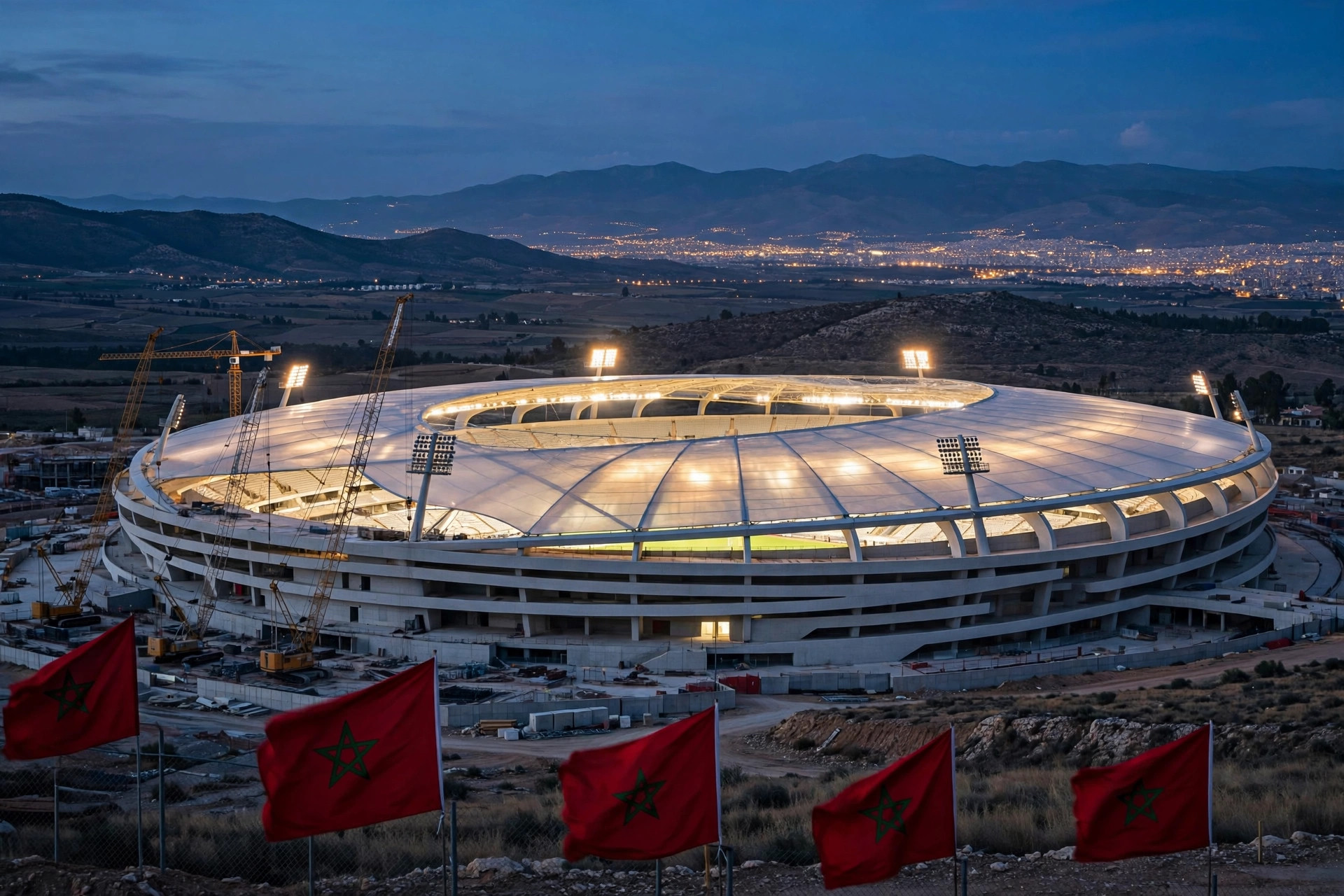
Day 2 — deeper Casablanca. Morning in the old medina, the fishing port and breakfast at La Sqala. Then the Museum of Moroccan Judaism — the only Jewish museum in the Arab world — or the Morocco Mall. End with rooftop drinks in Maârif. Football fans can also make for the construction site of the Grand Stade Hassan II at Benslimane, the 115,000-seat giant being built to potentially host the 2030 World Cup final.
Getting in and around
- From the airport: the ONCF train shuttle from Mohammed V Airport to Casa Voyageurs runs roughly every 30 minutes, takes about 45 minutes and costs around 50 MAD — far more reliable than a taxi.
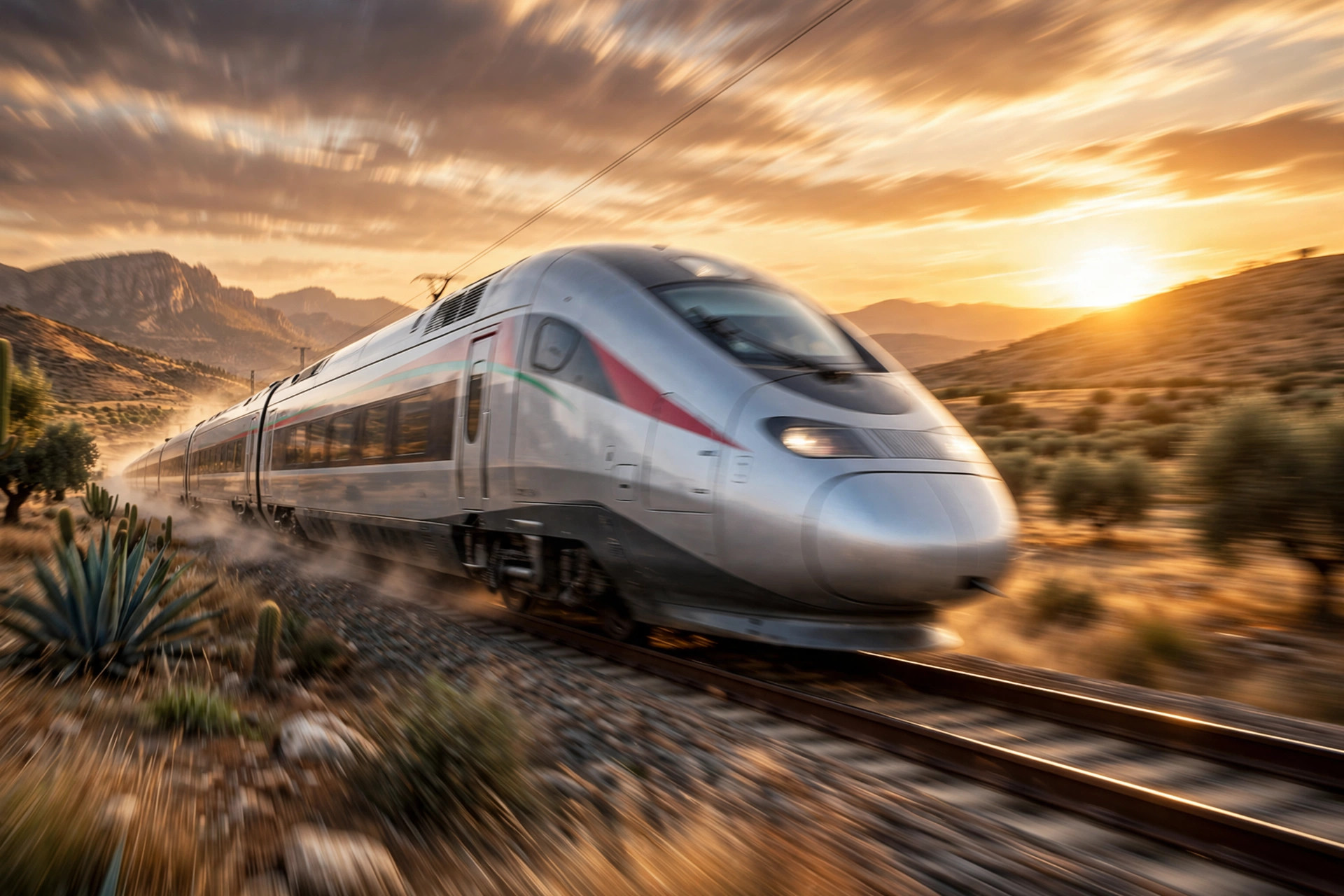
- Trains: Casa Voyageurs connects to Tangier by the Al Boraq high-speed train (about 2h10), Rabat (1h) and Marrakech (about 3h).
- In the city: the T1 and T2 trams cover the centre and the Corniche; petit taxis are cheap but insist on the meter.
Casablanca is Morocco's priciest city, but only slightly: budget 300–500 MAD per day for a comfortable mid-range visit including hotel, meals, tram rides and sights.
Plan your Morocco trip
Turn this guide into a booked trip: compare stays, flights and car rental across Morocco below.
Some links on this page are affiliate links. If you book through them, we may earn a commission at no extra cost to you — it keeps these guides free.
Frequently asked questions
Is Casablanca worth visiting?
Yes — with the right expectations. Casablanca is not a medina-and-souks town; it is Morocco's biggest, most cosmopolitan city. One to two days is the sweet spot: the Hassan II Mosque, the Art Deco boulevards and the Corniche are genuinely outstanding, and it is the natural arrival point for most Morocco trips.
Can non-Muslims enter the Hassan II Mosque?
Yes. The Hassan II Mosque is one of the only mosques in Morocco open to non-Muslim visitors. Entry is by guided tour only (English and French), and photography inside is allowed. Modest dress covering shoulders and knees is required for everyone.
What are the Hassan II Mosque tour times and prices?
Tours run roughly hourly from 9am to 4pm, with a long break on Friday mornings. Adult tickets cost around 120 MAD, students and children under 12 around 60 MAD. Mid-morning tours often sell out, so book online the day before when possible.
How do I get from Casablanca airport to the city centre?
Take the ONCF train shuttle from Mohammed V International Airport directly to Casa Voyageurs station. It runs roughly every 30 minutes, takes about 45 minutes and costs around 50 MAD — far more reliable than a taxi in Casablanca traffic. From Casa Voyageurs, trams and petit taxis cover the rest of the city.
How long is the train from Casablanca to Marrakech?
Direct ONCF trains from Casablanca to Marrakech take about 3 hours, departing from Casa Voyageurs. Trains to Tangier use the Al Boraq high-speed line (about 2h10) and to Rabat take roughly 1 hour, so Casablanca works well as the start of a longer Morocco itinerary.