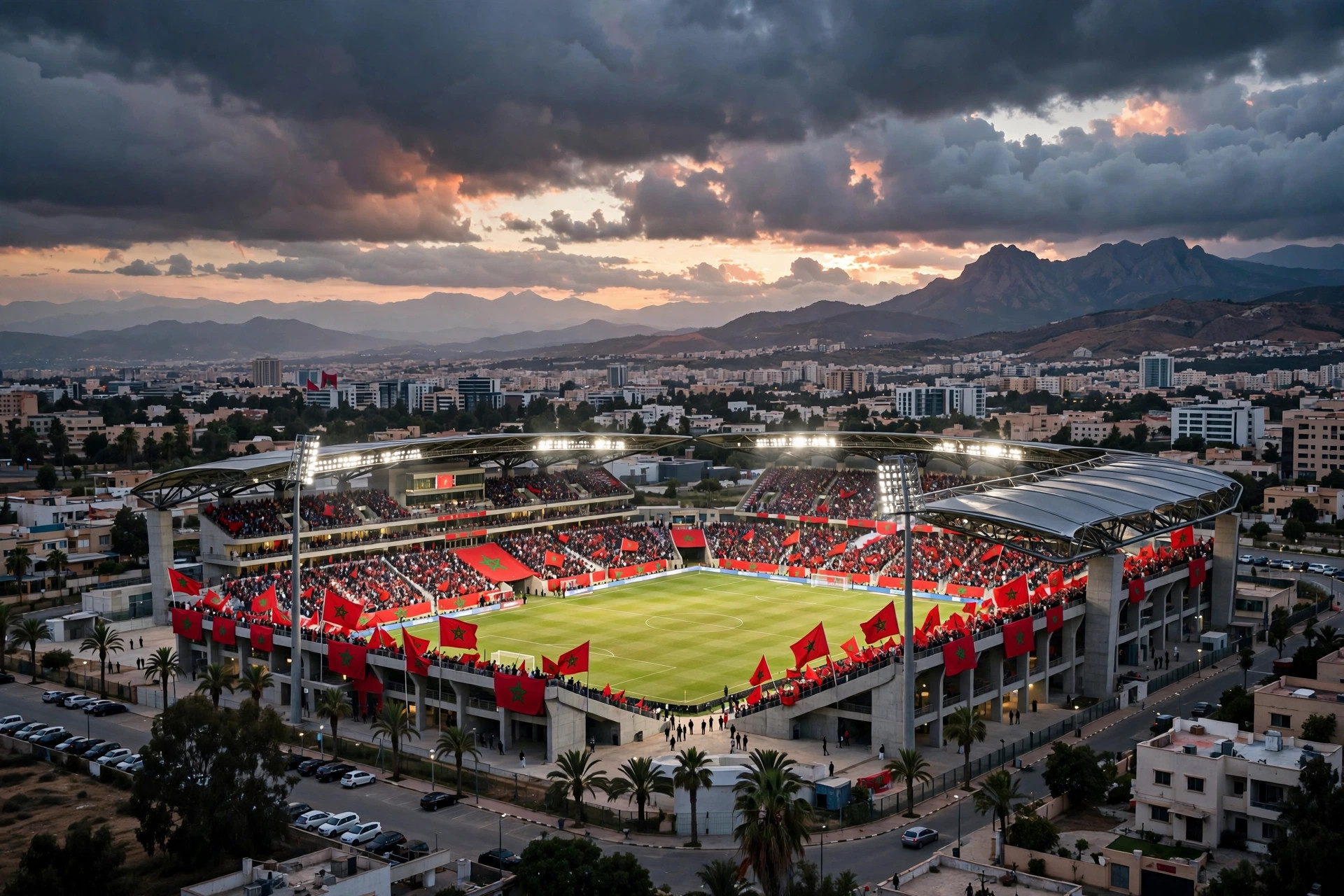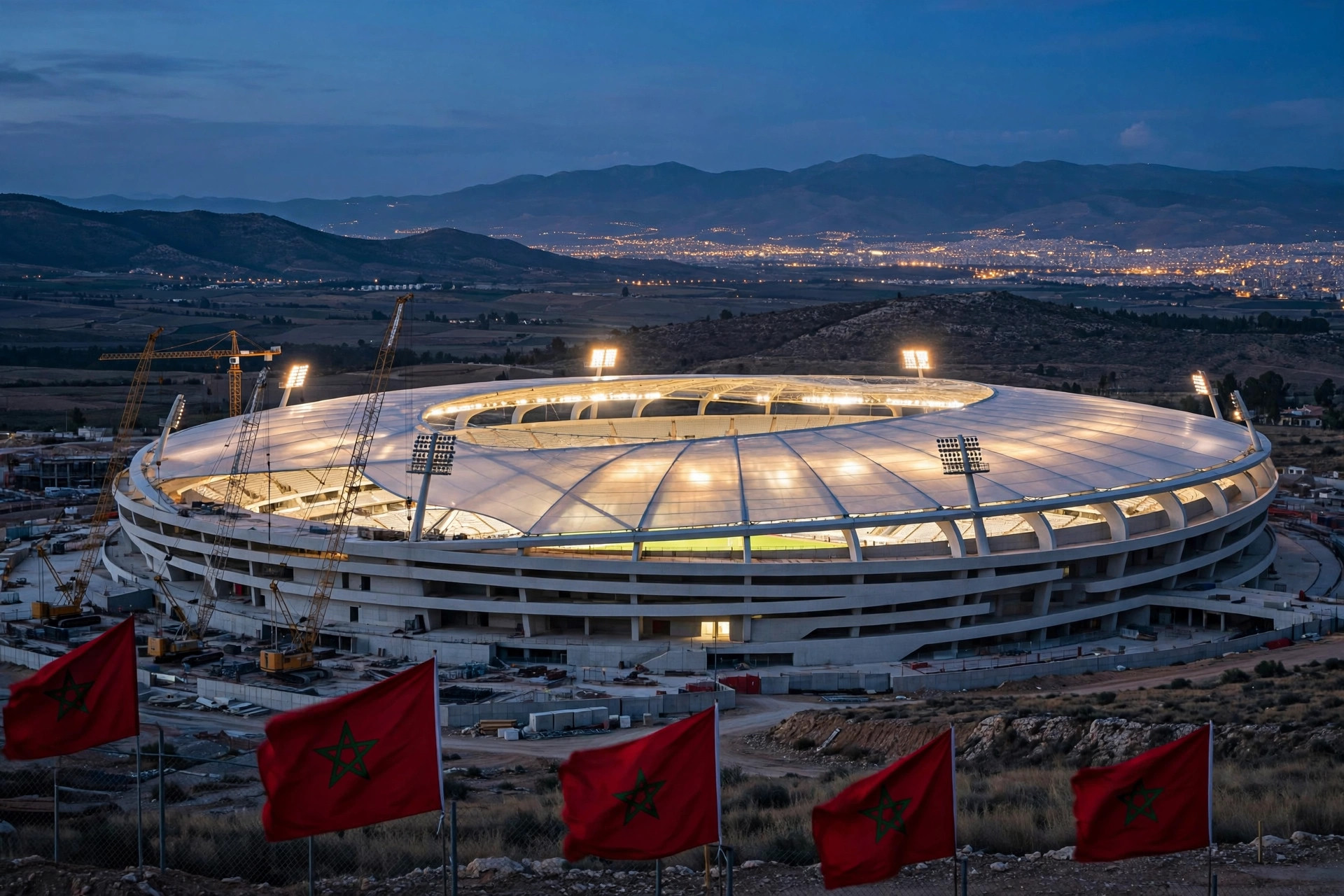
On 10 September 2026, the president of Morocco's football federation, Fouzi Lekjaa, told a political rally in Bouznika that the 2030 World Cup final will be played at Benslimane, 60 km east of Casablanca. FIFA hasn't confirmed a word of it — Spain is fighting just as hard to keep the final at the Bernabéu or the new Camp Nou — but the claim tells you everything about how seriously Morocco is playing this game. The country is building what would be the largest football-only stadium on earth, plus five more venues beside it.
We've been tracking the stadium programme closely, and honestly it's the most ambitious infrastructure project African football has ever seen. Here's the complete picture as it stands: every Moroccan venue, where the final-venue battle is at, and what all of it means if you're planning to be there in 2030.
The centrepiece: Grand Stade Hassan II
The star of the show is the Grand Stade Hassan II, rising from the ground at Benslimane in the Casablanca region. Planned for 115,000 seats on a hybrid grass pitch, it would be the biggest football-specific stadium in the world — bigger than the Maracanã, bigger than Wembley, bigger than anything in Spain.
Morocco's bid put it forward for the opening match or the final, and Lekjaa's September 2026 declaration shows the federation believes it has the deal done. Our honest take: the case is strong. A purpose-built 115,000-seat arena is exactly the kind of statement FIFA likes, and the stadium sits at the heart of the $12-billion-plus programme backing Morocco's bid. But nothing is official until FIFA says so, and with Camp Nou reopening at 105,000 seats, Spain won't give the final up quietly.
Morocco's six venues, city by city
Alongside the Benslimane giant, five more venues complete Morocco's bid — one per host city:
- Casablanca — Grand Stade Hassan II (Benslimane): 115,000 seats, brand new, proposed for the final.
- Tangier — Grand Stade de Tanger (Ibn Batouta): 75,600 seats after renovation, already hosted Club World Cup matches, proposed for a semi-final.
- Rabat — Stade Prince Moulay Abdellah: 68,700 seats, being rebuilt from the ground up on the old site, proposed for a semi-final.
- Fes — Stade de Fès: around 55,800 seats, set for a full renovation.
- Marrakech — Grand Stade de Marrakech: around 45,240 seats, due for upgrades.
- Agadir — Grand Stade d'Agadir: 46,000 seats, proposed for a quarter-final.
That would give Morocco six of the tournament's proposed 23 venues — the second-largest share after Spain's eight, and ahead of Portugal's two. For a country hosting its first World Cup, that is a serious statement of intent.
Morocco plans to add 60,000 hotel beds — about a fifth of its current capacity — before 2030, but demand around match weeks will still dwarf supply. If you know which host cities you want, book accommodation a year out and treat cancellation-flexible rates as part of the ticket budget.
Getting between the stadiums
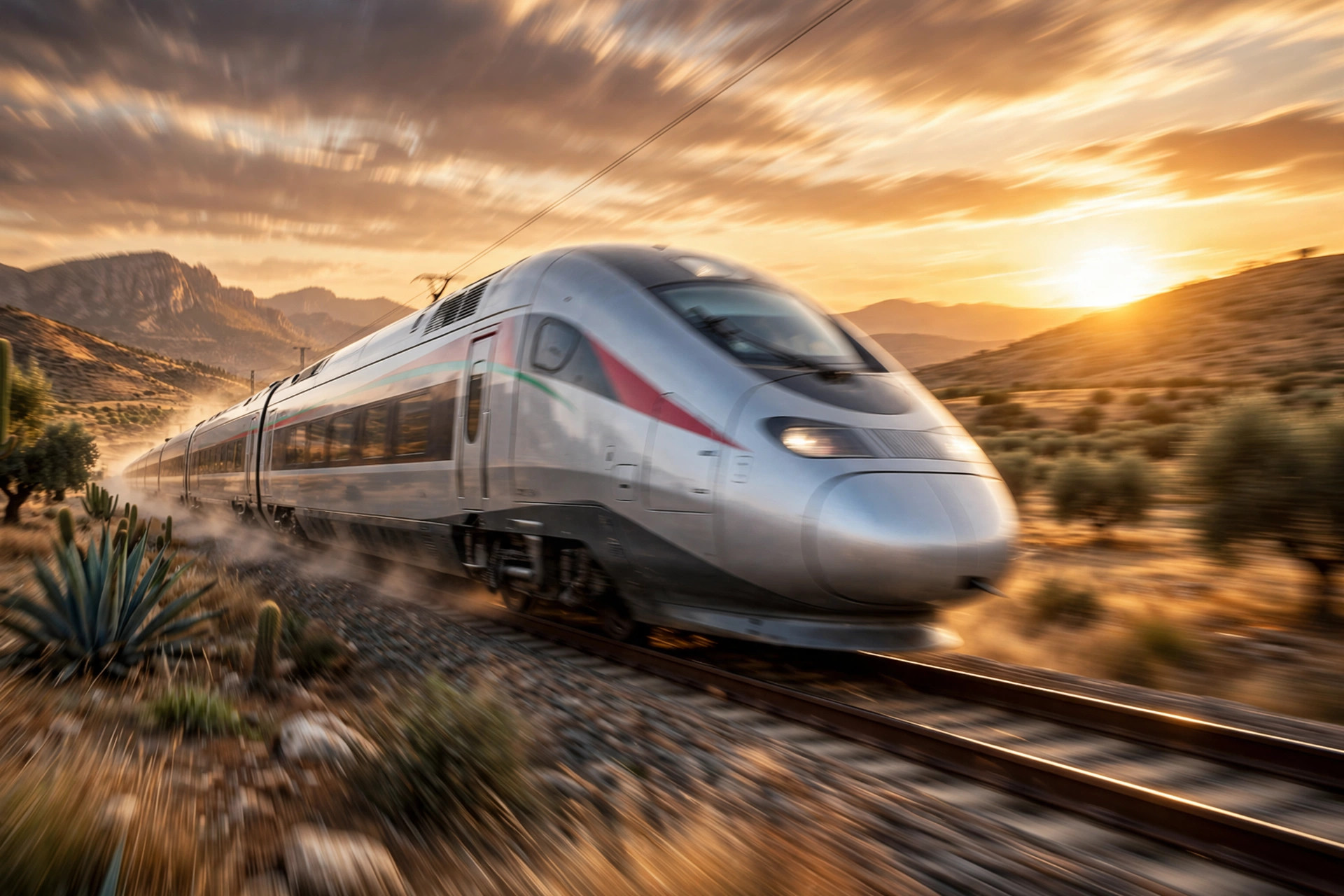
Morocco is compact enough that a multi-city World Cup trip is genuinely doable. The Al Boraq high-speed train already links Tangier, Rabat and Casablanca in well under two hours, and a 430 km extension down to Marrakech — via the new Kenitra–Rabat–Casablanca corridor — is scheduled to be running by 2030, cutting Tangier to Marrakech to about 2 hours 40 minutes.
For the cities the fast train doesn't reach, domestic flights from Casablanca's Mohammed V airport connect Fes and Agadir, and CTM coaches cover everything else at prices most European fans will find almost comically low. Our full breakdown is in our getting around Morocco guide — it's the trip-planning piece you'll want open in the next tab.
What this means for your 2030 trip
A few practical things follow from the stadium map. First, the biggest stadium isn't in Casablanca itself but 60 km east at Benslimane, so fans heading there will almost certainly base themselves in Casablanca and travel out on match days — factor that journey into your plans.
Second, every host city is a serious destination in its own right: Tangier and the Strait, the Atlantic surf towns near Agadir, Fes's 1,200-year-old medina, Marrakech at its chaotic best. Build in rest days. The fans who treat the World Cup as a Morocco trip with football in it will have a better time than the ones who treat it as football with a few layovers.
Third, the bid evaluation put Tangier and Rabat forward for semi-finals and Agadir for a quarter-final. If you're booking early without fixtures confirmed, those are the cities where the biggest nights are most likely to land.
The tournament runs from 8 June to 21 July 2030, with the first three matches in South America and everything else split between Morocco, Spain and Portugal. FIFA is expected to inspect the proposed stadiums in Spain, Morocco and Portugal before the end of October — after that, expect the venue picture to firm up fast. We'll update this guide as it does.
Plan your Morocco trip
Turn this guide into a booked trip: compare stays, flights and car rental across Morocco below.
Some links on this page are affiliate links. If you book through them, we may earn a commission at no extra cost to you — it keeps these guides free.
Frequently asked questions
Where will the 2030 World Cup final be played?
Morocco's federation president Fouzi Lekjaa said in September 2026 that the final will be staged at the 115,000-seat Grand Stade Hassan II at Benslimane, near Casablanca. But FIFA has not confirmed the venue yet, and Spain is pushing hard for the final to be played in Madrid or Barcelona — so nothing is official.
How many stadiums will Morocco have at the 2030 World Cup?
Morocco is expected to field six stadiums across six host cities: Casablanca (Benslimane), Rabat, Tangier, Marrakech, Agadir and Fes. That would give Morocco six of the tournament's proposed 23 venues — the second-largest share after Spain.
What is the capacity of the Grand Stade Hassan II?
The Grand Stade Hassan II is planned for 115,000 seats, which would make it the largest football-specific stadium in the world. It is being built from scratch at Benslimane, about 60 km east of Casablanca, with a hybrid grass pitch.
How do fans get between the World Cup stadiums in Morocco?
The Al Boraq high-speed train already links Tangier, Rabat and Casablanca, and a 430 km extension to Marrakech is due to be ready by 2030. Domestic flights from Casablanca's Mohammed V airport and CTM buses connect the remaining host cities, including Fes and Agadir.
When do 2030 World Cup tickets go on sale?
FIFA has not announced the 2030 ticket sales timeline yet. At previous tournaments, tickets went on sale through FIFA's official ballot several years before kick-off. Watch our upcoming tickets guide for the process, categories and what fans should expect to pay.