Morocco is the rare country where one trip can span a snowy Atlas pass, a Saharan dune and a windy Atlantic beach. That variety is why packing for Morocco trips people up: the suitcase that works in Marrakech in June is miserable in Fez in January.
This guide is the season-by-season packing list we give friends. It covers what to bring for spring, summer, autumn and winter, what the desert demands on top of that, and the handful of things you can safely leave at home.
The golden rules of packing for Morocco
Before the seasonal lists, three principles shape everything below. First, layers beat bulk. Moroccan days and nights swing hard — a 25°C afternoon in the Atlas foothills can drop to 8°C after sunset. A light fleece or warm mid-layer you can add and shed beats one heavy coat.
Second, dress a little more modestly than at home. Morocco is welcoming and used to tourists, but covering shoulders and knees — especially in medinas, villages and religious sites — earns you warmer interactions and fewer stares. You don't need full coverage on the beach in Agadir, but a scarf that doubles as a shawl is the most useful garment you can pack.
Third, pack for dust, sun and walking. Cobblestones, sandy medina lanes and long market strolls punish flimsy shoes. Broken-in walking shoes or sturdy sandals beat anything fashionable-but-fragile.
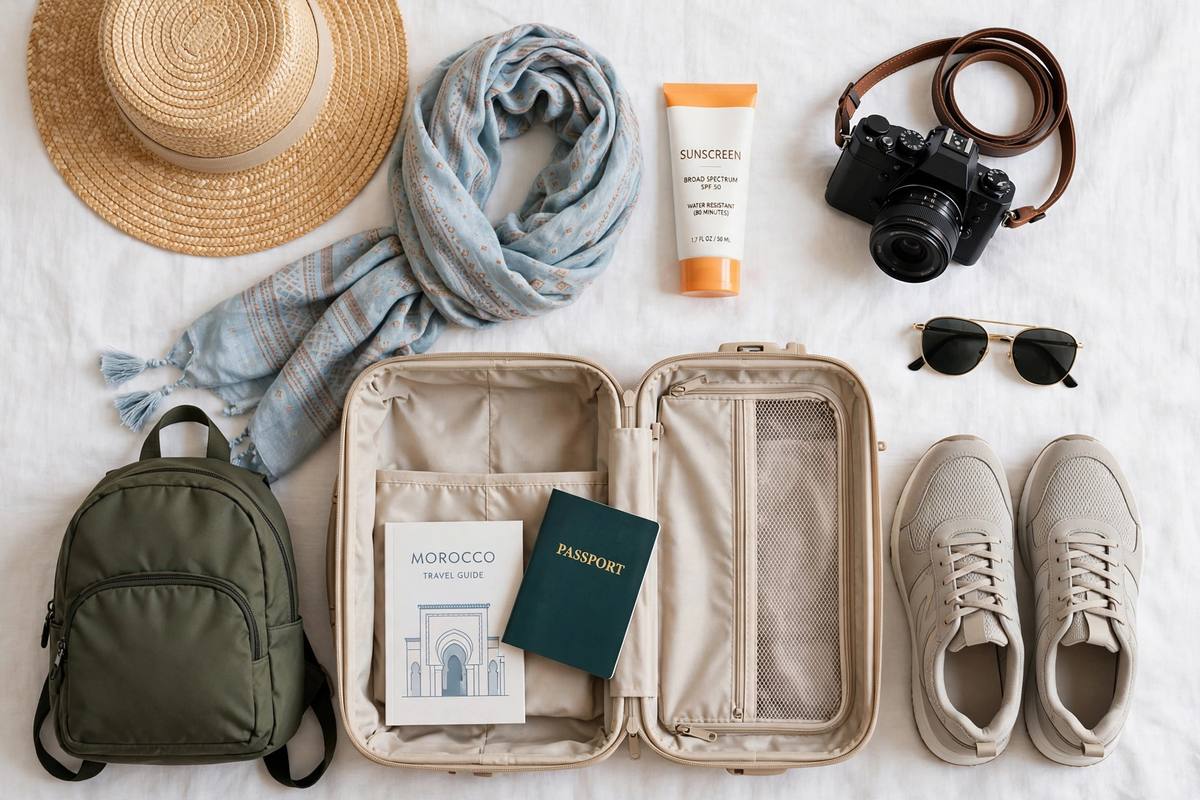
A large, lightweight scarf is Morocco's ultimate multi-tool: sun cover, mosque-visit head cover, evening shawl, blanket on chilly buses and even a wrap for fragile souvenirs.
Spring (March–May): the sweet spot
Spring is arguably the best time to visit Morocco: wildflowers in the Middle Atlas, comfortable 20–25°C days in the cities and cool-but-manageable desert nights. Pack:
- Light layers — t-shirts plus a fleece or light sweater for evenings
- A windproof, water-resistant jacket — the coast stays breezy and spring showers hit the north
- Comfortable closed walking shoes and one pair of sandals
- Sun protection: hat, sunglasses and SPF 30+ (the sun is strong by April)
- Swimwear if you're heading to Agadir or Taghazout from late April
Summer (June–August): heat strategy
Summer means serious heat inland — Marrakech regularly tops 40°C in July and August — while the Atlantic coast stays 10–15 degrees cooler. The strategy is light, loose and breathable:
- Loose linen or cotton clothing in light colours; avoid synthetics
- A wide-brimmed hat and high-SPF sunscreen — the sun is relentless
- Swimwear and a quick-dry towel for the coast and riad plunge pools
- One warmer layer anyway: desert nights and air-conditioned buses still get cold
- A refillable water bottle — stick to bottled or filtered water
Plan sightseeing for before 11:00 and after 16:00 in summer. Midday is for shady courtyards, museums and mint tea — your itinerary and your energy will thank you.
Autumn (September–November): our favourite
September and October bring warm seas, thinning crowds and harvest season in the countryside. November turns crisp, especially in the Atlas and the north. Pack like spring, plus:
- A proper warm layer — mountain evenings drop fast from October
- Closed shoes again; open sandals get dusty and cold after October
- Layers you can peel: 28°C afternoons and 12°C evenings are normal in October
Winter (December–February): colder than you think
This surprises first-timers: Morocco gets genuinely cold. Fez and the Atlas regularly see frost and snow, Marrakech nights drop near freezing, and most riads and hotels are poorly heated. Pack:
- A warm winter jacket, thermal base layers and a woolly hat
- Warm socks and closed, ideally waterproof, shoes
- Gloves and a scarf — essential in the Atlas and the desert at night
- Sleepwear warm enough for unheated rooms (a thermal top doubles as pyjamas)
- Lip balm and moisturiser — winter air is dry, and the desert doubly so
Desert add-ons (any season)
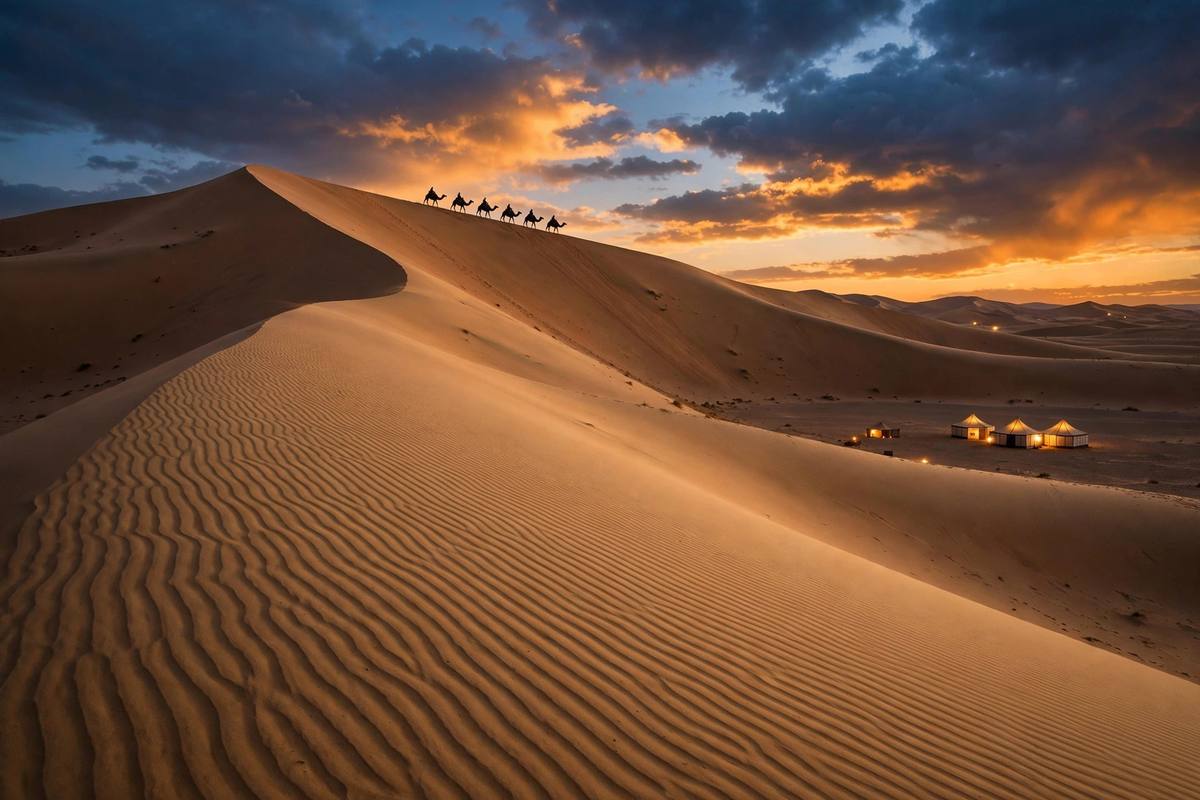
A Sahara night adds its own demands on top of the seasonal list. Whatever the month, bring:
- Warm layers for the night — desert temperatures can swing 20°C between day and night
- A headscarf or buff against wind-blown sand (your tour may lend you one, but bring your own)
- Sunglasses that seal well and a small headtorch for the camp
- A power bank — desert camps have limited charging
- Wet wipes and hand sanitiser; showers are a luxury at some camps
Electronics and documents
Beyond clothing: Morocco uses European-style Type E power sockets (two round pins, 220V), so pack a universal adapter. A local SIM or eSIM with data is cheap. Keep a passport photocopy separate from the original, and your insurance details on your phone — hospital visits are paid upfront here.
What to leave at home
- Valuable jewellery — medinas are safe but crowded; leave the irreplaceable pieces home.
- Too many "just in case" outfits — laundries are cheap and riads often offer same-day washing.
- A drone — Morocco requires a permit, and flying without one risks confiscation at the airport.
- Camping gear — unless you're on a specialist expedition, organised tours provide everything.
Pack with the seasons, keep the layers handy, and Morocco's climate stops being a puzzle — it becomes part of the adventure.
Plan your Morocco trip
Turn this guide into a booked trip: compare stays, flights and car rental across Morocco below.
Some links on this page are affiliate links. If you book through them, we may earn a commission at no extra cost to you — it keeps these guides free.
Frequently asked questions
Do I need to dress modestly in Morocco?
Morocco is relaxed by regional standards, but covering shoulders and knees in medinas, villages and at religious sites shows respect and earns warmer welcomes. Beach resorts are the exception — swimwear is fine at the pool and beach. A versatile scarf covers most situations.
What should I pack for a Sahara desert trip?
Warm layers for the night (desert temperatures can drop 20°C after sunset), a headscarf or buff for sand, sealed sunglasses, a headtorch, a power bank, wet wipes, and a small daypack for the camel trek — your main luggage stays at your hotel.
Does it snow in Morocco? Do I need winter clothes?
Yes — the Atlas Mountains get real snow from December to February, and Fez, Ifrane and even Marrakech see frosty nights. Pack a warm jacket, thermals and a hat if you visit in winter; most riads and hotels are poorly heated.
Can I wear shorts in Morocco?
Shorts are fine at beach resorts and in big tourist cities, though longer shorts or light trousers draw less attention in medinas and rural areas. For women, a skirt or trousers below the knee is the comfortable middle ground.
What power adapter do I need for Morocco?
Morocco uses Type E sockets (two round pins, 220V) — the same as France. Bring a universal adapter or a European plug adapter, plus a power bank for long travel days and desert camps.