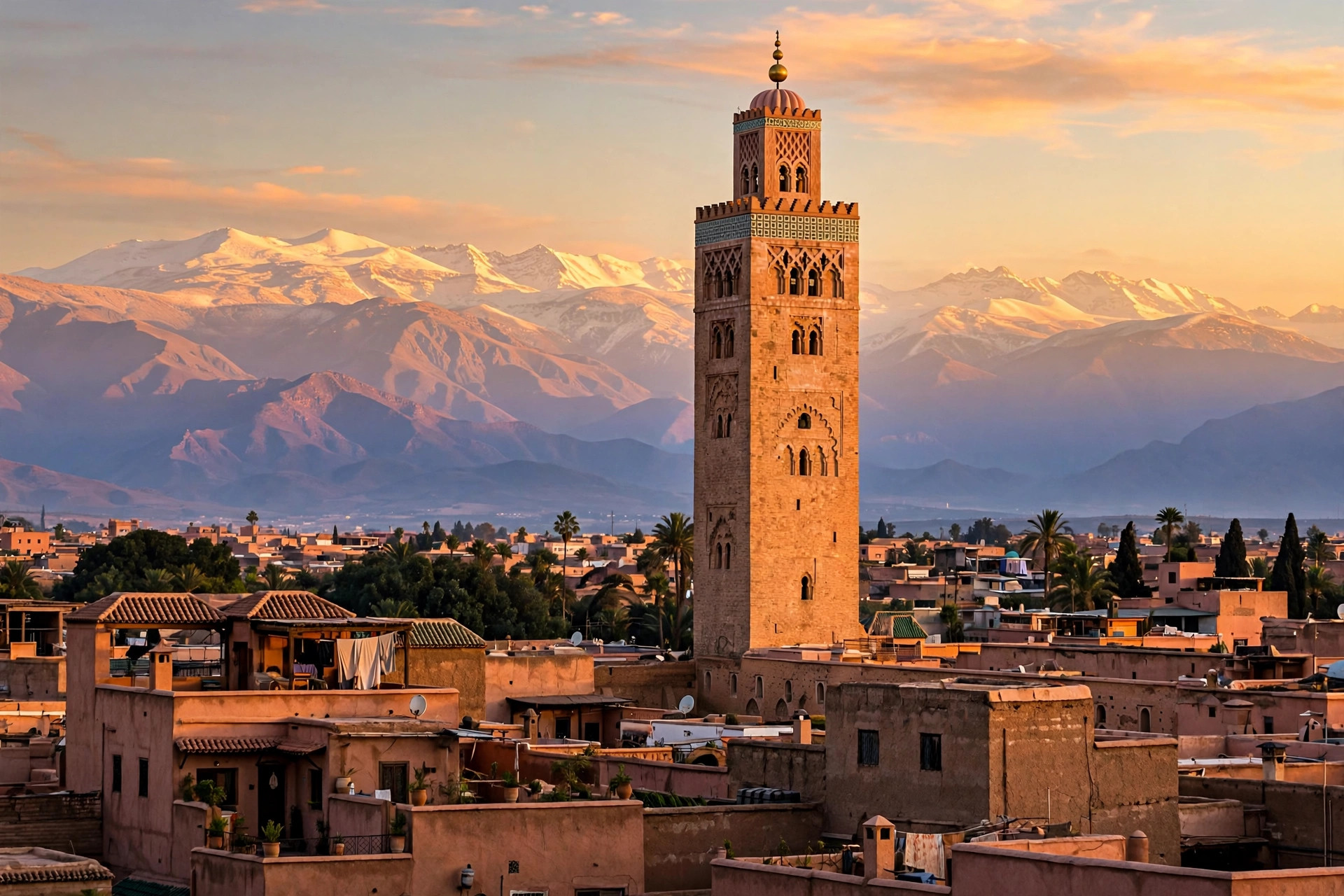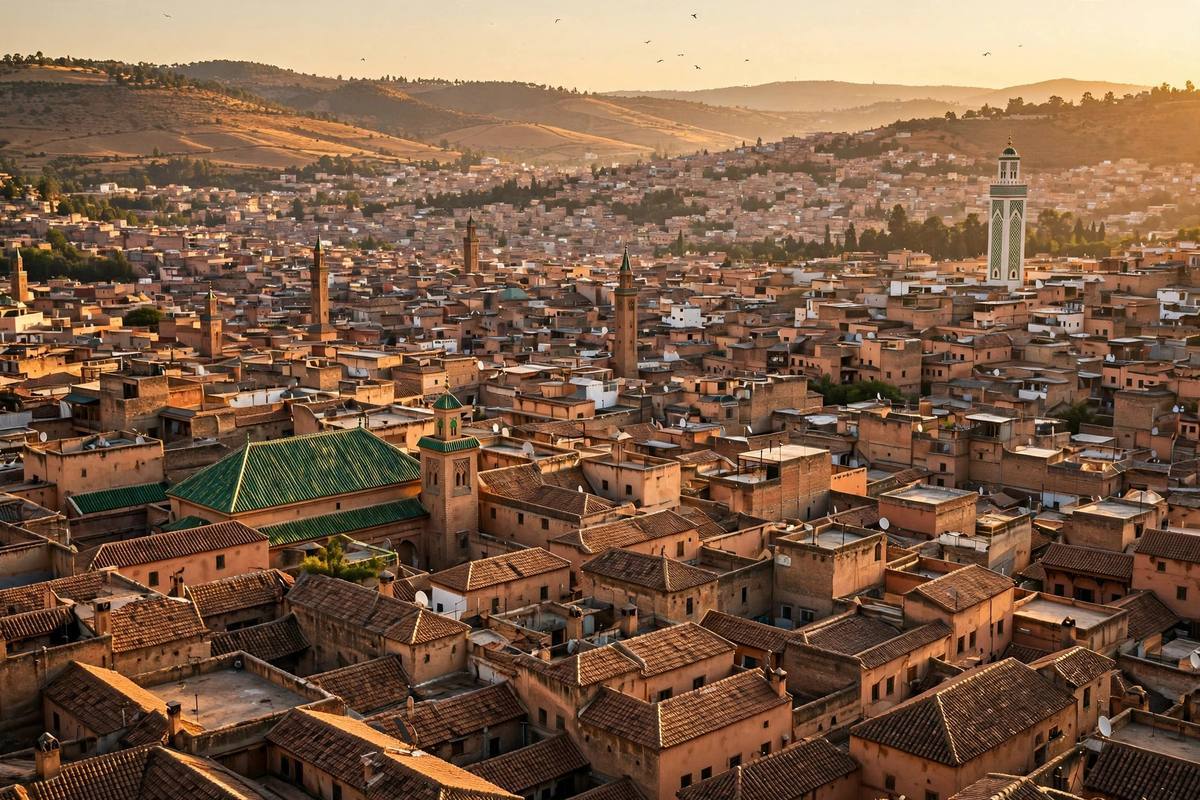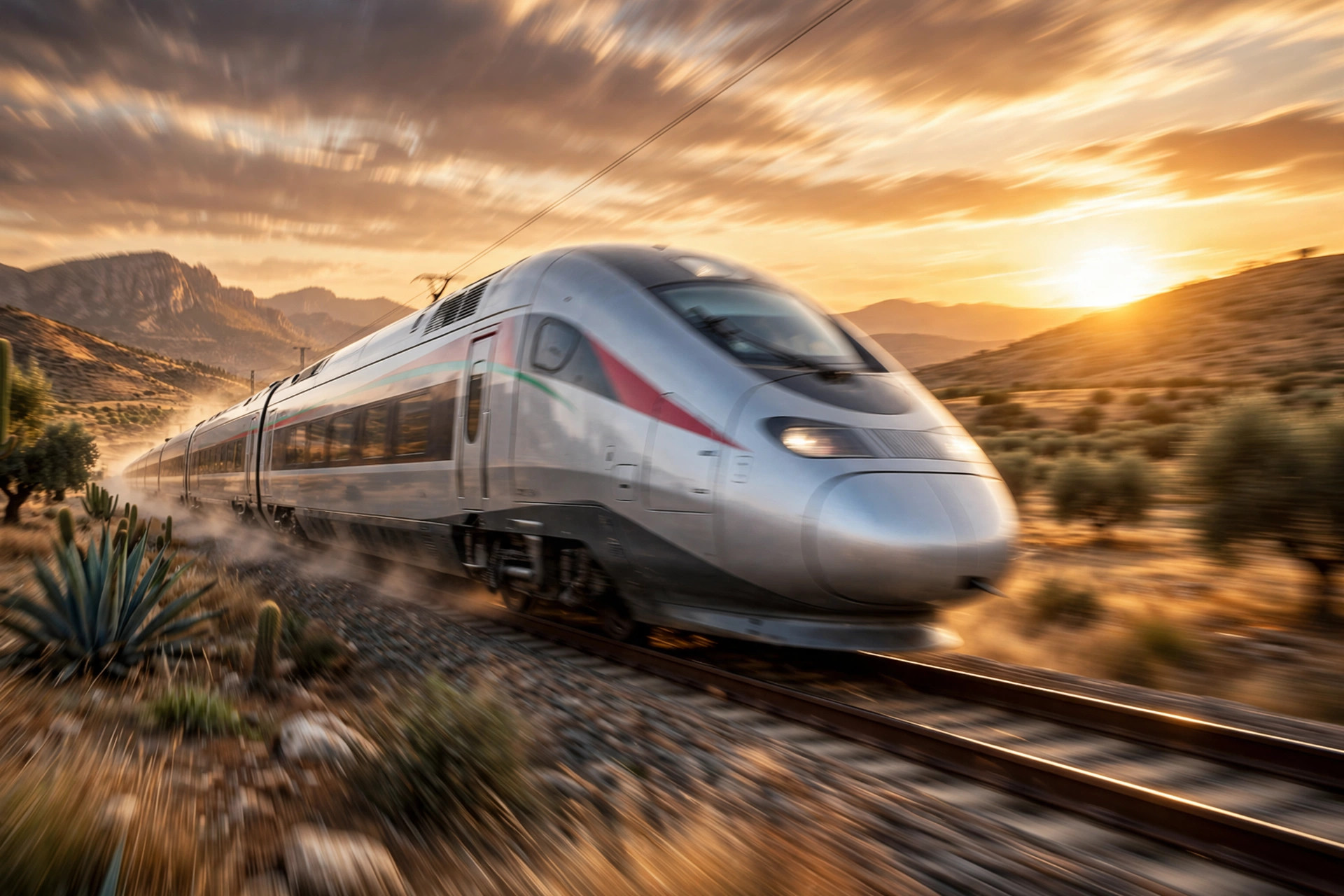
The Sahara is the reason many people come to Morocco, and it rarely disappoints: the silence between the dunes, the sand cool under your feet at dawn, drums around a fire after dinner. But the desert trips sold in every Marrakech riad lobby are not all equal, and the first decision — Merzouga or Zagora — shapes the whole trip.
Both trips leave from Marrakech (or Fes). Only one of them takes you to the great dunes. This guide compares the two gateways honestly, maps out the classic three-day Merzouga circuit, breaks down camp types and 2026 prices, and covers what to pack for a night in the sand.
Merzouga vs Zagora at a glance
Two towns gate the Moroccan Sahara, and they are not interchangeable:
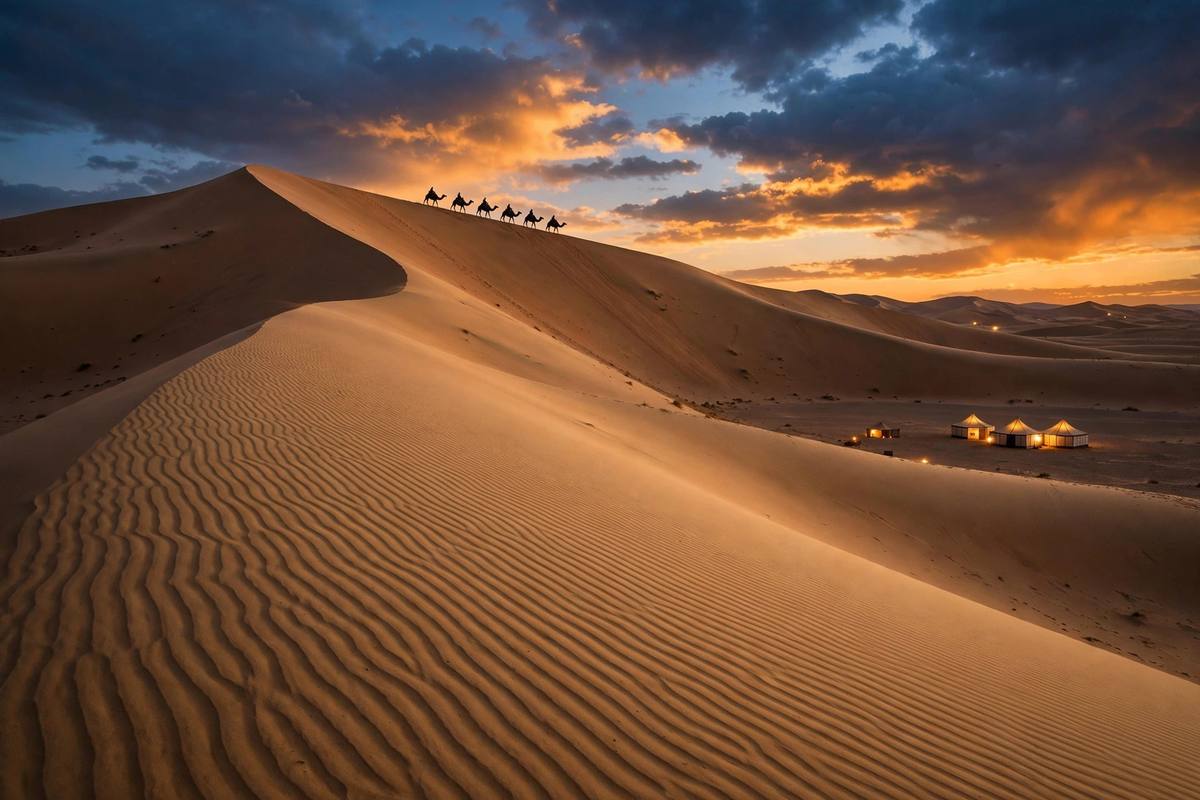
- Merzouga (Erg Chebbi): Morocco's tallest dunes — ridges of fine orange sand up to 150 metres high, stretching 28 kilometres. Camel treks walk straight from the village into the dunes, and most camps sit right among them. About 9–10 hours by road from Marrakech, 7 hours from Fes.
- Zagora (Draa Valley / Tinfou dunes): about 6–7 hours from Marrakech, so it fits a two-day trip. The dunes at nearby Tinfou are low ridges rather than the great dunes. For bigger dunes from Zagora you continue another 90 minutes to M'hamid and the Erg Chigaga region — wilder, more remote, and a genuinely different, quieter desert.
If your schedule allows three days, choose Merzouga — the dunes are the ones in the photographs, and the journey through the kasbahs and gorges becomes part of the experience. Choose Zagora only when you have two days and want any desert night rather than none. Skip the "two-day Merzouga" itineraries that spend roughly 18 of 48 hours in a minibus.
The classic 3-day Merzouga circuit
Day 1 — Marrakech to the Dades Valley. Tours leave Marrakech before 8am and cross the High Atlas over the Tizi n'Tichka pass (2,260 m). The stop everyone wants is Ait Ben Haddou, the famous mud-brick ksar where films and series were shot — allow a couple of hours to climb to the granary for the view. The night is usually spent in a hotel or kasbah in the Dades Valley.
Day 2 — Dades to Merzouga. The morning run goes through the Todra Gorges, a canyon with 300-metre rock walls, then along the palm-lined Ziz Valley. You reach Merzouga in the late afternoon, just in time for the camel trek — about an hour and a half into Erg Chebbi as the light turns gold. Dinner is a tagine at the camp, followed by drumming and music around the fire, then sleep in a tent with the dunes outside the door.
Day 3 — Sunrise and the long road back. Wake before dawn and climb the nearest dune for sunrise — this is the photograph everyone brings home. Camels or 4x4s return you to the village for breakfast, then the drive back to Marrakech begins, arriving in the evening. It is a long day, and exactly why the trip needs three days rather than two.
Standard vs luxury desert camps
Most Merzouga camps fall into two categories, and the price gap is wide:
- Standard camps: traditional canvas Berber tents, shared bathrooms, camp beds or thick mattresses, dinner and breakfast included. Clean and atmospheric — everything you need for one night.
- Luxury camps: ensuite bathrooms with flush toilets and hot showers, real beds with proper bedding, better food, and often a swimming pool at the base lodge where you shower after the dunes. You still sleep in a tent; "luxury" means comfort at the camp, not distance from the desert.
The stars are the same at every camp — you do not need luxury for the magic. Pay extra only if a private bathroom matters to you. And choose operators whose camels look well fed and rested; reputable camps will also let you walk into the dunes instead of riding if you prefer.
Real prices for 2026
Group tours booked in Marrakech or Fes are the cheapest way into the desert, and prices include transport, one hotel night in the Dades Valley, the camel trek, and dinner plus breakfast at the camp:
- Standard 3-day group tour: 1,200–1,800 MAD ($120–$180) per person.
- Luxury 3-day group tour: 2,500–3,500 MAD ($250–$350) per person.
- Private 3-day tour (two people): from about 4,000 MAD ($400) total.
- Camel-trek add-on if you are already in Merzouga independently: 150–250 MAD.
There are no ATMs in Merzouga — bring cash. Camps, camel handlers and roadside restaurants are cash-only, and small notes (20s and 50s) are useful for tipping your driver and the camp crew (50–100 MAD each is the norm).
What to pack and practical tips
- Warm layers: desert nights drop near freezing from October to March — a fleece and long trousers matter more than swimwear.
- Sand-friendly shoes: closed shoes or strapped sandals; flip-flops fill with sand in seconds.
- Headscarf, sunglasses, sunscreen: the sun on pale sand is intense even in winter.
- A small overnight bag: leave big luggage in the vehicle; you only carry one night's things into the dunes.
- Power bank: charging points at camps are limited and often shared.
- Water: carry at least 1.5 litres for the camel trek and the walk back.
- Best months: October to April. Avoid June to August, when daytime temperatures regularly pass 45°C (113°F).
- Booking: reserve camps ahead from December to March; outside high season you can usually book a few days out.
Plan your Morocco trip
Turn this guide into a booked trip: compare stays, flights and car rental across Morocco below.
Some links on this page are affiliate links. If you book through them, we may earn a commission at no extra cost to you — it keeps these guides free.
Frequently asked questions
Is it better to go to the Sahara from Marrakech or Fes?
Either works well. Marrakech is the classic departure point — the road passes Ait Ben Haddou and the Dades Valley, so the journey becomes part of the trip. Fes is closer to Merzouga (about 7 hours versus 9-10) and pairs naturally with an imperial-cities itinerary.
How much does a 3-day Merzouga desert tour cost?
Group tours from Marrakech typically cost 1,200-1,800 MAD ($120-$180) per person for a standard camp, and 2,500-3,500 MAD ($250-$350) for a luxury camp. Private tours start around 4,000 MAD ($400) for two people. Prices usually include transport, one hotel night, the camel trek, dinner and breakfast at the camp.
Can you do the Sahara desert in 2 days from Marrakech?
Yes, but only via Zagora — about 6-7 hours each way — and the dunes at Tinfou are low ridges, not the big dunes. A 2-day Merzouga run means roughly 18 hours of driving in 48 hours. Give Merzouga the full three days.
What is it like to sleep in a Sahara desert camp?
Expect canvas Berber tents, a tagine dinner, drumming around the fire and a sky full of stars. Standard camps use shared bathrooms; luxury camps add ensuite toilets, hot showers and real beds. Camps provide warm bedding, but bring a fleece — desert nights get cold from October to March.
When is the best time to visit the Sahara desert in Morocco?
October to April is ideal, with mild days and cold nights — winter temperatures can drop near freezing after dark, so pack warm layers. Avoid June to August, when daytime heat regularly passes 45°C (113°F).