Morocco is made for road trips. In fourteen days you can watch the Atlantic roll in at Casablanca, haggle in the imperial medinas of Fes and Marrakech, ride a camel into the Sahara dunes, and cross the High Atlas on some of the most cinematic mountain roads on earth — all at the wheel of your own rental car.
The route below is a full loop. It starts and ends in Casablanca, covers roughly 3,000 kilometres, and is designed so that no single driving day exceeds five or six hours — with one glorious exception in the desert. It is the itinerary we recommend to first-time visitors who want the whole country, not just one city.
Days 1–2: Casablanca and Rabat
Land at Casablanca's Mohammed V airport and pick up your rental car — then leave the city traffic behind as quickly as you can. The one unmissable stop is the Hassan II Mosque, the largest in Africa, whose minaret rises 210 metres above the Atlantic. A guided tour (offered in English several times a day) is the only way inside, and it is worth it.
Drive north to Rabat on day 2 (about 90 minutes on the A3 autoroute). Morocco's calm capital rewards slow walkers: the Kasbah of the Udayas with its blue-and-white lanes, the Roman and medieval ruins of Chellah, and the riverside corniche at sunset. Park the car and explore on foot — the medina here is mercifully small.
Days 3–4: Tangier and Chefchaouen
Head north along the coast via Asilah, a whitewashed artists' town that makes a perfect coffee stop, to Tangier — the city where Africa almost touches Europe. Wander the Grand Socco, descend into the old medina, and drive out to Cap Spartel, where the Atlantic meets the Mediterranean at the lighthouse.
On day 4, turn inland into the Rif Mountains to Chefchaouen, Morocco's famous blue city (about two hours). Spend the afternoon getting lost in the blue-washed lanes and climb to the Spanish Mosque for sunset over the valley — the classic Chefchaouen photograph.
Days 5–6: Fes
The drive from Chefchaouen to Fes takes around four hours through rolling farmland. Fes el-Bali, the world's largest living medieval medina, is the cultural heart of Morocco: 9,000 alleyways, the Chouara tanneries, brass workshops, and Al-Qarawiyyin, founded in 859 and considered the world's oldest university.
Keep day 6 flexible: revisit the medina with a local guide (highly recommended — the medina defeats maps), or take a half-day trip to the Roman ruins of Volubilis and the imperial city of Meknes, both easy drives.
Day 7: The long drive — Fes to Merzouga
This is the one big driving day: roughly 470 kilometres and seven hours from Fes to Merzouga, gateway to the Sahara. The route climbs through the cedar forests of the Middle Atlas (watch for Barbary macaques near Azrou), crosses the high plains around Midelt, then drops into the spectacular Ziz Valley, where a ribbon of date palms cuts through red desert.
Days 8–9: The Sahara at Merzouga
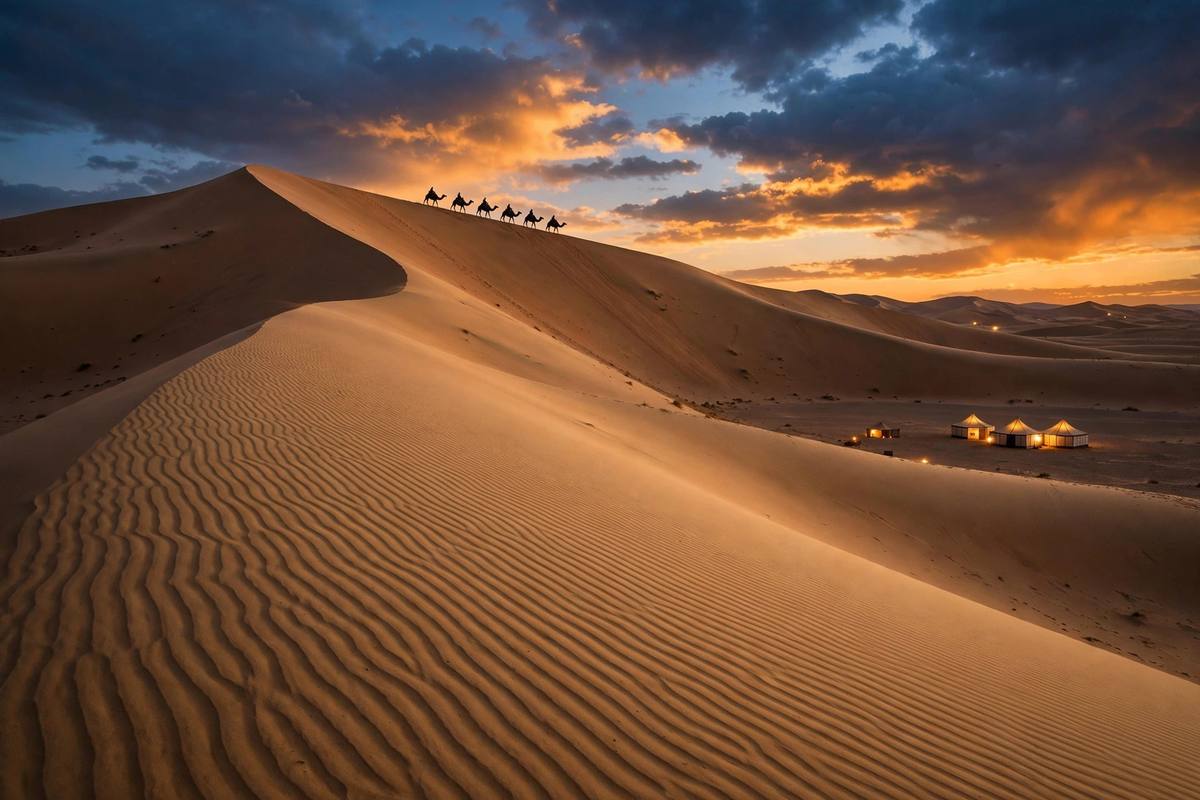
The Sahara is the emotional peak of the trip. Most travellers ride camels into the Erg Chebbi dunes at sunset, sleep in a desert camp under absurdly starry skies, and wake for sunrise over the sand. Book a camp with proper beds and an ensuite tent — the "luxury camp" tier is worth the upgrade.
Days 10–11: Gorges, valleys and Ait Ben Haddou
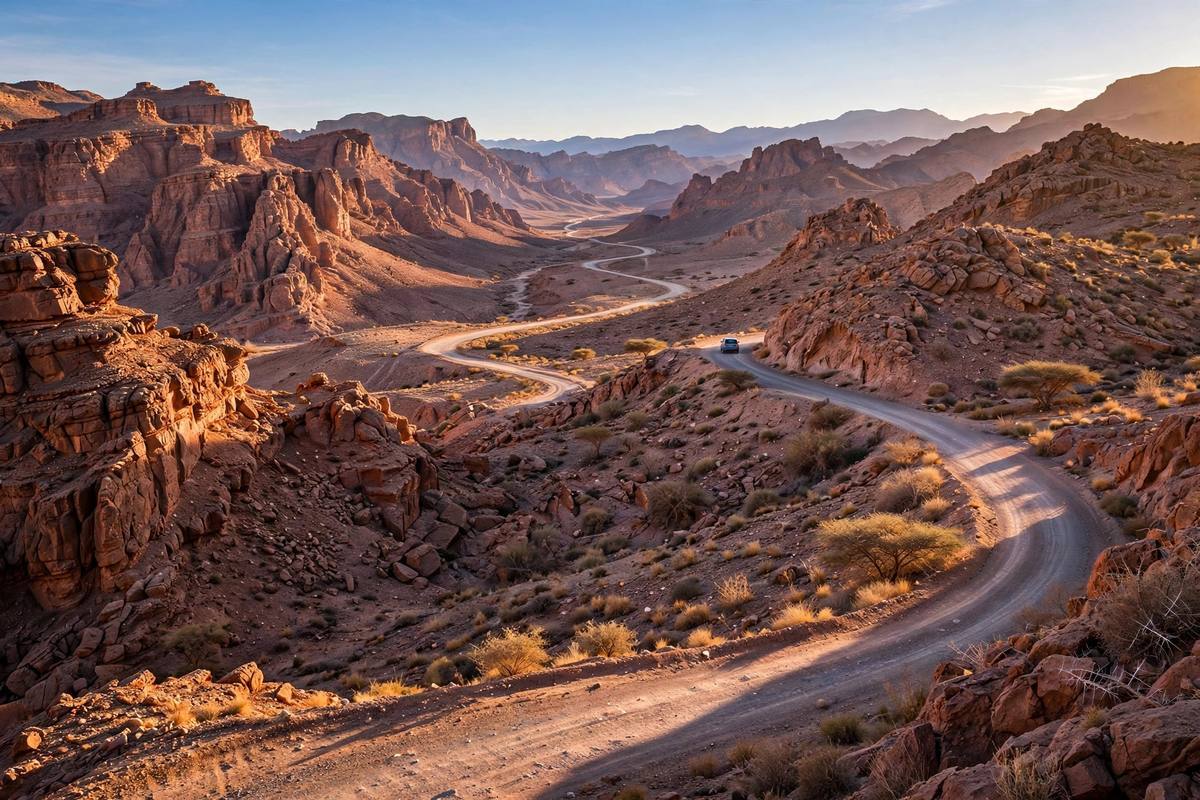
The drive west from Merzouga is one of Morocco's greatest road days. Stop at Rissani's market, walk the towering Todra Gorges (climbers scale the 300-metre walls), then cruise the Dades Valley — the "Road of a Thousand Kasbahs" — past mud-brick villages and rose fields.
Sleep in the Dades Valley, then continue to Ait Ben Haddou, the fortified ksar made famous by films and series. Arrive by late afternoon: the sunset light on the earthen walls is the reason to come.
Days 12–13: Marrakech
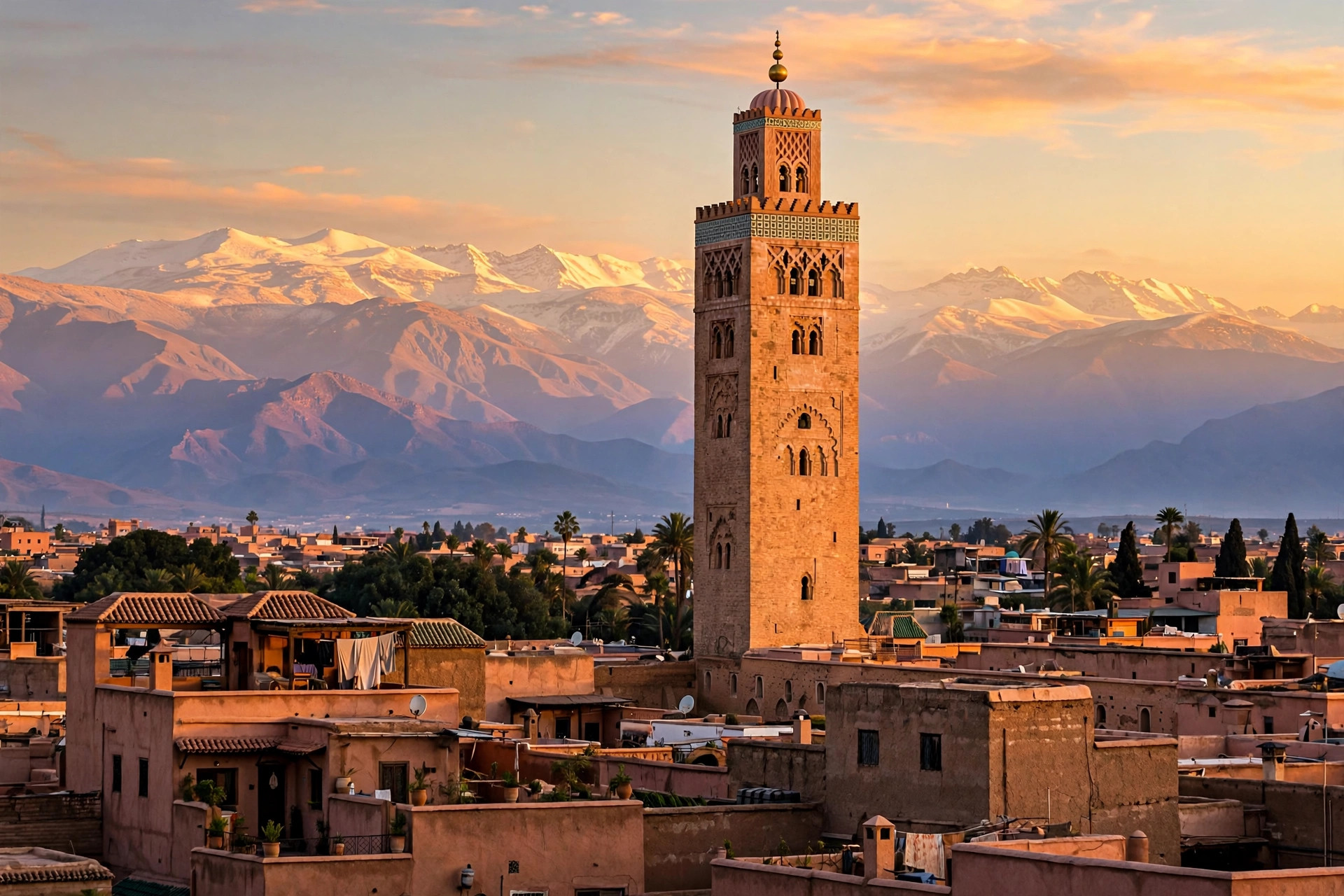
Cross the High Atlas over the Tizi n'Tichka pass (2,260 metres) — a winding, spectacular road — and descend into Marrakech. Two days gives you the medina and souks, Jemaa el-Fna square at dusk, the Jardin Majorelle, and the calm courtyards of the Bahia Palace, with evenings on a rooftop restaurant above the chaos.
Day 14: The Atlantic and home
For the finale, drive west to Essaouira (about three hours), the windy white-and-blue port city. Eat grilled fish at the harbour, walk the 18th-century ramparts, then take the A7 autoroute back to Casablanca for your flight — or linger one more night by the sea if your schedule allows.
Practical driving tips for Morocco
- Choose the right car. Book an SUV or a car with decent ground clearance — desert tracks and mountain passes punish low sedans. Expect €30–€55 per day from international agencies at the airport.
- Take full insurance. Zero-excess cover is worth it: medina streets are narrow and parking scrapes are common.
- Fuel up before the desert. Stations are frequent on main routes, but fill the tank at Erfoud or Rissani before Merzouga.
- Tolls are easy. The autoroutes (A1, A3, A5, A7) are modern and fast — keep dirhams or a bank card ready for the toll booths.
- Respect speed limits. Gendarmerie checkpoints are frequent: 120 km/h on autoroutes, 100 on national roads, 60 in towns.
Plan your Morocco trip
Turn this guide into a booked trip: compare stays, flights and car rental across Morocco below.
Some links on this page are affiliate links. If you book through them, we may earn a commission at no extra cost to you — it keeps these guides free.
Frequently asked questions
Is it safe to drive in Morocco?
Yes. The main roads between cities are in good condition and well signposted, and thousands of tourists self-drive every year. Drive defensively, expect the unexpected from other road users, and avoid driving at night outside cities.
Do I need an international driving permit for Morocco?
Visitors can legally drive on a valid home-country licence for up to one year, but an International Driving Permit is strongly recommended — rental desks and traffic police may ask for one, and it removes any ambiguity.
Should I rent a car or hire a driver in Morocco?
A rental car (€30–€55 per day) gives you complete freedom and is the best value for a 14-day loop. A private driver costs roughly €100–€150 per day but removes the stress of navigation and medina parking — a good option if you dislike driving.
Are there toll roads in Morocco?
Yes. Modern autoroutes connect the major cities — Casablanca, Rabat, Tangier, Marrakech and Agadir. You pay at booths with a bank card or dirhams; Casablanca to Marrakech costs about 120 MAD.
Can I drive from Marrakech to the Sahara in one day?
Technically yes — it is a 9 to 10-hour drive — but we do not recommend it. Split the journey with a night in the Dades Valley or at Ait Ben Haddou, as this itinerary does.