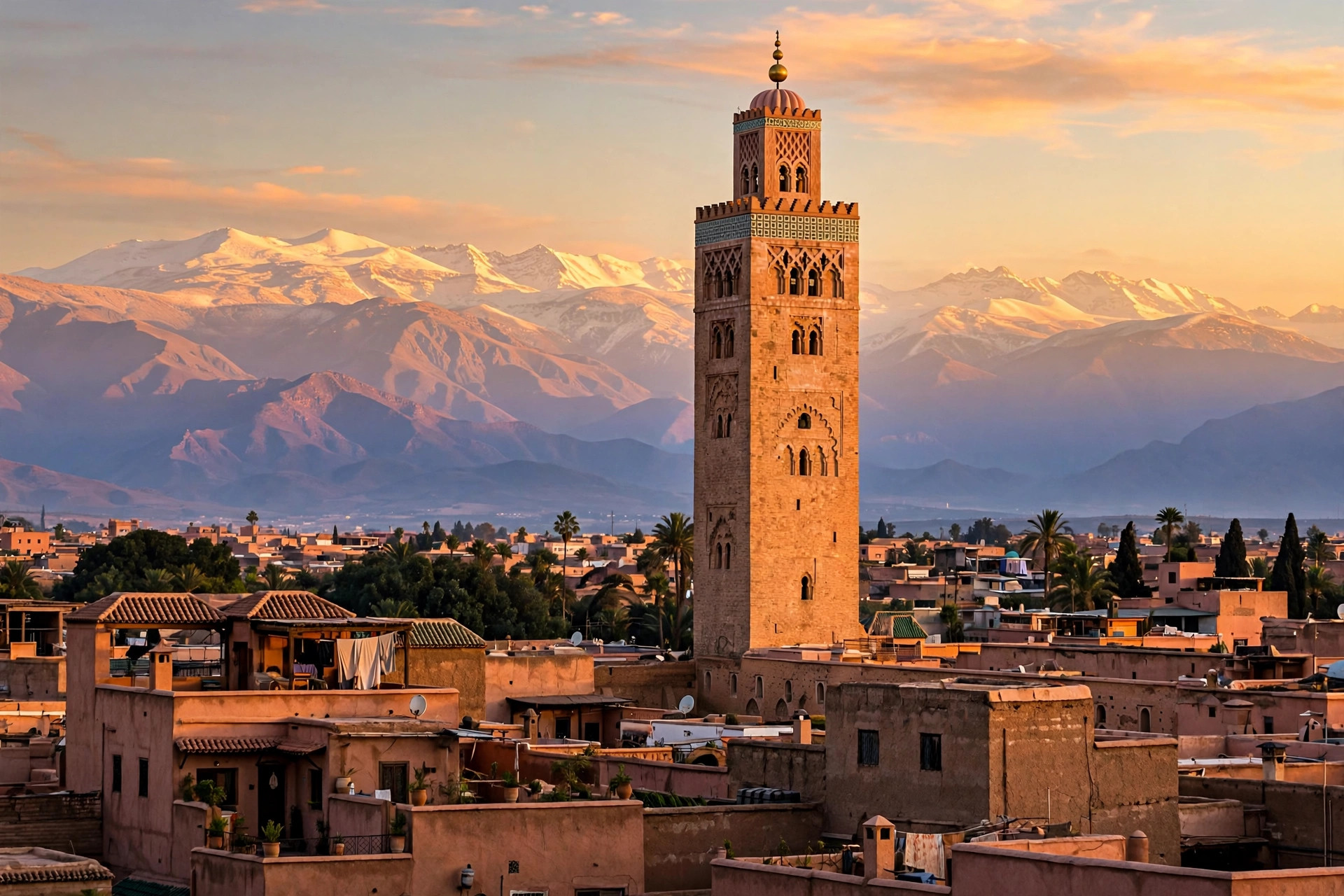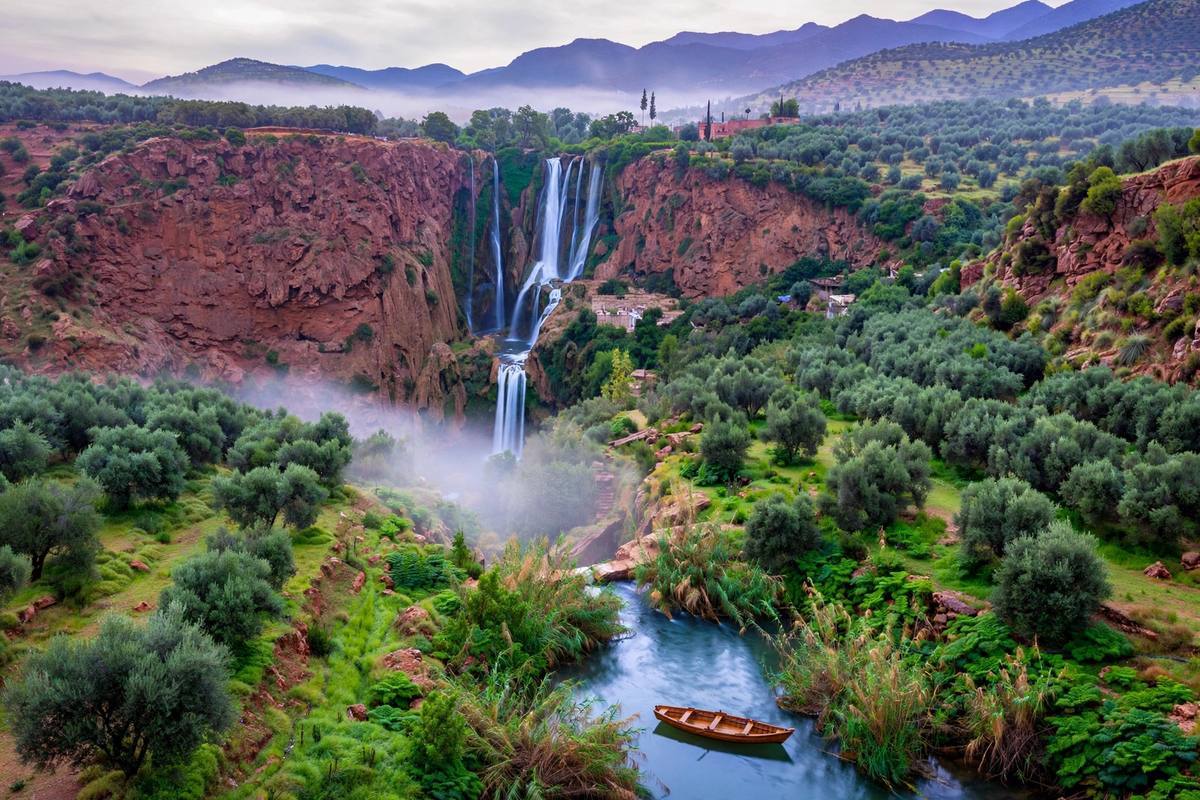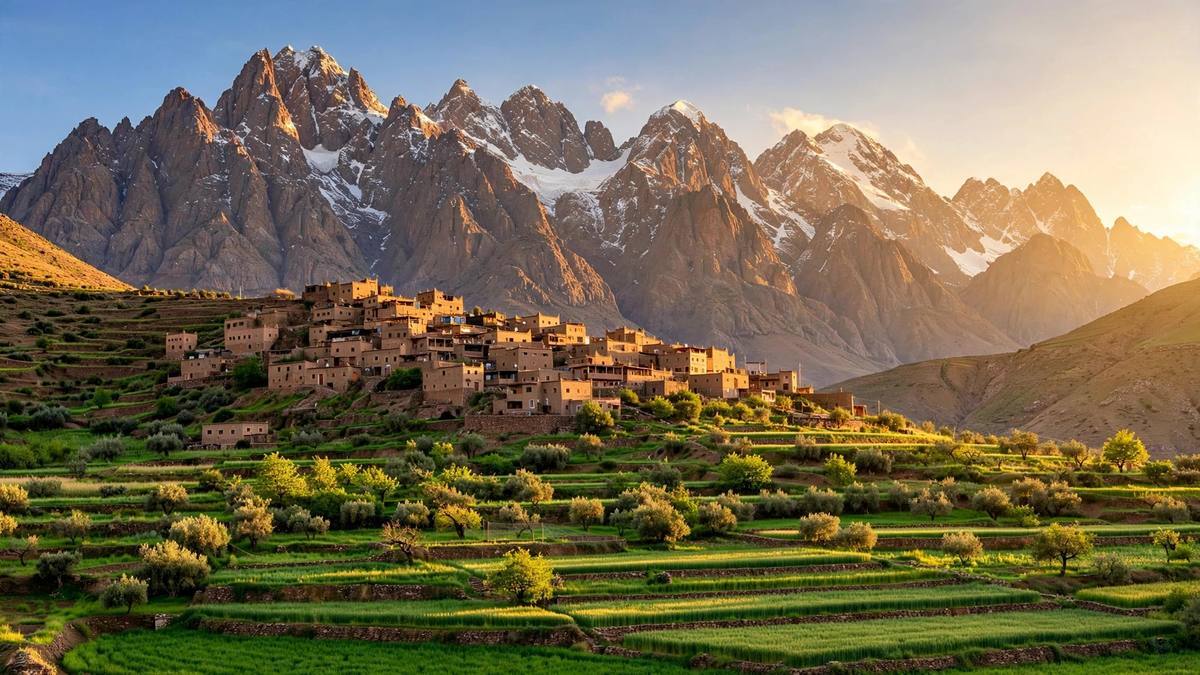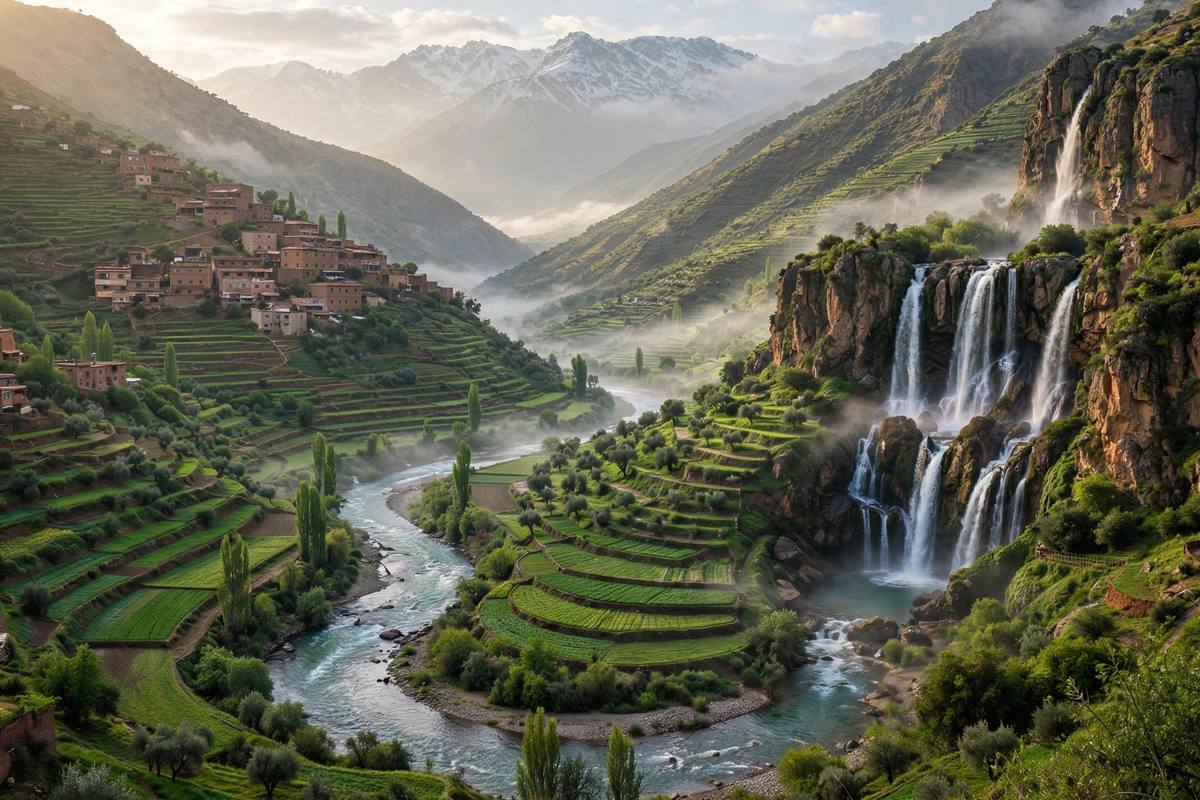
There is a reason almost every Marrakech itinerary includes a day in the Ourika Valley. Ninety minutes after leaving the noise and heat of the medina, you are standing in a green river canyon in the foothills of the High Atlas, where cold waterfalls drop from rust-coloured cliffs and Berber villages cling to terraced hillsides. It is the easiest mountain escape in Morocco — no trekking boots required — and the best answer to the question every Marrakech traveller eventually asks: what lies beyond the city walls?
Ourika Valley day trip: getting there from Marrakech
The valley begins about 65 km south of Marrakech — the Marrakech to Ourika km count works out at roughly 60 to 90 minutes on the road, depending on how fast you clear the city. There is no train, but every other option is easy. Organised Ourika Valley tours leave Marrakech daily and bundle transport, a local guide and often a riverside lunch, which suits travellers who want zero planning. Going independently works just as well: hire a grand taxi for the day near Jemaa el-Fna, split a petit taxi between four, or drive the R203 yourself if you have a rental car — it is a straight, well-signed road.
Leave Marrakech by 8:30 am. You will reach Setti Fatma before the big tour groups, hike in cooler morning air, and claim a riverfront table for lunch instead of queuing for one.
The Setti Fatma waterfalls: the hike that made the valley famous
Setti Fatma, the last village at the end of the road, is where the famous Ourika Valley hike begins. The river's seven cascades tumble down a steep gorge here, and the trail climbs past them one by one. The first two falls are an easy stroll across little bridges; beyond that the path steepens, with rocky sections and boulders where you will be glad of a guide's hand. Fit walkers can reach all seven falls and be back in two to three hours. Local guides gather at the trailhead and charge a modest fee — take one if you plan to go beyond the second fall, because the route above it is easy to lose.
One caution deserves respect: the Ourika is a mountain river, and after heavy rain it can rise fast. The devastating flood of 1995 is still part of valley memory. Check the forecast, never climb during a storm, and head downhill immediately if the sky darkens upstream.
Berber villages and the Monday souk
Between Marrakech and Setti Fatma, the road threads through traditional Amazigh (Berber) villages — mud-brick houses stacked above walnut orchards and terraced barley fields. The liveliest window into valley life is the Monday souk in Ourika village: farmers selling cherries and walnuts in season, herders trading livestock, and half the valley turning up to haggle. Even if your visit misses market day, stop at a village teahouse for mint tea and watch life move at mountain pace.
Argan oil cooperatives and riverside tagines
The road into the valley passes several women's argan oil cooperatives, where argan kernels are cracked by hand and cold-pressed into oil. Most cooperatives welcome visitors to watch the whole process — cracking, roasting, grinding, pressing — and buying directly from the makers is the best guarantee of authenticity, and it pays the women fairly. Skip the pushy roadside middlemen and go straight to a cooperative.
By midday, do what Moroccans do: take a low table set right over the river at one of the valley's famous riverside restaurants. Tagine slow-cooked over charcoal, fresh bread, grilled meats and mint tea, eaten with your feet nearly in the water — it is half the reason locals drive up here on weekends.
Ourika Valley in winter — and every season
The valley works all year, but it changes costume with the seasons. Ourika Valley in winter means crisp air, snow-dusted peaks above the gorge and far fewer visitors — bring a warm layer, because mornings are genuinely cold. Spring (March to May) is arguably the loveliest: terraces turn electric green and the falls run full. Summer is escape season, when Marrakech swelters and the valley's shade and icy river feel like air conditioning. Autumn brings the harvest — walnuts, apples and the tail end of cherry season.
Ourika Valley or Imlil: which should you choose?
Travellers with one spare day in Marrakech often weigh Ourika Valley or Imlil. The honest split: Ourika is the valley of waterfalls — lower, greener, easier walking, with better food stops along the river. Imlil, the trailhead town for Mount Toubkal, sits higher and feels properly alpine; it suits travellers who want a genuine mountain hike or the gateway to a multi-day trek. First time in the Atlas with limited time? Choose Ourika. Back for altitude? Choose Imlil.
Practical tips for your Ourika Valley day trip
- Cash in small denominations (dirhams) — guides, parking, tea and market stalls are all cash-only.
- Shoes with grip, not sandals — the rocks above the second waterfall are slippery even when dry.
- A light rain shell, even on sunny days — mountain weather changes fast.
- Sunscreen and swimwear in summer — the river pools below the falls are irresistible when it is hot.
- Arrive before 10 am — the trail is quietest in the morning and the light in the gorge is at its best.
Plan your Morocco trip
Turn this guide into a booked trip: compare stays, flights and car rental across Morocco below.
Some links on this page are affiliate links. If you book through them, we may earn a commission at no extra cost to you — it keeps these guides free.
Frequently asked questions
Is Ourika Valley worth it?
Absolutely. It is the easiest and most rewarding day trip from Marrakech: waterfalls you can hike in a morning, Berber villages, a traditional Monday souk and riverside tagines, all within 90 minutes of the city. If you have just one free day in Marrakech, spend it here.
What is there to do in Ourika Valley?
Hike the seven cascades at Setti Fatma, browse the Monday souk in Ourika village, visit a women's argan oil cooperative, eat tagine at a riverside restaurant, and wander the Berber villages along the road. Most visitors do it as a day trip, but staying overnight in a valley guesthouse is a lovely slow-travel option.
How far is Ourika Valley from Marrakech?
About 65 km — roughly 60 to 90 minutes by road. Organised day tours, grand taxis and rental cars all make the trip easy, and there is no train to the valley.
Is Ourika Valley safe for tourists?
Yes — it is one of Morocco's busiest and most established day-trip routes, and the villages are welcoming. Take the usual precautions: hire a local guide for the upper waterfalls, never climb during or after heavy rain, keep valuables discreet, and agree taxi fares before you set off.
Can I visit Ourika Valley without hiking?
Yes. The first two waterfalls at Setti Fatma are a gentle, mostly flat stroll, and everything else — the souk, the argan cooperatives, the riverside restaurants and the village views — needs no hiking at all. The full seven-cascade climb is entirely optional.