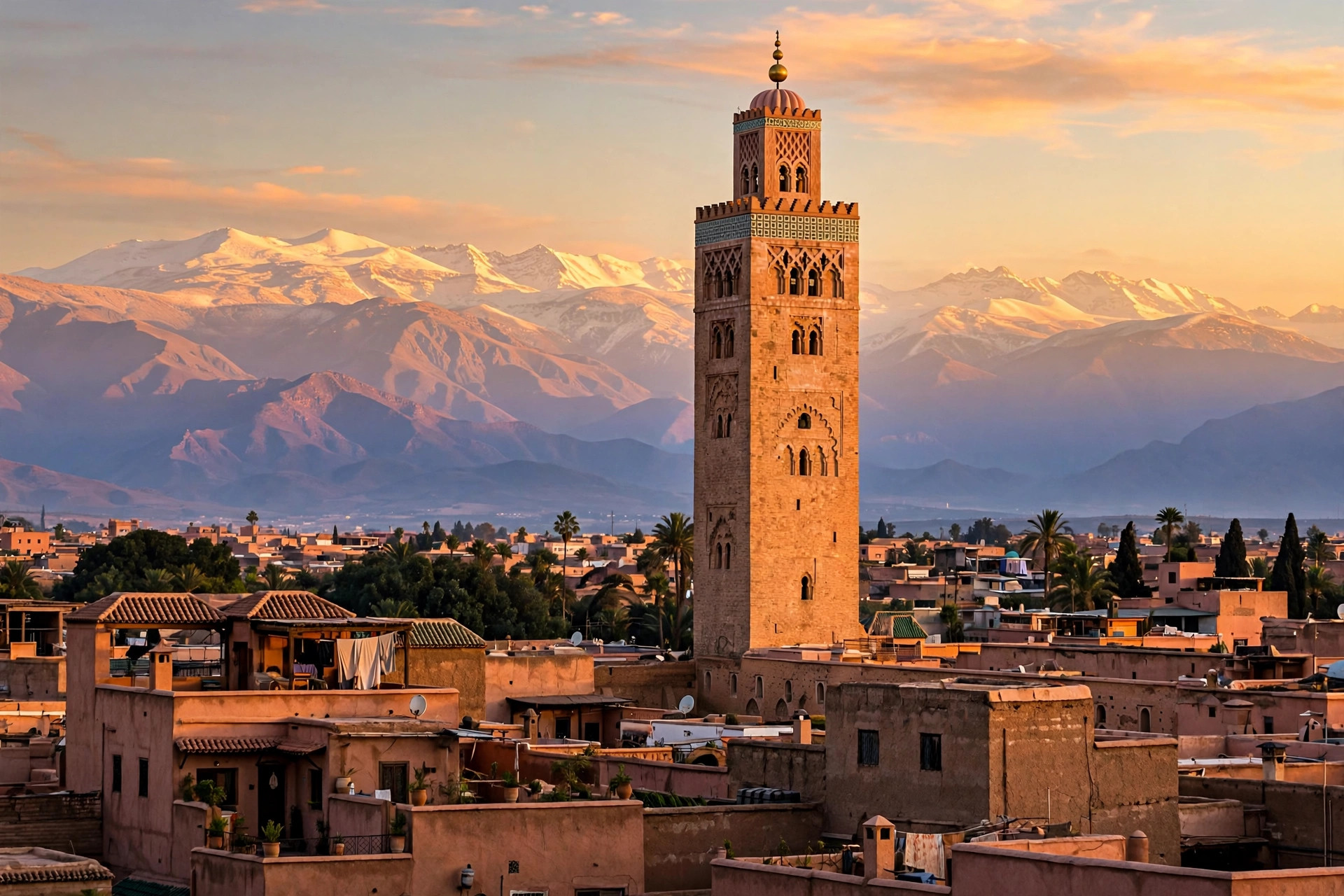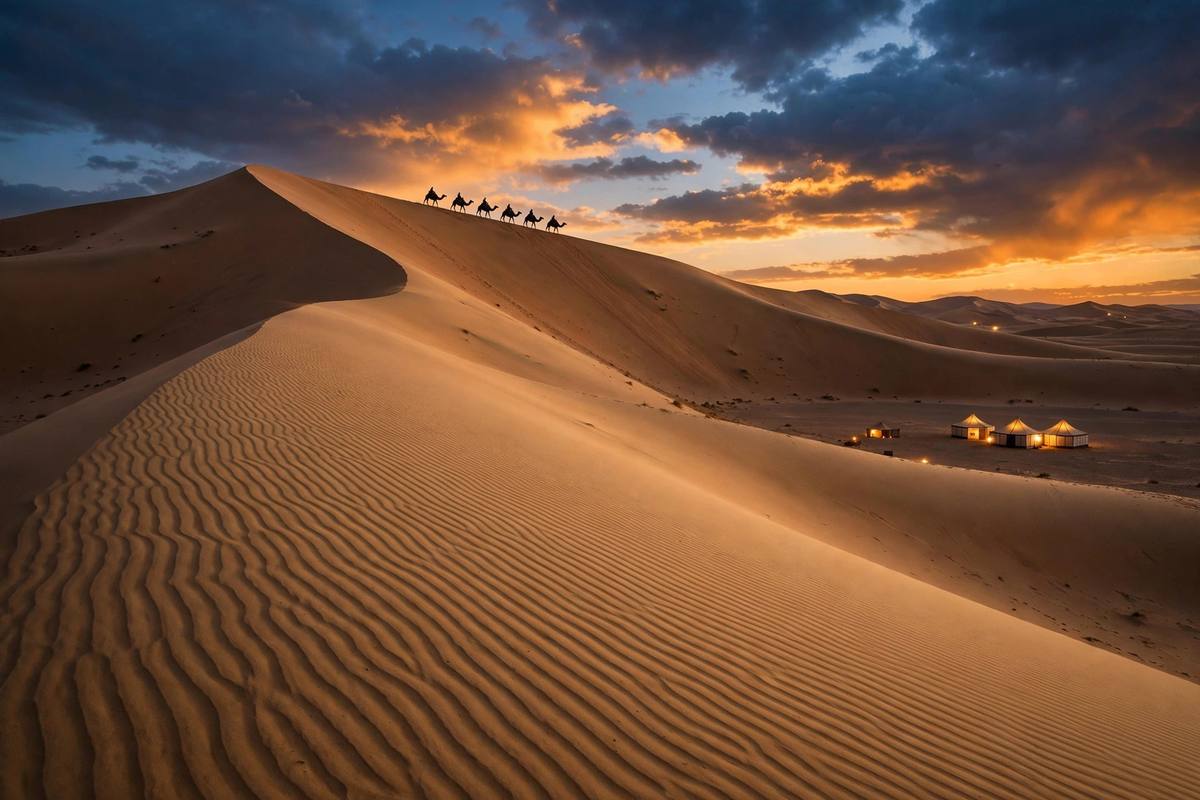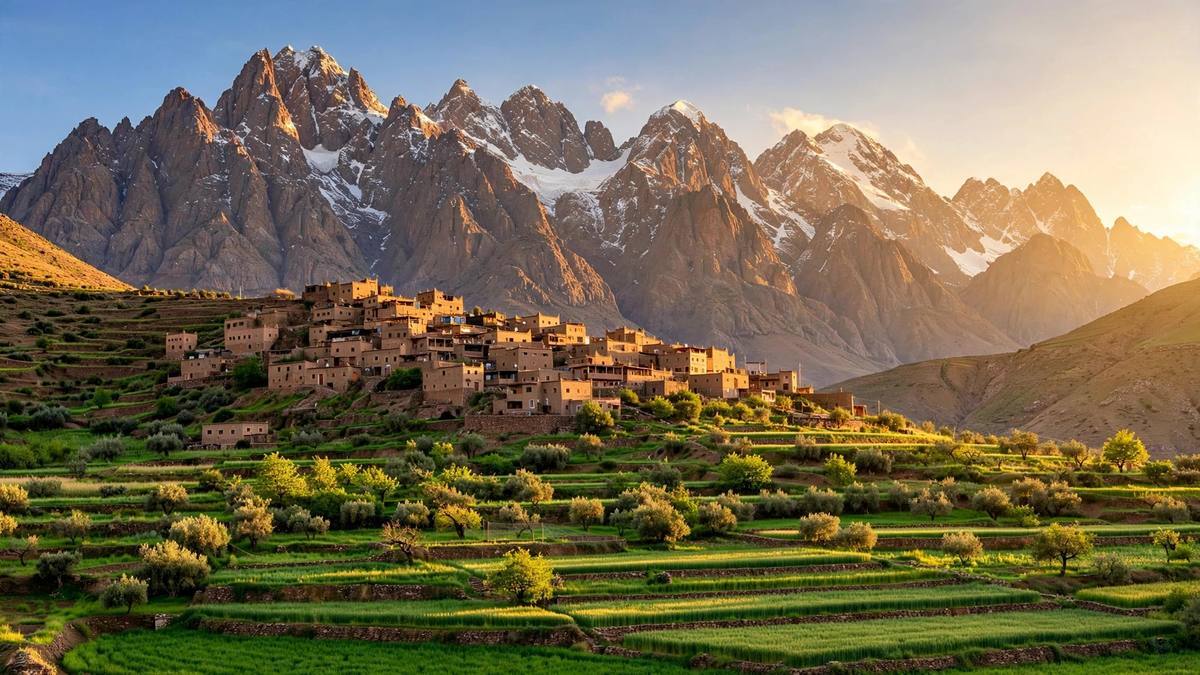
An hour's drive from the souks of Marrakech, the High Atlas rises to 4,167 metres at the summit of Jebel Toubkal — the highest trail-accessible peak in North Africa. Between the trailhead village of Imlil and the snow-capped summit lies one of the world's great long weekends of hiking: a two-day assault on Toubkal, valley walks through walnut orchards and cherry groves, and nights in Berber mountain gîtes where the tagine comes straight off the fire.
You don't need to be an alpinist. The standard Toubkal route is a well-marked trek on mule paths — long and steep, but requiring no climbing gear in summer. What it demands is fitness, an early alarm, and a plan for the altitude. Get that right and the sunrise from the summit — Sahara glowing on one horizon, the Atlantic on the other — is the single best moment in Moroccan travel.
The classic Toubkal trek: two days to the roof of North Africa
Day one starts in Marrakech. A grand taxi or private transfer reaches Imlil (1,740 m) in about 90 minutes. After mint tea, the path climbs past Aroumd — the valley's highest village — and up the Mizane valley to the Toubkal Refuge at 3,207 metres: five to six hours of walking with a 1,400-metre climb.
Day two is the summit push. Trekkers leave around 5 a.m. for the 960-metre ascent, reaching the 4,167-metre summit by 8 or 9 a.m., in time for the clearest views of the trip. Descend to the refuge for lunch, then back to Imlil by late afternoon — and sleep in Marrakech that night if you wish.
Toubkal's 4,167 metres hits hard if you arrive from sea level the day before. Walk slowly, drink more water than you think you need, and take headache or nausea as your signal to descend, not push on.
Slower options: three days, circuits and valley treks
Two days is the minimum, not the ideal. Adding a third day — refuge on day one, an acclimatisation walk to 3,500 metres on day two, summit on day three — makes a comfortable, successful ascent far more likely. Longer options include the Toubkal circuit over the Tizi n'Ouanoums pass, and the Aït Bouguemez "Happy Valley", often called Morocco's most beautiful trek: a five- or six-day loop through remote Berber villages east of the main range.
Not every Atlas walk needs a summit: the villages around Imlil — Aroumd, Tamatert, Tacheddirt — are webbed with day-hike paths through terraced fields, and mule support keeps multi-day treks light.
Berber villages: the other half of the experience
The High Atlas is home to the Imazighen — the Berber people — and the trek is as much cultural as physical. Villages are clusters of flat-roofed stone houses above terraces of walnut, apple and cherry trees. Imlil has grown into the trekking capital; the smaller hamlets above it feel a decade or two further back in time.
Stay in a village gîte at least once. For 200–400 dirhams a night you'll get a simple room, a filling dinner and a breakfast of msemen flatbreads and honey — plus mint tea with the family that runs the place. A night in Aroumd, looking straight across at the Toubkal massif, beats any Marrakech hotel terrace.
When to go: seasons in the High Atlas
The trekking season runs roughly May to October, with June and September the sweet spots: warm valley weather, clear summit mornings, and refuges fully open. July and August are fine on the mountain — altitude keeps it pleasant — but the valleys scorch and the refuges fill up.
Winter is a different sport. From November to April, Toubkal is a genuine mountaineering objective: snowfields, ice on the summit gully, crampons and an ice axe required. Winter ascents are superb, but they are guided-only territory unless you have real winter skills.
The Toubkal Refuge (and its CAF hut neighbour) fill up on summer weekends and around public holidays. If your dates are fixed, book your bunk — and your guide — a week or two ahead. Spring can still hold snow above 3,500 metres into May.
Costs: what the trek actually costs
- Guide: 400–600 dirhams per day for a small group — effectively required for Toubkal since 2024, so budget it in.
- Refuge: around 200–300 dirhams at the Toubkal Refuge, dinner and breakfast included.
- Gîtes: 200–400 dirhams half-board per person in Imlil and Aroumd.
- Transfers: grand taxi Marrakech–Imlil around 350–450 dirhams for the whole car; private transfers 500–800 dirhams.
- Mule: around 250–350 dirhams per day on multi-day treks.
All in, the classic two-day trek costs roughly 1,500–2,500 dirhams per person booked locally in Imlil — far less than the Marrakech hotel packages that do the same walk.
Getting to the trailhead
Almost every Atlas trek starts in Marrakech. Imlil is 65 kilometres south — 90 minutes by road. Grand taxis leave from near Bab Er-Robb when full; a private taxi takes under two hours door to door. Most trekkers arrange guide and gear in Imlil itself, where competition keeps prices honest.
The valley floor can be 30°C while the summit is near freezing at dawn — even in July. Bring a warm mid-layer, a windproof shell, sun protection, 2+ litres of water and broken-in boots. Gear rental is available in Imlil if you're travelling light.
Plan your Morocco trip
Turn this guide into a booked trip: compare stays, flights and car rental across Morocco below.
Some links on this page are affiliate links. If you book through them, we may earn a commission at no extra cost to you — it keeps these guides free.
Frequently asked questions
How difficult is the Mount Toubkal trek?
It's a tough but non-technical hike. The classic two-day route covers roughly 38 kilometres with about 2,400 metres of total ascent, and no climbing skills are needed in summer. Good fitness is essential — but altitude is the real challenge: at 4,167 metres you'll feel every step if you arrive straight from sea level.
Do I need a guide to climb Mount Toubkal?
In practice, yes. Since 2024, trekkers on the Toubkal massif have been required to hire a licensed local mountain guide. Expect to pay 400–600 dirhams per day for a small group, and arrange it in Imlil — where most guides are based — or through a Marrakech agency.
What is the best month to hike in the Atlas Mountains?
June and September are the sweet spots: stable weather, warm valleys, clear summit mornings and fewer crowds. May and October are also good; July and August are hot in the valleys and busy on the mountain. Winter (November to April) turns Toubkal into a mountaineering objective requiring crampons and an ice axe.
Can beginners trek in the Atlas Mountains?
Yes. The valley walks around Imlil and villages like Aroumd and Tacheddirt are gentle day hikes on easy mule paths. Toubkal itself demands solid fitness but no technical experience, and mule support means multi-day treks only need a light daypack.
How much does it cost to climb Toubkal?
Budget roughly 1,500–2,500 dirhams per person for the classic two-day trek booked locally in Imlil: guide, refuge nights, meals and transfers. Packaged tours sold from Marrakech hotels cover the same route for significantly more.