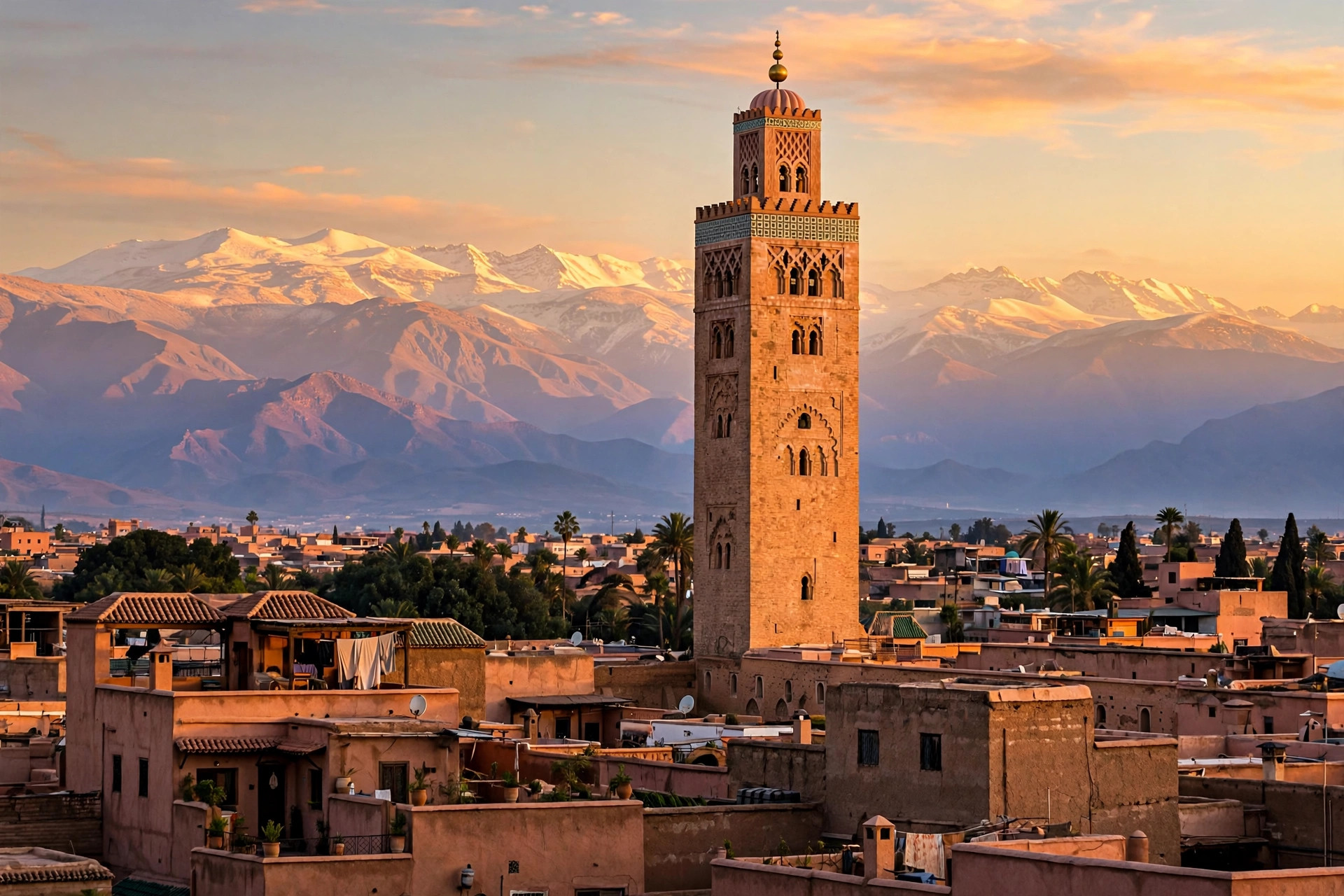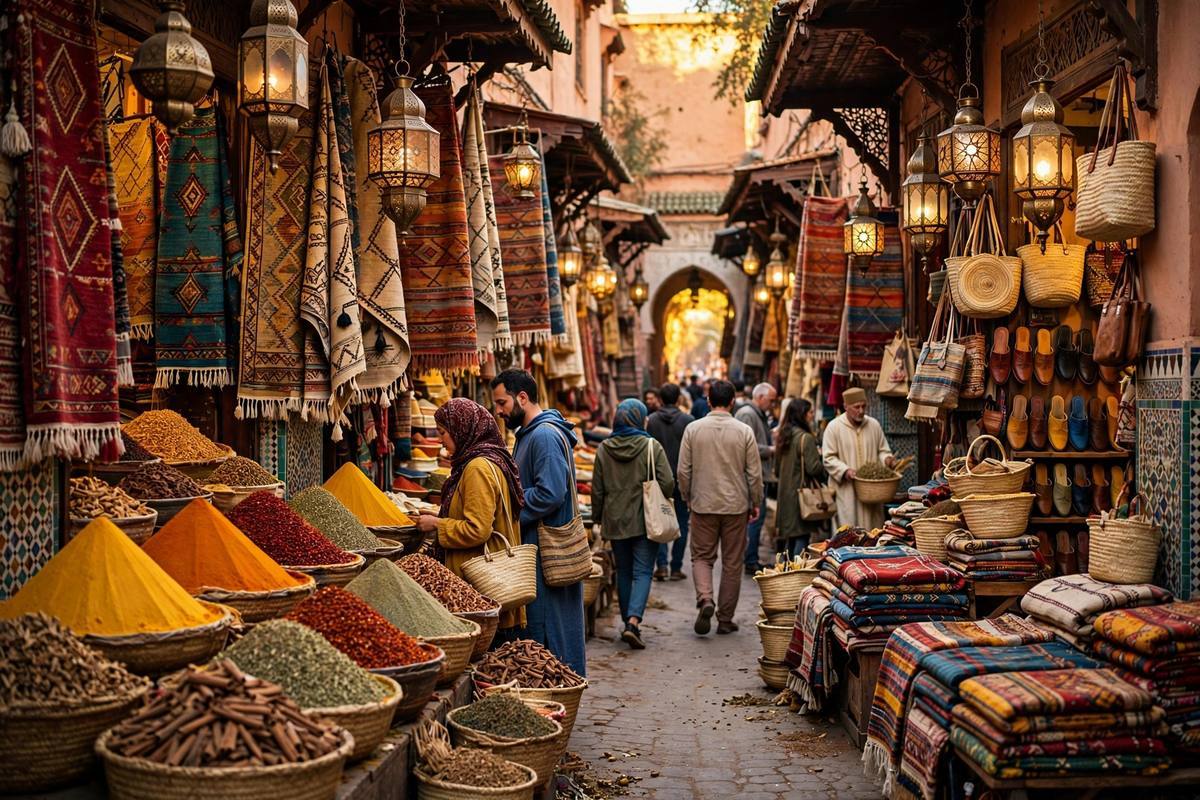
Step into a Moroccan souk and the modern world falls away. Alleyways barely wider than a doorway wind past stalls stacked with saffron, brass lanterns glow in every shade of amber, and the air carries mint, leather and woodsmoke. The souks — Morocco's traditional markets — are the beating heart of every medina, and bargaining is the local language.
For first-time visitors the souks can overwhelm. Nothing has a price tag, shopkeepers are masters of persuasion, and telling a handmade treasure from an imported imitation is genuinely hard. This guide cuts through the noise: what is worth buying, what to pay, how to haggle without stress, and which souks deserve your time.
What to buy in Morocco's souks
Every souk sells souvenirs, but a few Moroccan crafts are world-class — handmade the same way for centuries:
- Carpets and rugs. The crown jewel. Handwoven Beni Ourain rugs (cream wool, black geometric lines) and bold Boujad or Azilal pieces come from the Atlas. Bargain hard: a medium rug runs 800–2,500 MAD by size and quality.
- Leather goods. Bags, babouche slippers and jackets from the Fez tanneries. Real leather smells rich and feels soft; plastic imitations smell of chemicals and crack at the folds.
- Ceramics. Blue-and-white pottery from Fez, turquoise-and-yellow from Safi. Hand-painted pieces show tiny irregularities; perfectly uniform patterns usually mean a factory print.
- Brass and copper lanterns. Pierced lanterns throw magical light but are heavy. Small candle holders are the practical souvenir; chandeliers ship home by cargo.
- Textiles. Handwoven scarves, djellabas and kaftans. Feel the weave: hand-loomed cloth has texture, machine cloth feels flat.
- Argan oil. Buy cosmetic or culinary argan oil only from cooperatives or reputable shops. Real argan oil is never neon-yellow and never costs 30 MAD a bottle.
- Spices and saffron. Taliouine saffron, ras el hanout blends, preserved lemons. Buy from spice pyramids you can smell — and keep quantities small for customs.
- Silver jewelry. Berber silver, often set with amber or coral. Look for the 925 stamp and prefer established jewelers over roaming sellers.
Handmade craft has small flaws: uneven weaving, wobbling brushstrokes, hammer marks. Machine-made copies are perfect — and worth far less. If a "handmade" carpet looks factory-perfect and costs 200 MAD, trust your eyes, not the story.
How bargaining works in Morocco
Haggling in the souks is expected, social and — once you relax — fun. The shopkeeper names a price often three or four times the real one. Your job is not to accept it; his is not to be offended when you don't.
Start near one-third of the asking price and meet in the middle. Keep smiling, keep chatting, take your time. Accepting mint tea obliges you to nothing — but sitting down for tea means the real negotiation is beginning.
The most powerful move is walking away. Thank the seller warmly and leave; half the time you'll be called back with a better offer before the alley ends. If not, the price was probably fair — or the next stall sells it cheaper.
Never offer a price you wouldn't happily pay — a serious offer is a commitment. Never bargain as a game with no intention to buy. And never compare prices loudly between stalls; the souk is a small community, and sellers talk.
The best souks in Morocco
Not all souks are equal. Plan your shopping around these four:
- Marrakech. The biggest and most famous — a labyrinth north of Jemaa el-Fnaa organized by craft. Overwhelming, essential, the best single place to buy almost anything.
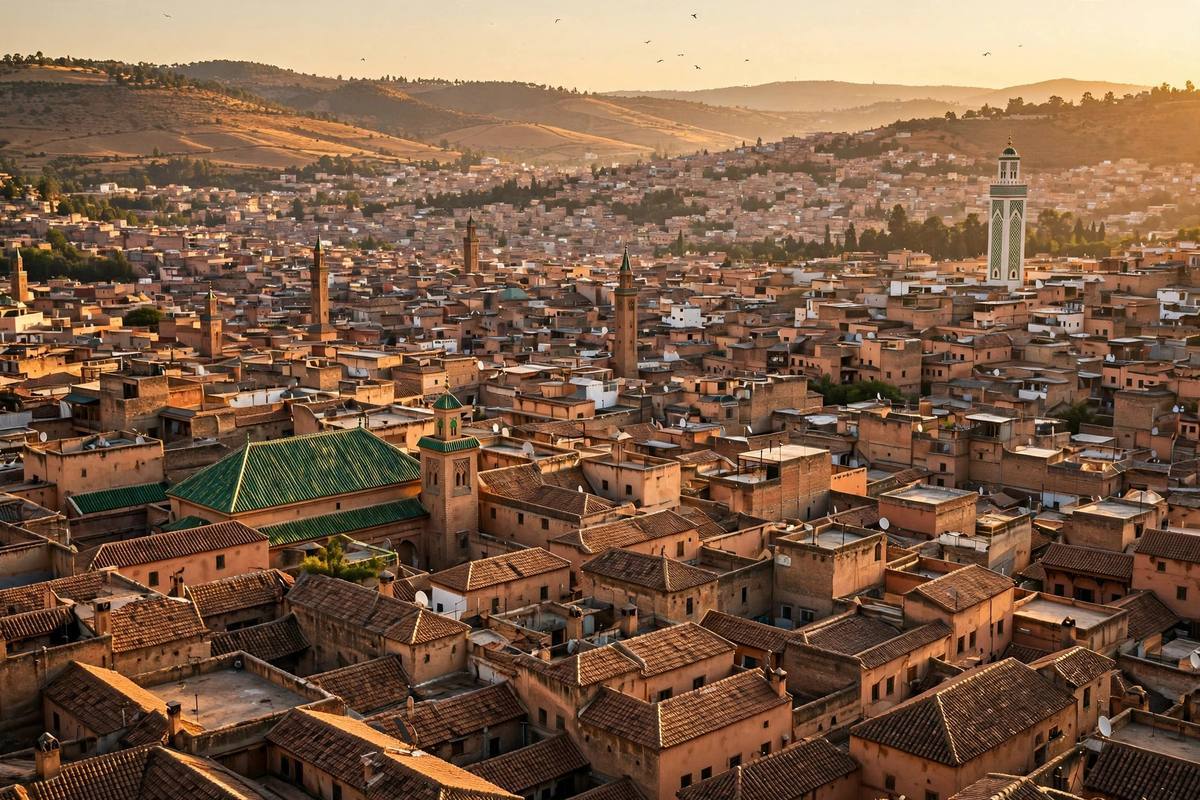
- Fez. The oldest, inside the world's largest car-free medina. Come for leather from the Chouara tanneries and blue Fez pottery made steps from where it's sold.
- Essaouira. Small, relaxed, easy to navigate — ideal if Marrakech felt like too much. Good for thuya wood boxes and art.
- Chefchaouen. Tiny and charming, with woven blankets and light wool djellabas at gentler prices and softer selling.
Souk etiquette and the traps to avoid
Don't photograph people or stalls without asking — a smile and gesture go far, and some sellers expect a small tip for posed photos. Dress modestly and keep valuables tucked away; crowds are part of the charm and the risk.
Beware the "helpful stranger" guiding you to the "best" shop — his commission is folded into your price. Decline unasked-for guides and be skeptical of anyone steering you to their cousin's carpet shop. For big purchases, government-run Ensemble Artisanal shops sell at fixed, fair prices — a useful baseline even if you bargain elsewhere after.
Practical tips for souk shopping
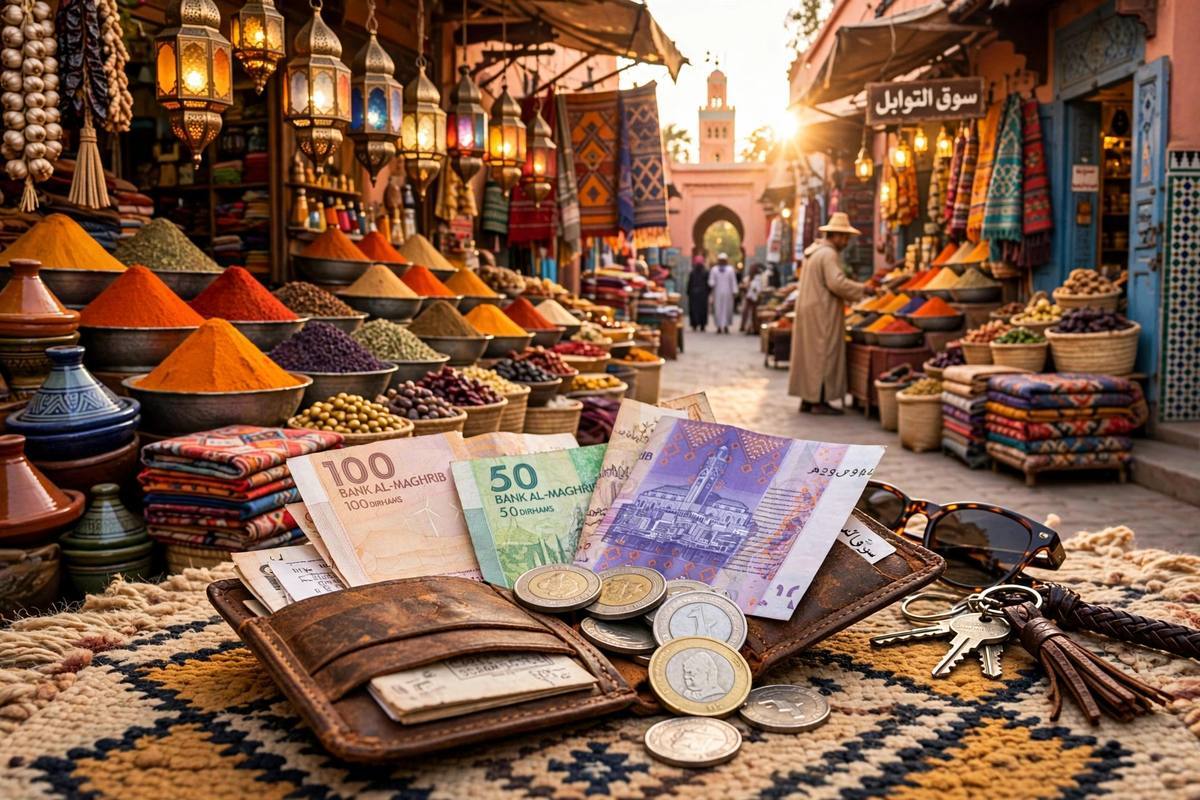
- Bring cash in dirhams. Most stalls are cash-only; ATMs sit at medina entrances, so withdraw before diving in.
- Go in the morning. Stalls open around 9–10am, the light is best for judging colors, and sellers believe the first sale brings luck — morning buyers often get the best prices.
- Expect Friday pauses. Many stalls close or quiet down around midday Friday for prayer; plan big shopping for other days.
- Leave space in your bag. Ceramics and lanterns are bulky. Fall for a rug? Most carpet shops arrange international shipping — get it in writing with the shop's full address.
- Learn ten words of Darija. "Shhal?" (how much?), "ghali bzzaf" (too expensive) and a laughing "la, shukran" (no, thanks) earn grins and better prices than any phrasebook French.
Plan your Morocco trip
Turn this guide into a booked trip: compare stays, flights and car rental across Morocco below.
Some links on this page are affiliate links. If you book through them, we may earn a commission at no extra cost to you — it keeps these guides free.
Frequently asked questions
Do I have to bargain in Moroccan souks?
Yes — in traditional souks bargaining is the norm, not an insult. The asking price is a starting point, usually two to four times the expected sale price. The only exceptions are fixed-price shops like the government-run Ensemble Artisanal and modern malls, where the tag is the price.
What is a fair price when haggling in Morocco?
A common rule: offer about one-third of the asking price and expect to settle somewhere near half. For a 600 MAD asking price, paying 200–300 MAD after negotiation is typical. Walk away if the seller will not move — being called back with a lower price is part of the ritual.
What should I buy in Morocco that is actually authentic?
Handwoven Beni Ourain and Azilal rugs, Fez leather goods, hand-painted Fez and Safi ceramics, Taliouine saffron, cooperative-made argan oil, and Berber silver jewelry. Check for handmade irregularities — perfect, cheap “craft” is almost always imported.
Are Moroccan souks open on Fridays?
Mostly yes, but many stalls close or slow down around midday for Friday prayer. Mornings and late afternoons are normal. If Friday is your only shopping day, go early or stick to the bigger tourist souks of Marrakech, which stay lively.
Can you pay with a credit card in the souks?
Rarely. The souks run on cash — Moroccan dirhams. Bring enough from an ATM at the medina entrance, since few stalls accept cards and paying in euros or dollars gets you a bad exchange rate.