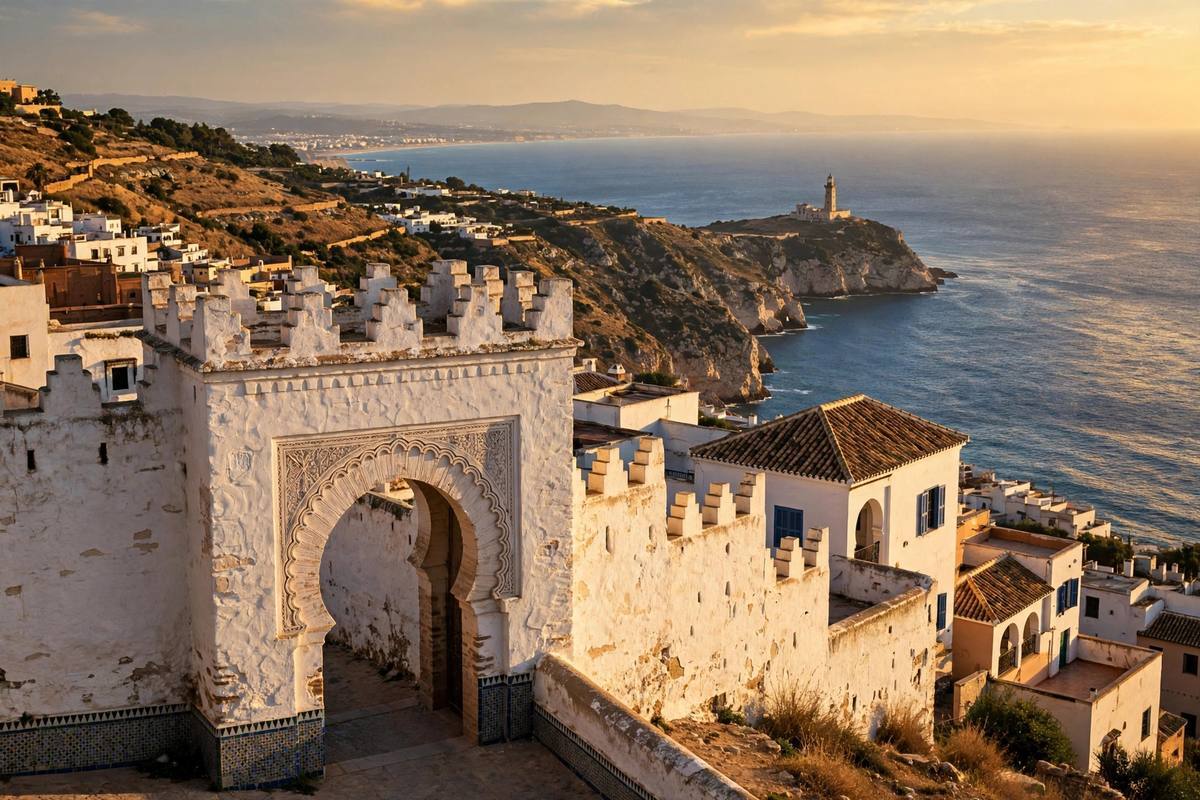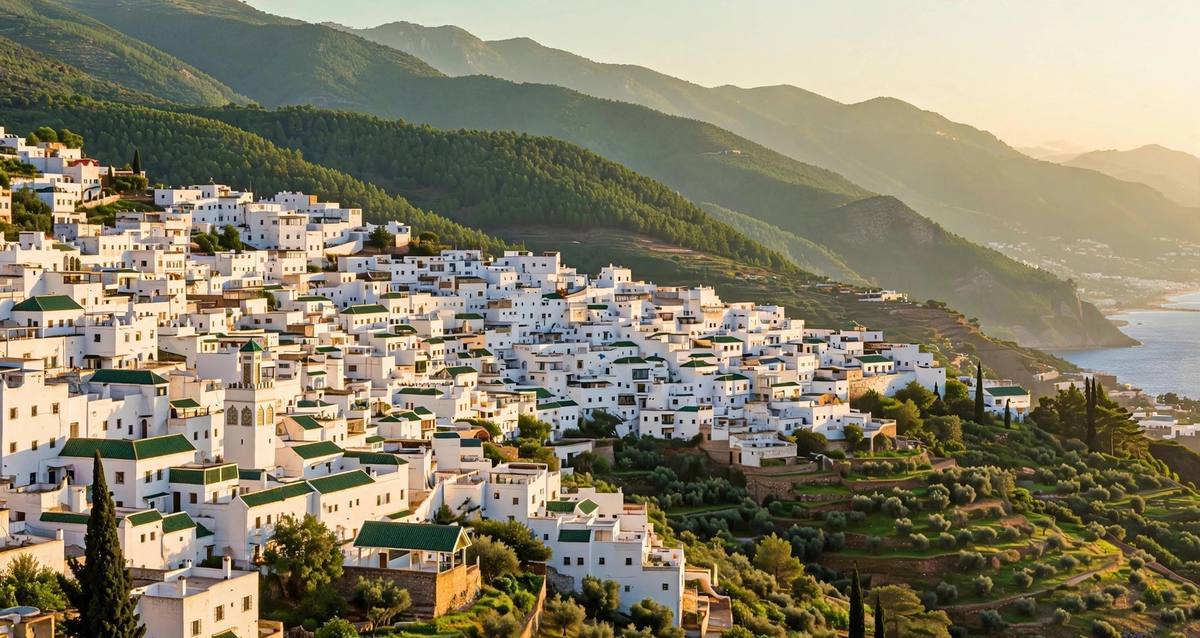
Tetouan, Morocco, is the northern city most travellers drive straight past — and exactly the one they should stop for. Locals call it the White Dove: a whitewashed Andalusian city pressed against the Rif Mountains, about 60 kilometres south of Tangier and a short hop from the Mediterranean. It has one of the most complete and least crowded medinas in the country — a UNESCO World Heritage site — a grand Hispano-Moorish boulevard, and a calm, lived-in feel that Tangier lost decades ago. If you are stitching together a northern Morocco route, give Tetouan the two days it deserves.
What to do in Tetouan: medina, boulevards and viewpoints
Start in the old medina, inscribed by UNESCO in 1997. It is smaller and more intact than the medinas of Fes or Marrakech, and far less pressured by touts. The street plan still follows the Andalusian refugees who refounded the city in the late 15th century, and you can feel it: white cubic houses, green tiled roofs, tiled fountains, and craft quarters where artisans still make the zellige, embroidery and painted wood the city is famous for. Tetouan has long been Morocco's fine-arts capital — its National School of Fine Arts, founded in 1945, still trains the country's painters and designers.
Leave the medina through one of the old gates and you step into the Spanish colonial-era new town: the wide, palm-lined Avenue Hassan II and the grand Place Hassan II, flanked by the Royal Palace and the Hassan II Mosque. It is one of the most elegant squares in Morocco at dusk. The old Mellah (Jewish quarter) just north of the palace is worth a wander for its high balconies and quiet lanes. For the postcard view, climb to the Kasbah hill or one of the rooftop terraces above the medina: the whole White Dove spreads below you, glittering against the dark line of the Rif.
Hire a medina guide at the tourist office near Place Hassan II rather than accepting whoever approaches you in the street — official guides cost little, speak good English and French, and will show you the craft quarters and rooftops you would never find alone.
Day trips from Tetouan
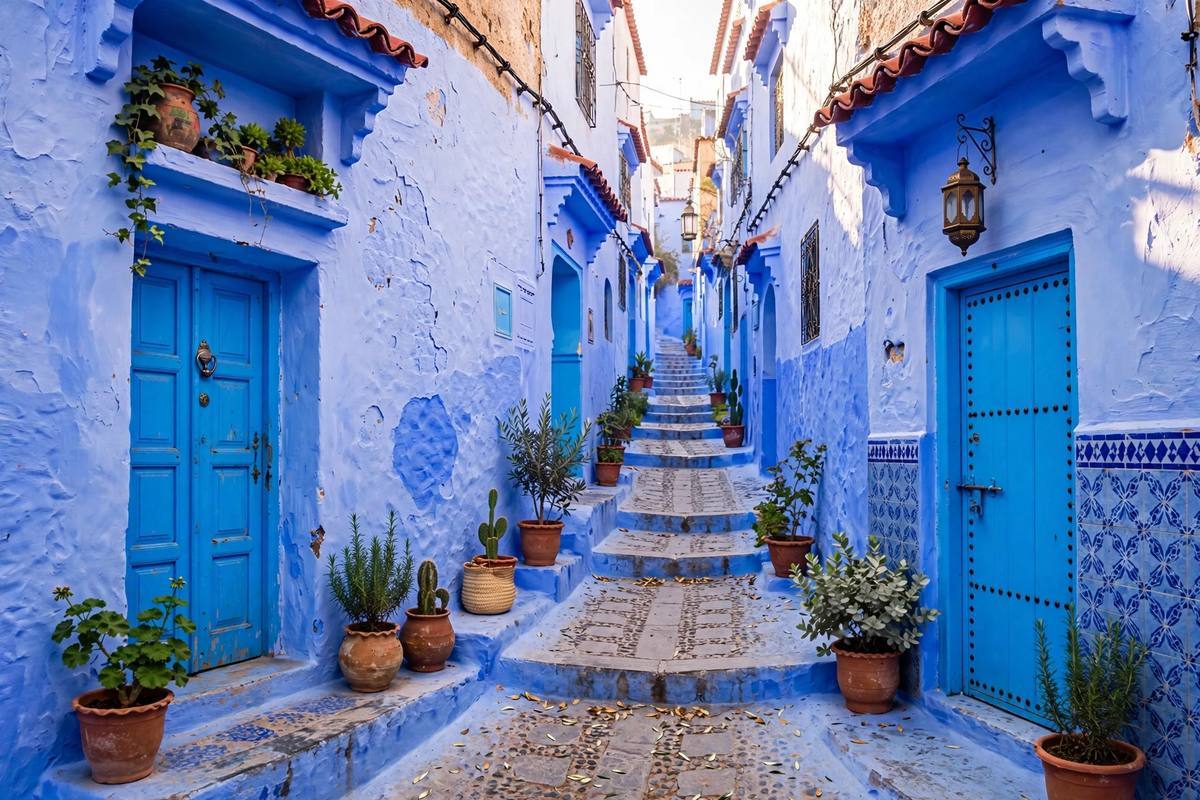
Tetouan sits at a genuinely useful crossroads. Chefchaouen, Morocco's famous blue city, is about an hour south by grand taxi or bus — close enough for a full-day trip, though it deserves its own overnight. The Martil and Cabo Negro beaches on the Mediterranean are just 10–15 minutes east: wide sandy strips that get busy with Moroccan families in summer. History buffs can visit the Roman ruins of Tamuda just outside town, and the wild coast road south toward Oued Laou makes a gorgeous half-day drive.
Where to stay in Tetouan
You have two good options. Inside the medina, restored riads give you the full White Dove experience: courtyard patios, rooftop breakfasts and green tiles overhead. Expect to pay roughly 400–800 MAD a night for a comfortable riad, less for a simple guesthouse. On and around Avenue Hassan II, modern mid-range hotels offer bigger rooms and easier parking, from about 350 MAD. Tetouan stays noticeably cheaper than Tangier or Marrakech for the same comfort level — another quiet argument for coming here.
How to get to Tetouan
Tetouan has no airport of its own, but getting there is simple. From Tangier — the usual arrival point — it is 40 to 50 minutes by road: shared grand taxis leave constantly from Tangier's taxi ranks for roughly 40–60 MAD per seat, and CTM and local buses run the same route for less. From Chefchaouen, buses and grand taxis take about an hour. From Fes or Casablanca, CTM coaches connect Tetouan directly, or ride the Al Boraq high-speed train to Tangier and continue by road. If you fly into Tangier Ibn Battouta Airport, a private transfer to Tetouan takes under an hour.
When to visit and how long to stay
Two full days is the sweet spot: one for the medina, the boulevards and the viewpoints, one for a day trip to Chefchaouen or the Mediterranean beaches. Spring (April–May) and autumn (September–October) are ideal — warm, clear days, the Rif green, and the medina at its photogenic best. Summers are hot but the sea breeze from the Mediterranean side helps, and winters are mild and rainy like the rest of northern Morocco.
Costs in Tetouan
Tetouan is one of the best-value cities in northern Morocco. A comfortable riad runs 400–800 MAD a night; a simple but clean hotel can be found for 300–400 MAD. Street food and local restaurants are a bargain: a filling lunch of tagine or grilled fish runs 40–70 MAD, and even a sit-down dinner with mint tea rarely passes 120 MAD per person. Add transport and entry fees, and two days in Tetouan can comfortably come in under €100 per person excluding accommodation.
Plan your Morocco trip
Turn this guide into a booked trip: compare stays, flights and car rental across Morocco below.
Some links on this page are affiliate links. If you book through them, we may earn a commission at no extra cost to you — it keeps these guides free.
Frequently asked questions
Where is Tetouan in Morocco?
Tetouan sits in northern Morocco, about 60 kilometres south of Tangier at the foot of the Rif Mountains, roughly 40 minutes by road from Tangier and a short drive from the Mediterranean beaches of Martil and Cabo Negro.
Is Tetouan worth visiting?
Yes. Tetouan has a superb UNESCO-listed medina without the crowds of Fes or Marrakech, an elegant Spanish-era boulevard, and it is the handiest base between Tangier and Chefchaouen. It is especially worth it on a northern Morocco itinerary.
Is Tetouan safe for tourists?
Yes, Tetouan is generally considered safe for travellers, with a calm atmosphere and welcoming locals. Use the same common sense as anywhere in Morocco: watch your belongings in busy markets, avoid poorly lit lanes late at night, and agree taxi fares before getting in.
How do I get from Tangier to Tetouan?
The 60-kilometre road takes 40 to 50 minutes. Shared grand taxis leave Tangier constantly and cost around 40–60 MAD per seat; CTM and local buses are cheaper and take about an hour. A private transfer is the easiest door-to-door option, especially with luggage.
How many days do you need in Tetouan?
Two full days is ideal: one day for the UNESCO medina, the Hispano-Moorish boulevards and the viewpoints, and a second day for an excursion to Chefchaouen or the Mediterranean beaches of Martil and Cabo Negro.