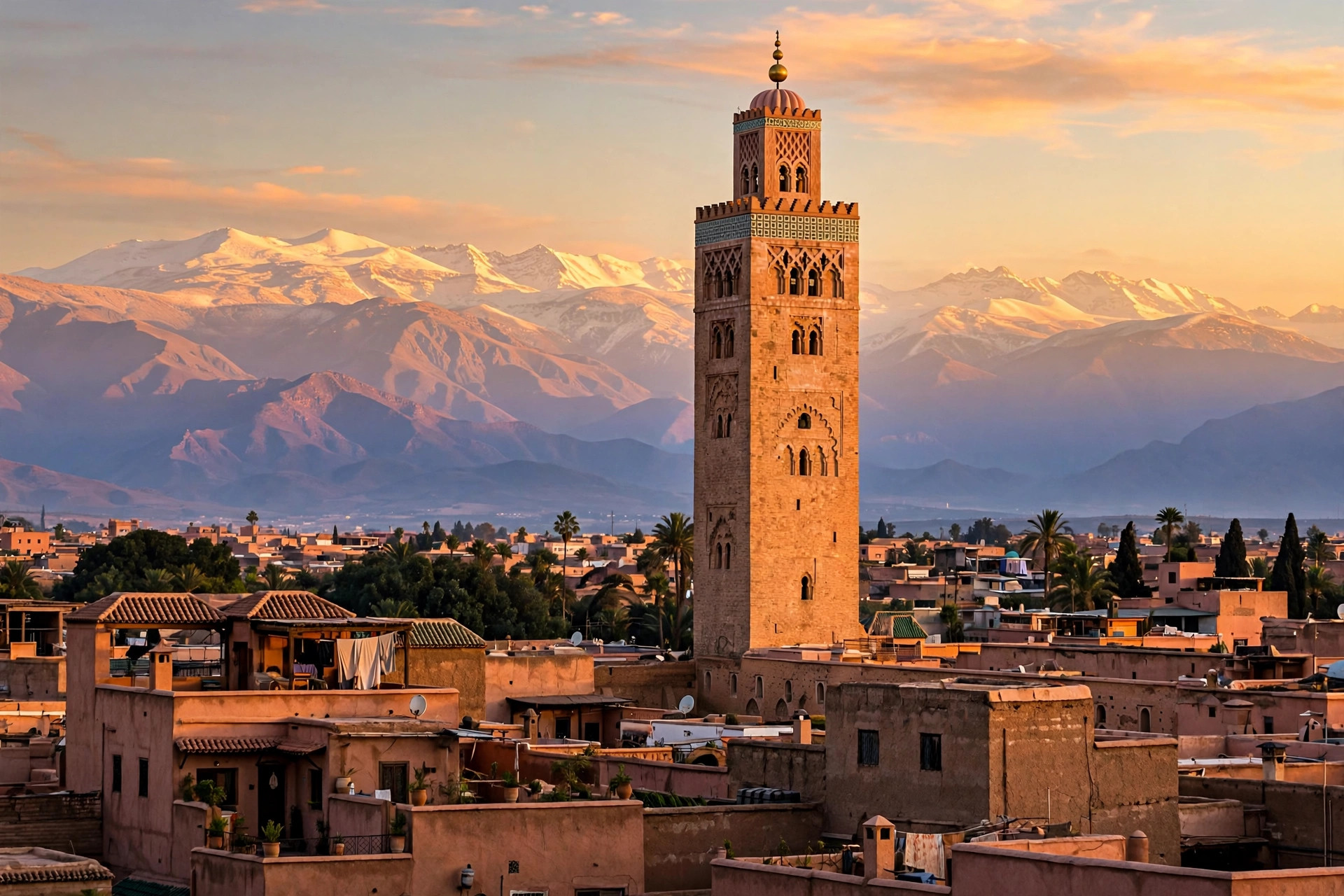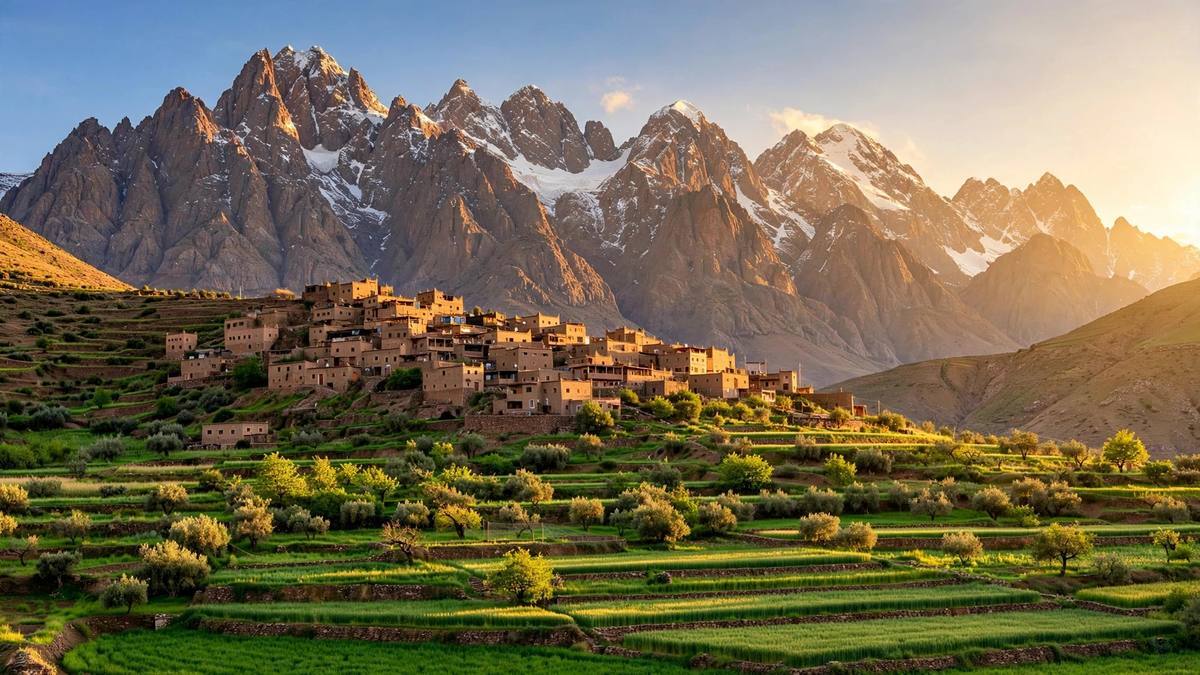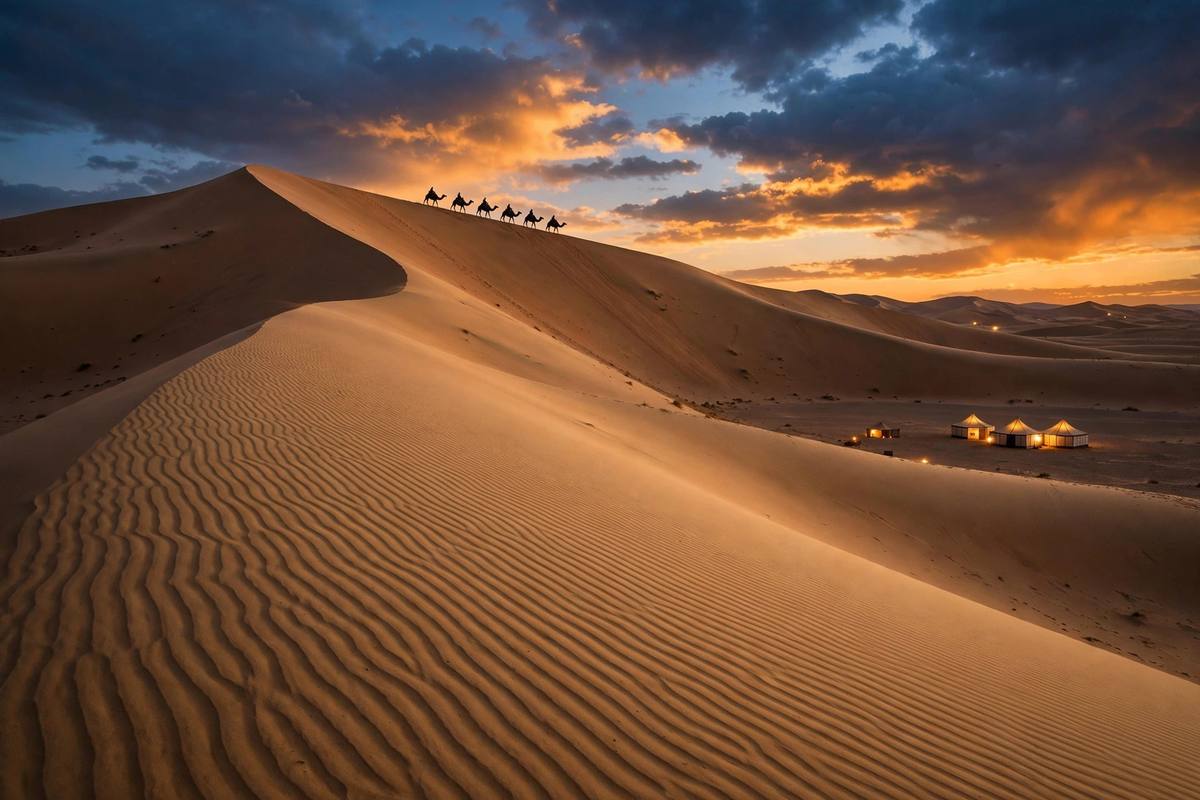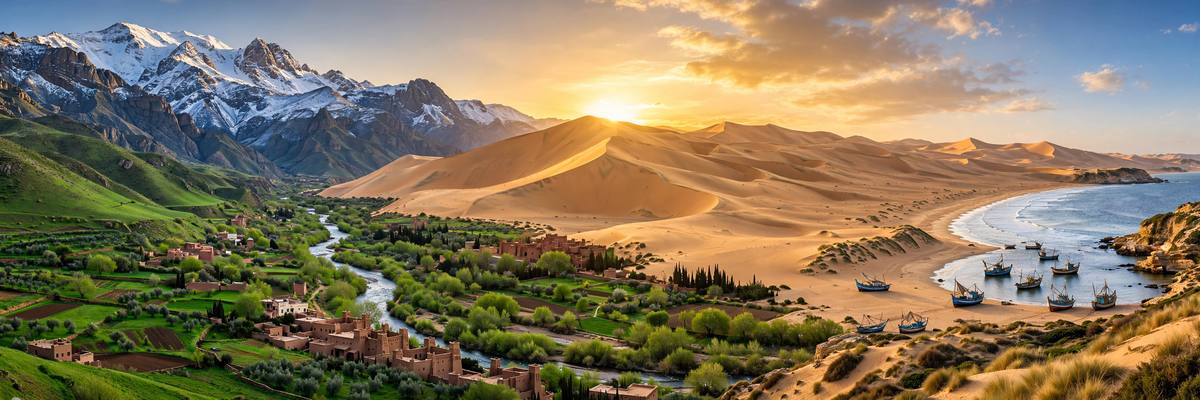
Morocco doesn't have one "best" season — it has four climate zones, and they take turns showing off. The High Atlas can be under snow while camels are crossing 25°C dunes in the Sahara, and while surfers are catching autumn swells in Taghazout. Ask when to visit and the honest answer is: it depends where you're going.
But a simpler version exists too: this guide gives the short answer first, then walks the year month by month and matches the best months to the trip you actually want.
The short answer
For most travellers, the sweet spot is March to May and September to November. Days are warm without being punishing, the light is golden, prices sit between the summer and winter extremes, and the crowds are thinner than the holiday peaks.
- City sightseeing (Marrakech, Fes, Rabat): March–May and September–November
- Beaches (Agadir, Essaouira, Tangier): June–September
- Sahara desert nights: October–April
- Atlas trekking: June–September for the high passes, year-round at lower altitudes
Morocco month by month
Winter: December to February
Winter is Morocco's secret season: Marrakech days hover around 18°C under crisp blue skies with chilly nights, the Atlas on the horizon is snow-capped, and the coast stays mild (Tangier and Essaouira around 16–18°C). The Sahara drops near 0°C at night but stays sunny by day.
This is the best time for desert camps and city breaks: flights and riads are cheaper, and you'll share Jemaa el-Fnaa with a fraction of the summer crowds. Pack layers — the temperature swing between noon and midnight can be 20 degrees.
Spring: March to May
Spring might be the single best season: the Atlas valleys turn green, wildflowers cover the hills around Chefchaouen, and Marrakech warms from 22°C into a toasty 28°C. Sahara nights are still cool enough for comfortable sleeping.
Late March and April are the golden window: peak weather, off-peak prices. Easter brings a wave of European visitors — book early.
Summer: June to August
Summer is a two-country story: Marrakech and Fes regularly hit 38–45°C in July and August and the Sahara becomes an extreme-heat zone, while the coast — Essaouira, Tangier, Agadir — sits at a blissful 24–28°C with ocean breezes, making it the best beach season of the year.
Visit the interior's medinas early in the morning, embrace the siesta, and choose a hotel with a pool. August is peak domestic tourism, so coastal towns book up.
Autumn: September to November
Autumn is the mirror of spring: the inland heat breaks by mid-September, the sea is at its warmest, and the harvest fills the souks with dates, olives and pomegranates. Atlas hiking is superb, Sahara nights are comfortably cool, and the summer crowds have gone.
November brings the first rains north, but the south — Marrakech, the Anti-Atlas, the desert — stays dry and sunny into December.
April–May and September–October combine the year's best weather with lower prices and thinner crowds than the August and December–January peaks. If your dates are flexible, aim for the shoulders.
Best time by trip type
City sightseeing. Marrakech and Fes are walking cities, and walking is miserable in 40°C heat — target March–May and September–November.
Atlas and Toubkal trekking. The high passes around Jebel Toubkal (4,167m) are snow-free June–September — the classic summit season — while lower valleys like Imlil can be hiked almost year-round.
Sahara desert nights. October–April is the window: warm days, star-filled nights, cool enough for comfortable sleeping in camp. Avoid June–August, when daytime heat in the dunes is extreme.
Beaches and surfing. June to September for swimming (the Atlantic peaks around 22°C in Agadir); October to March for surf, when Taghazout and Imsouane are at their best.
World Cup 2030. The tournament runs in June–July 2030 — the hottest months inland. If you're coming for the football, base match trips on the coastal host cities, where sea breezes keep temperatures in the comfortable mid-twenties.
Many Sahara camps close or run minimal programs in July and August — the heat makes camel treks unsafe. If a summer desert night is non-negotiable, choose May or September instead.
Festivals, Ramadan and dates to know
A few calendar events can reshape your trip. Ramadan moves each year (roughly February–March in 2026): daytime dining options shrink, but evenings come alive — a fascinating time to be there if you respect the rhythm. The two Eids — Eid al-Fitr and Eid al-Adha — bring closures and busy transport, so book trains and accommodation early around them.
On the celebration side, the Gnaoua World Music Festival fills Essaouira each June, and Mawazine in Rabat is one of the world's biggest music festivals. Check the lunar calendar before booking — Morocco's holiday dates shift every year.
Match the month to the region and Morocco rewards you: spring and autumn flatter almost everywhere, summer belongs to the coast, winter belongs to the desert and the cities.
Plan your Morocco trip
Turn this guide into a booked trip: compare stays, flights and car rental across Morocco below.
Some links on this page are affiliate links. If you book through them, we may earn a commission at no extra cost to you — it keeps these guides free.
Frequently asked questions
What is the best month to visit Morocco?
April and October are the two best all-round months: warm days, cool nights, green or golden landscapes, and prices below the summer and New Year peaks. March and May are close runners-up. Avoid July and August for inland cities, when Marrakech and Fes regularly top 40°C.
Is Marrakech too hot to visit in summer?
Often, yes — July and August highs regularly reach 38–45°C, which makes full days in the medina exhausting. If summer is your only option, sightsee early in the morning, rest midday, book accommodation with a pool, or base yourself on the coast (Essaouira is 2–3 hours away and 15°C cooler).
When is the best time to visit the Sahara Desert?
October to April is the desert's sweet spot: sunny days around 20–28°C and nights cool enough to sleep comfortably in camp. November to February can drop near 0°C at night, so pack warm layers. Avoid June to August, when daytime heat in the dunes is extreme and many camps close.
Does it rain a lot in Morocco?
Not much. The north (Tangier, Chefchaouen) and the Atlas get rain from November to March, and Marrakech sees occasional winter showers, but the south — including the Sahara — stays dry almost year-round. Morocco averages well over 300 days of sunshine a year in the south.
What should I pack for Morocco in winter?
Layers. Winter days in Marrakech reach around 18°C but nights drop near 5°C, and the Sahara and Atlas go colder still. Pack a warm jacket, a fleece, a hat for desert nights, and comfortable walking shoes — plus sunscreen, because the daytime sun is still strong.