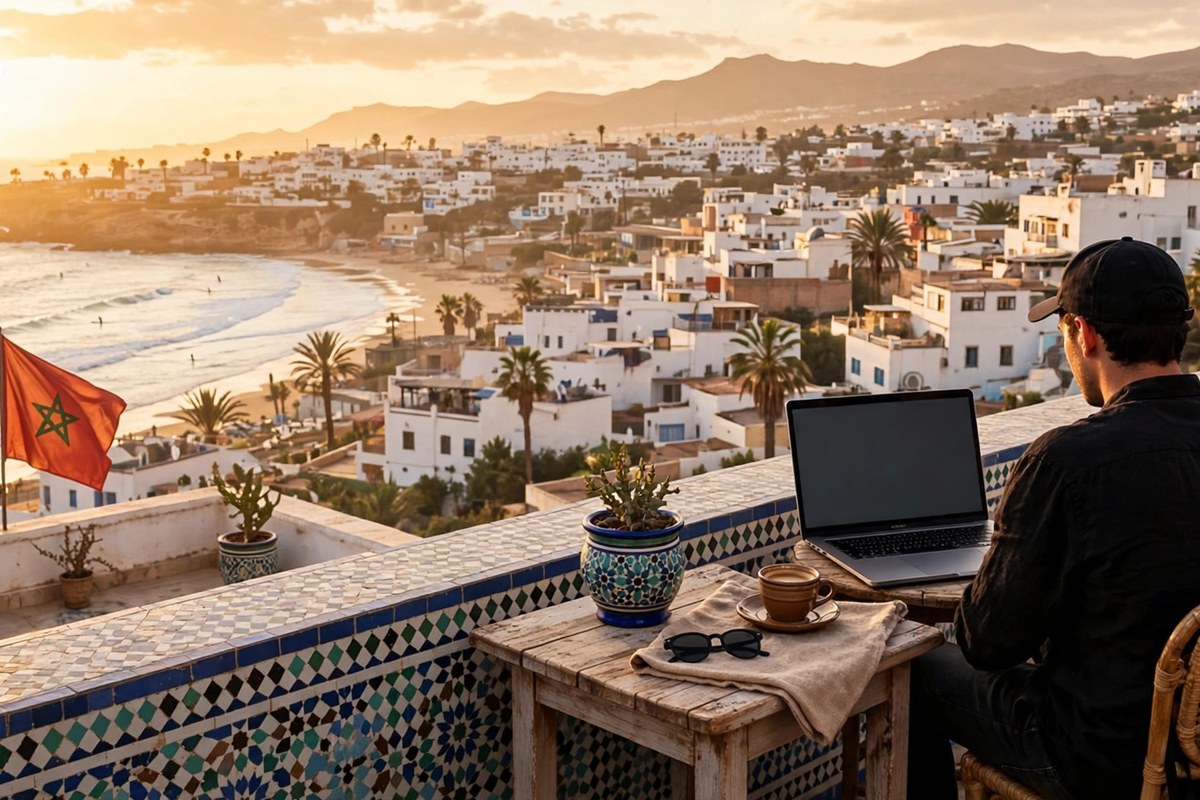
There is a particular kind of freedom in closing your laptop at sunset, swapping your desk chair for a surfboard, and still hitting every deadline. That is the daily rhythm drawing remote workers to Morocco — and if you are considering joining them, this digital nomad Morocco guide covers everything that actually matters: the visa reality, the best bases, WiFi you can rely on, real monthly costs, and where to find your people.
Morocco has quietly become one of Africa's most practical bases for location-independent work. It is cheap by European standards, sunny more than 300 days a year on the coast, and a short flight — or, in the north, a ferry ride — from Europe. The digital nomad in Morocco scene is still small enough that you will not trip over laptop workers on every terrace, but established enough that coworking spaces, surf camps with fiber internet, and nomad-friendly rentals exist in every major base.
Digital Nomad Morocco Visa: The 90-Day Reality
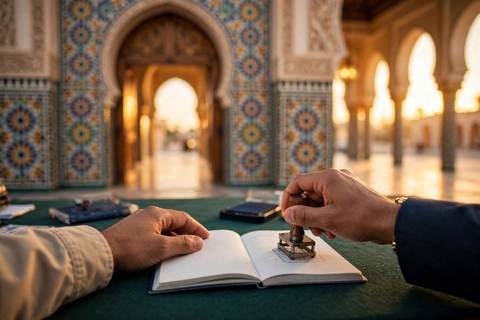
Let us get the biggest question out of the way first: as of 2026, there is no official digital nomad visa in Morocco. The "digital nomad visa Maroc" rumor resurfaces every year, but no list of morocco digital nomad visa requirements exists — because the program itself does not exist yet. What does exist is generous: most nationalities (US, UK, EU, Canada, Australia) get up to 90 days visa-free on arrival, which is more than enough to test whether the lifestyle fits.
The rules are straightforward. You may work remotely for foreign employers or clients while on a tourist entry; you may not take a job with a Moroccan company or invoice Moroccan clients without a work permit. Do not overstay the 90 days — fines and exit hassles are real. Some nomads base themselves in southern Spain and do short Morocco stints inside the window (Tarifa is 35 minutes by ferry from Tangier), which is the practical answer most digital nomad visa Spain Morocco searchers are actually looking for. For the full entry rules, see our Morocco visa guide.
The Best Bases for a Digital Nomad in Morocco
Where you base yourself decides your experience. Here is the honest breakdown:
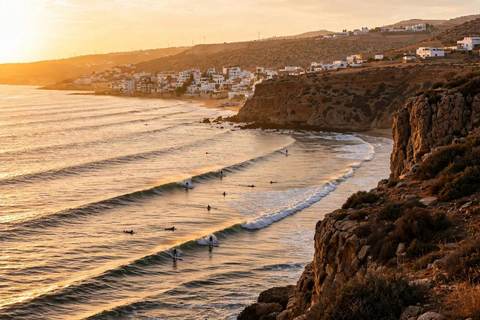
- Taghazout: the capital of the taghazout morocco digital nomad scene. A dozen surf camps double as coworking spaces, fiber is reliable in the village center, and the community is the friendliest on this list. Best from September to May. See our Taghazout guide.
- Marrakech: big-city energy, the most coworking spaces, and the best flight connections. Summers are brutally hot; winters are perfect.
- Essaouira: windier, calmer, cheaper than Marrakech — ideal if you want a slower rhythm and seafood dinners instead of nightlife.
- Tangier: the strategic base. Ferries to Spain in under an hour, fast trains south, and a growing café-coworking scene.
- Dakhla: the wildcard. A kitesurf lagoon in the deep south with a handful of camps offering solid WiFi — for the nomad who wants an edge-of-the-map winter.
WiFi and Staying Connected
Morocco's internet is better than its reputation. Fiber connections in Marrakech, Casablanca and Tangier routinely hit 100–200 Mbps; coworking spaces advertise 300+. Even smaller towns have usable fiber, and 4G blankets most of the country at 20–50 Mbps — good enough as a hotspot backup for video calls. The digital nomad Morocco reddit threads consistently rate the WiFi situation as "surprisingly fine," with the only real complaints coming from remote desert camps.
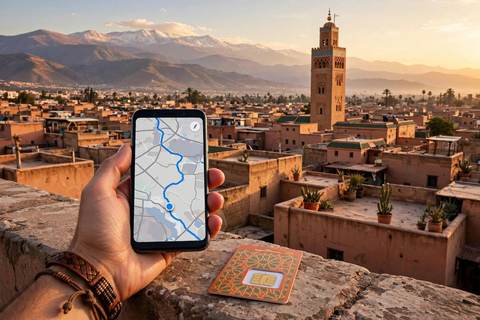
Our rule: never rely on a single connection. Get a local SIM with a big data plan on day one — it costs a few euros, and the full comparison is in our SIM and internet guide — and ask any rental for a speed-test screenshot before you book a month-long stay.
What a Month Really Costs
A comfortable digital nomad Maroc budget runs $900–$1,500 a month outside high season — roughly half of Lisbon or Barcelona. Realistic numbers for one person:
- Rent: €350–€600/month for a furnished studio or one-bedroom on monthly Airbnb rates; less in Essaouira, more in Marrakech's medina.
- Coworking: €80–€150/month, or free if you buy coffee at laptop-friendly cafés.
- Food: €150–€300/month — street food and market cooking are absurdly cheap; mid-range restaurants add up faster.
- Transport: €40–€80/month using trains and buses between cities.
- Surf & sport: €50–€120/month for board rental and lessons in Taghazout.
Coworking and Community
The community is the reason nomads stay longer than planned. Digital nomad surf camp Morocco outfits in Taghazout run weekly coworking socials; Marrakech has several established coworking spaces with dedicated desks and meeting rooms; even smaller cities have nomad WhatsApp groups organizing hikes, surf trips and Friday tagines. Show up to one social event in your first week and you will have a surf buddy, a gym partner, and someone to split a desert weekend with.
Time your arrival for September or October. Summer crowds and heat are gone, the Atlantic swell season is starting in Taghazout, rents drop before winter, and the nomad community rebuilds after the summer exodus — the easiest month of the year to plug in socially.
Plan your Morocco trip
Turn this guide into a booked trip: compare stays, flights and car rental across Morocco below.
Some links on this page are affiliate links. If you book through them, we may earn a commission at no extra cost to you — it keeps these guides free.
Frequently asked questions
Does Morocco have a digital nomad visa?
Not yet — as of 2026, Morocco has no official digital nomad visa. Remote workers enter on the standard tourist entry (up to 90 days visa-free for most nationalities) and work remotely for employers or clients outside Morocco. Working for a Moroccan company still requires a separate work permit.
How long can a digital nomad stay in Morocco?
Most nationalities get 90 days per visit without a visa. Formal extensions are theoretically possible at the local police station but are rarely granted to remote workers. Some nomads leave and re-enter for a fresh stamp, but repeated back-to-back stays can be refused at the border officer's discretion — plan your 90 days carefully.
Is Taghazout good for digital nomads?
It is one of the best bases in the country: surf camps with coworking spaces and reliable fiber, a ready-made international community, and living costs well below Marrakech. September to May is prime season — book accommodation early for winter.
Is the WiFi in Morocco fast enough for remote work?
Yes. Fiber in the main cities reaches 100–200 Mbps, coworking spaces go faster, and 4G works as a solid backup almost everywhere. Carry a local SIM with a large data plan and ask rentals for a speed-test screenshot before committing to a month.
How much does it cost to live as a digital nomad in Morocco?
Budget $900–$1,500 a month for a comfortable lifestyle: €350–€600 for a furnished rental, €80–€150 for coworking, €150–€300 for food, plus transport and surf. That is roughly half what the same lifestyle costs in Lisbon or Barcelona.