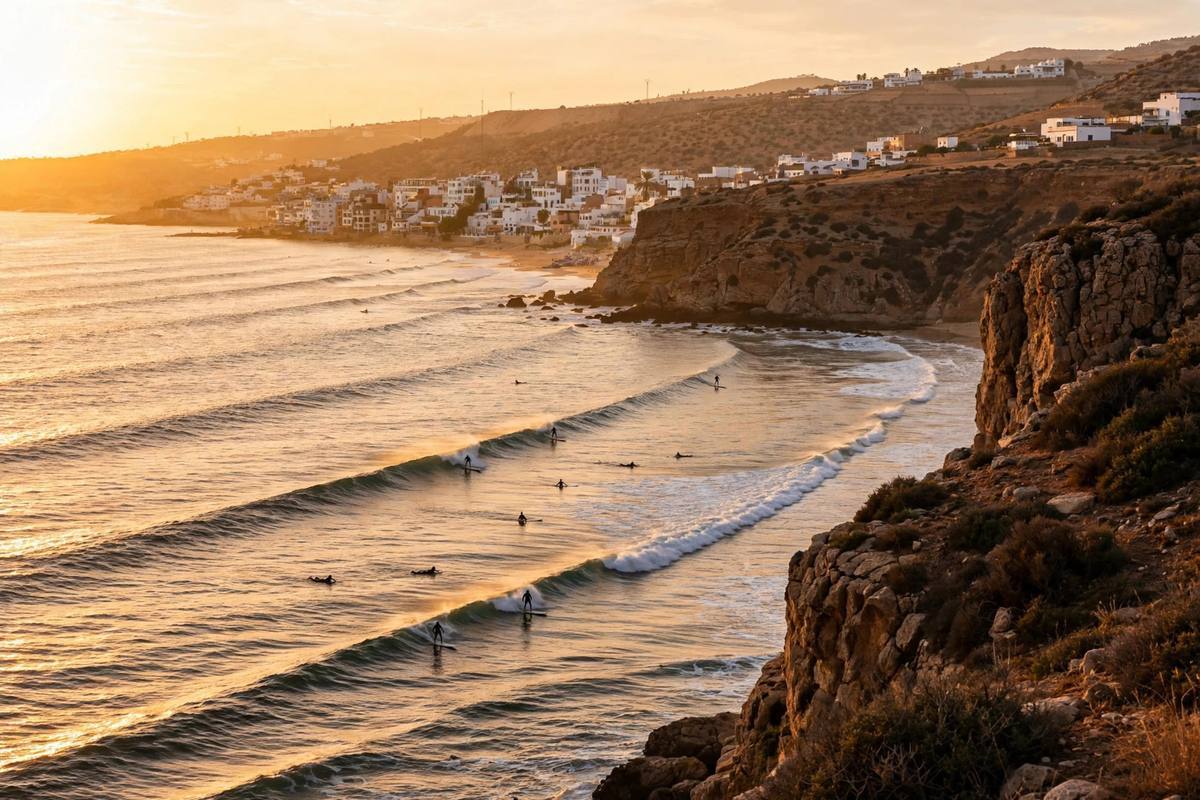
Taghazout surfing is the reason a sleepy Berber fishing village on Morocco's Atlantic coast became one of the world's most famous surf towns. It began in the late 1960s, when a handful of travelling surfers followed rumours of empty, glassy point breaks around Agadir and found Taghazout's little cove wrapped around some of the most consistent waves in North Africa. The secret got out in the 2010s. Today the village is a proper surf destination with dozens of camps and a main street where fishing nets hang beside surfboard racks. And yet it still feels like a village: goats wander the lanes, women sell msemen at the roadside, and the call to prayer drifts over the line-ups at dusk. If you surf — or want to learn — Taghazout deserves a week of your life.
The Best Taghazout Surf Spots, From First Wave to Pro Line-Up
Within a fifteen-minute drive you can choose between gentle whitewash for your first pop-up and a legendary right-hander that hosts international pros. Most camps post a taghazout surf map on the wall each morning and match your level to the day's best call.
Beginner-friendly beaches
Hash Point, right in front of the village, is the classic learning beach: a mellow beach break with long whitewater sections and a sandy bottom. Devil's Rock, a ten-minute walk south toward Tamraght, is another favourite for lessons — fun, forgiving peaks that peel gently on small to medium swells. Further south, Tamri offers a long beach with softer waves for improvers, and the taghazout surf kids clubs run small-group lessons at these beaches with instructors who genuinely love teaching.
Intermediate and advanced
Anchor Point is the wave that put Taghazout on the map: a world-class right-hand point break that fires from November to March, peeling for hundreds of metres over rock reef. It needs a big swell to switch on, but when it does, it is genuinely world-class. Killer Point, just north of the village, serves up powerful, hollow rights over shallow reef — experts only, and booties are wise. La Source is a faster, shorter right for confident intermediates, while Panorama Point delivers long, cruisy walls perfect for logging.
Before breakfast, check the taghazout live surf cam views and the swell forecast, then ask your camp host — they read these waves every day and will save you a wasted session at a flat spot.
Taghazout Surfing Seasons: When to Go
The classic Taghazout surfing season runs from September to April, when Atlantic swells are biggest and most consistent. December through February is peak: expect overhead waves at the points, water around 16-18°C (a 4/3mm wetsuit, usually included in lessons). This is when Anchor Point and Killer Point light up — and when the village is busiest.
Do not dismiss the off months. Taghazout surfing in May and through the summer is a different, gentler experience: smaller swells (chest-high rather than head-high), warmer water at 19-21°C, fewer crowds and lower prices across camps and hotels. For beginners, honestly, late spring and early summer can be better than midwinter — the waves are more forgiving and the line-ups are thin. September is many locals' favourite month: the first autumn swells arrive while the water is still warm.
Taghazout Surf Camps, Lessons and Prices
The best taghazout surf camp for you depends on your style: boutique rooftop camps above the village, big social camps in Tamraght with pools and yoga decks, or quiet family-run guesthouses that keep groups tiny. Most offer taghazout surf and stay packages that bundle accommodation, daily guided surf sessions, equipment, breakfast and airport pickup — the simplest way to book a week.
Typical prices as of 2026: a group lesson (two hours, board and wetsuit included) runs €30-40 per person; a private lesson is €60-80; and a weekly surf-and-stay package lands between €350 and €600 depending on the room and the season. Book lessons for your first two or three days, then rent a board and practice — instructors will tell you when you are ready to go solo.
Taghazout Surf Hire and Surf Shops
You do not need to travel with a board. Taghazout surf hire is everywhere: expect to pay €10-15 per day for a foamie or funboard and €15-25 for a fibreglass shortboard or longboard, with discounts for weekly rental. Wetsuit hire runs about €5-8 per day. The main street and the Tamraght road are lined with a taghazout surf shop every hundred metres selling wax, leashes, fins, rashguards and repair services — ding repairs are usually done overnight for a few euros.
Second-hand boards in the village shops are fairly priced; haggle gently and check for dings before paying.
Beyond the Board: Beach-Town Life in Taghazout
Taghazout works as a holiday even on flat days. Mornings start with rooftop yoga overlooking the Atlantic, afternoons drift through beachfront cafés serving tagines and grilled fish, and evenings end with sunset from the rocks above Anchor Point. The Thursday souk in nearby Aourir (locals call it Banana Village) is a brilliant, chaotic market for fruit, olives, spices and cheap clothes.
Two day trips are essential. Paradise Valley, forty minutes inland, is a gorge of natural pools and palm groves — swim and eat a tajine at a riverside café. Imsouane, ninety minutes north, is a sleepy fishing port with one of the longest waves in Africa. Both are easy to reach by grand taxi or organised camp trips.
Bring cash in dirhams. Many cafés, taxis and small shops in Taghazout do not take cards, and the village ATMs run dry on busy weekends — withdraw in Agadir on your way through.
Where to Stay: Taghazout Hotels and Guesthouses
There is no shortage of taghazout hotels, but the word hotel here mostly means guesthouses, riads and surf camps rather than big chains. In the village centre, family-run guesthouses a minute from Hash Point cost €25-50 per night. Tamraght, ten minutes south, is quieter and slightly cheaper, with good value apartments and several of the bigger surf camps — ideal if you want a pool.
For something special, the villas and boutique hotels on the headland near Anchor Point offer front-row sunset views at €80-150 per night. Wherever you stay, ask whether surf guiding and board storage are included — in a surf town, that matters more than a minibar.
How to Get to Taghazout
Fly into Agadir Al Massira Airport (AGA), which has direct flights from across Europe, especially in winter. Taghazout is about 45 minutes north of the airport. The simplest arrival is a pre-booked camp transfer (usually €20-30), or take a taxi to Agadir's bus station and continue by local bus or shared grand taxi for a few euros. Buses from Marrakech take about four hours and cost roughly 120 MAD.
Once there, the village is walkable, most spots are reached by camp 4x4, and shared taxis run constantly to Tamraght for a couple of dirhams.
Plan your Morocco trip
Turn this guide into a booked trip: compare stays, flights and car rental across Morocco below.
Some links on this page are affiliate links. If you book through them, we may earn a commission at no extra cost to you — it keeps these guides free.
Frequently asked questions
How do I get to Taghazout from Agadir?
Taghazout is about 45 minutes north of Agadir Al Massira Airport (AGA). The easiest option is a pre-booked transfer with your surf camp, usually €20-30. Budget travellers can take a taxi to Agadir's bus station and continue by local bus or shared grand taxi for a few euros, or hire a private petit taxi for around 200-300 MAD.
When is the best time for Taghazout surfing?
The main Taghazout surfing season runs September to April, with the biggest and most consistent swells from December to February — that is when Anchor Point and Killer Point switch on. For beginners, late spring and early summer (including May) can actually be better: smaller, friendlier waves, warmer water at 19-21°C, fewer crowds and lower prices.
Can you surf in Morocco as a complete beginner?
Absolutely — Taghazout is one of the best places in Morocco to learn. Beach breaks like Hash Point and Devil's Rock offer gentle whitewater over sand, ideal for your first pop-ups, and the village is full of camps with certified instructors. Yes, you can surf in Morocco as a beginner, and a week of daily lessons here will take most people from zero to catching green waves.
How much do surf lessons and board hire cost in Taghazout?
A two-hour group lesson with board and wetsuit included typically costs €30-40 per person, while a private lesson runs €60-80. Daily board hire is €10-15 for a foamie and €15-25 for a fibreglass board, with wetsuits around €5-8 per day. Weekly surf-and-stay packages bundling accommodation, guiding and equipment land between €350 and €600.
Taghazout or Essaouira — which is better for surfing?
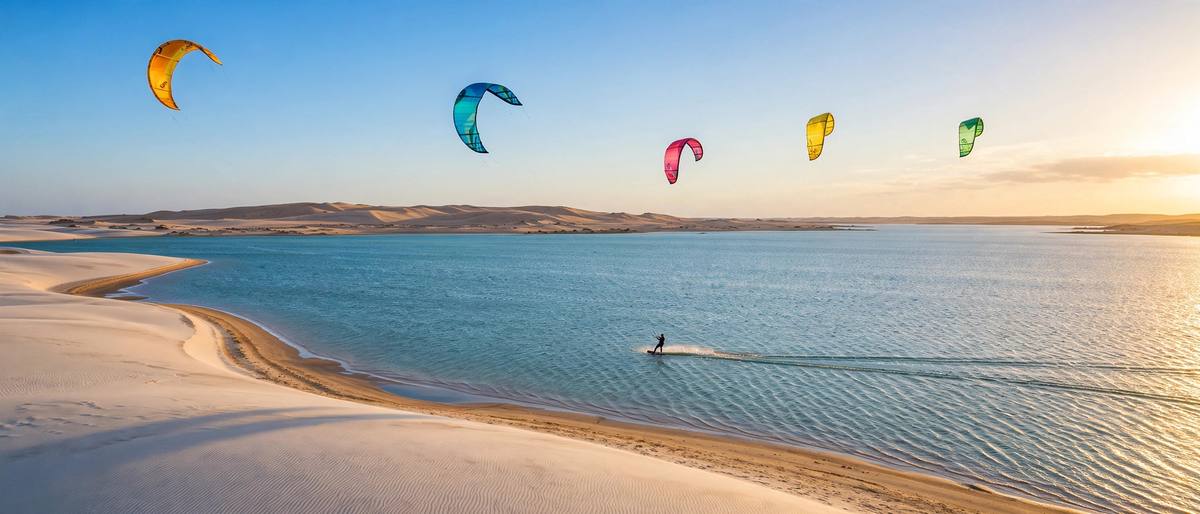
It depends on your level. Taghazout wins for variety and quality: a cluster of world-class point breaks within minutes, a huge choice of camps and year-round consistency. Essaouira is windier — great for kitesurfing and windsurfing — but its surf is usually smaller and messier, though its long beach is fine for first lessons. Serious surfers choose Taghazout; watersports lovers who also want to kite will prefer Essaouira.