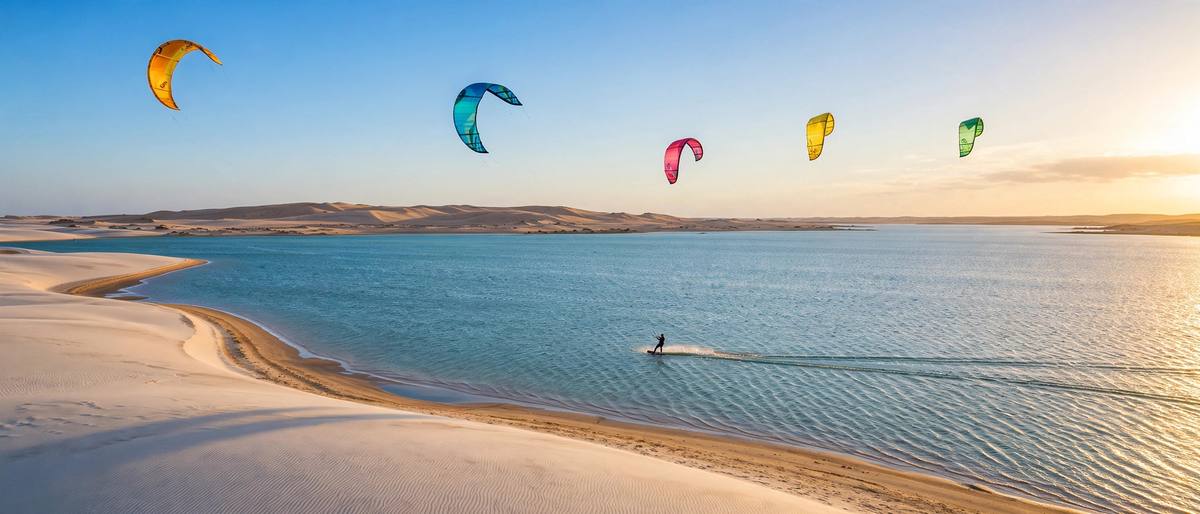
Dakhla kitesurfing has a simple pitch: one narrow peninsula, two playgrounds. On one side lies a vast turquoise lagoon of flat, knee-to-waist-deep water; on the other, the open Atlantic with real ocean waves. Add one of the most reliable wind machines in Africa, and you get the place many kiters now rank as the best all-round kitesurf destination in Morocco — and one of the best on the planet.
This guide covers everything you need to plan a kitesurfing trip to Dakhla: when the wind blows, a map of the main spots, what lessons and rental actually cost, where to stay, and how to get there.
Why Dakhla kitesurfing is world-famous
Most famous kite spots force a choice: flat water or waves, beginners or experts. Dakhla refuses to choose. The lagoon — a huge, shallow bay sheltered by the peninsula — is one of the easiest places in the world to learn: waist-deep water for hundreds of metres, no shore break, and room for everyone. Ten minutes away, the ocean side serves up proper waves for surfboards and strapless riding.
The second reason is the wind. Dakhla sits in the path of the north-east trade winds, which blow side-onshore across the lagoon for most of the year — steady, predictable and strong when the rest of Morocco is calm. It is no accident that international kitesurf competitions, including World Cup tour stops, have been held here.
Dakhla kitesurf map: the main spots
The classic Dakhla kitesurf map fits on one peninsula:
- The lagoon — the main playground. Flat, shallow and enormous, with most kitesurf camps lined up along its shore. This is where lessons happen and where freeriders spend their days.
- Duna Blanca (the White Dune) — a white sandbank in the middle of the lagoon and the classic downwind destination. Kite down to it, climb it for the view, and get picked up or kite back.
- The Speed Spot — a butter-flat section of the lagoon where riders chase personal speed records in shallow water.
- PK25 — about 25 kilometres north of town on the ocean side, the go-to wave spot: clean Atlantic swell with side-offshore wind.
- The ocean beaches near town — smaller beach breaks on the peninsula's west side for a change of scenery.
Most riders base themselves at a lagoon camp and sample the other spots on day trips or downwinders organised by the schools.
Dakhla's wind is strongest in the afternoon. Plan lessons for the morning's gentler breeze if you are a beginner, and save the big-kite sessions for after lunch, when the trades really switch on.
Dakhla kitesurf wind and the best season
The best time for kitesurfing in Dakhla is April to August, when the trade winds blow almost every day — often 20 to 30 knots in the afternoon. June and July are the windiest months, and the reason many kiters plan their whole year around a Dakhla kitesurf week in early summer.
September and October stay windy but softer, with warmer water and fewer crowds — a sweet spot for intermediates. From November to March the wind eases off: still rideable on many days, but expect lighter sessions and the occasional calm spell, which is when the wave side and the no-wind activities earn their keep.
Water temperature hovers around 19–22°C most of the year, cooler in winter. A 3/2mm wetsuit works for most of the year; bring a 4/3mm if you kite in winter. As for kite sizes, a two-kite quiver of 9m and 12m covers most riders most of the year — add a 7m if you visit in peak summer and like to ride powered.
How much kitesurfing in Dakhla costs
Kitesurfing in Dakhla is not cheap, but it is noticeably cheaper than learning or riding in Europe — and the wind statistics make every euro work harder.
- Lessons: group beginner lessons typically run €50–70 per hour; most schools sell multi-day beginner packages (around 6–10 hours) at a better per-hour rate.
- Rental: full gear rental is usually €60–80 per day, with weekly rates bringing the daily cost down. Storage at the camps is often included if you bring your own gear.
- Kitesurf camps: the classic Dakhla kitesurf trip is a week at a lagoon camp. All-inclusive weeks (room, meals, gear storage, rescue) generally start around €800–1,200 per person in shoulder season and climb in July and August.
- Bringing your own gear: airlines charge for kite bags on the Casablanca–Dakhla leg, so compare the baggage fee against a week of rental before you decide.
Prices rise in peak wind season and around holidays, and the best-known camps sell out — book the camp before the flights.
Where to stay: kitesurf camps on the lagoon
Most kiters do not stay in Dakhla town at all. The lagoon shore is lined with kitesurf camps — bungalows, tents and small hotels sitting right on the launch beach, with gear storage, rescue boats, restaurants and bars on site. You rig steps from your room and you are on the water in minutes.
Camps range from simple and social to genuinely comfortable; nearly all are full-board or half-board, which matters because there is not much else around the lagoon. Staying in town is cheaper and puts you near restaurants and the port, but adds a daily transfer to the lagoon.
For July and August, book your camp two to three months ahead. The lagoon camps are small, the wind statistics are famous, and the best weeks sell out every year.
Getting to Dakhla
Dakhla has its own airport (VIL) with direct flights from Casablanca — about two and a half hours — plus connections via Agadir. Royal Air Maroc and low-cost carriers serve the route; prices climb steeply in summer, so book early.
Overland, Dakhla is a serious journey: roughly 12 hours by bus or car from Agadir along the Atlantic highway through the desert. It is a spectacular drive, but for a one-week kitesurf trip, flying is the sane choice. From the airport, camps arrange transfers (about 30–40 minutes to the lagoon).
What to do on no-wind days
Even in peak season the wind occasionally takes a day off. Dakhla is ready:
- Downwinder to Duna Blanca — the classic light-wind mission: a long glide across the lagoon to the white dune.
- Oyster tasting — the lagoon's oyster farms serve some of Morocco's best oysters, minutes from harvest.
- Dragon Island — a boat trip to the island in the lagoon, known for flamingos and white-sand beaches.
- Surf the ocean side — when the lagoon is calm, the Atlantic often still has swell; several spots work for surfing.
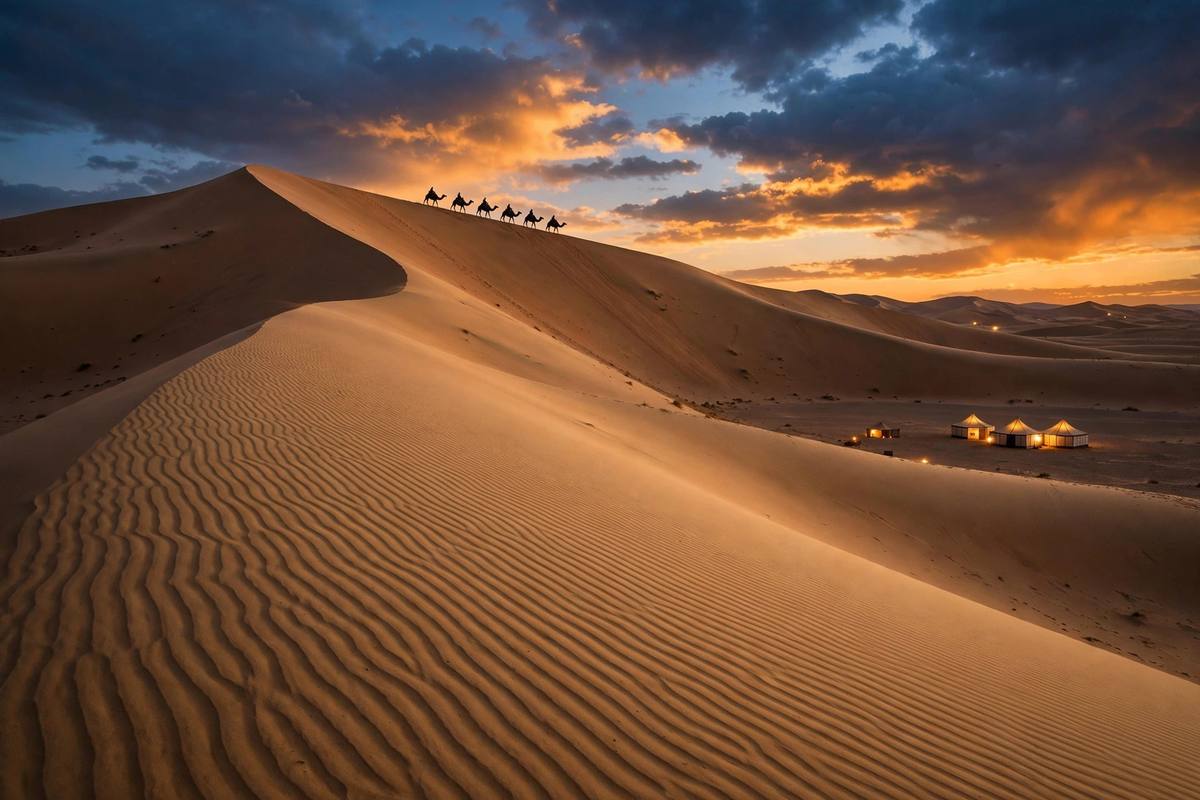
- Desert excursions — 4x4 trips into the dunes behind the lagoon, or a seafood lunch in the fishing village.
Dakhla or Essaouira for kitesurfing?
The honest comparison: Essaouira is closer to Marrakech (three hours), livelier as a town, and cheaper to reach — but its wind is gustier, the water choppier and colder, and the beach gets crowded. Dakhla is a mission to reach, but the reward is flatter water, warmer conditions, steadier wind and far more space. Beginners progress faster in Dakhla; wave riders find better-organised spots; and anyone planning a dedicated kitesurf week gets more sessions per trip. If kiting is the point of the trip, Dakhla wins. If it is one activity among many on a first Morocco visit, Essaouira is the easier add-on.
Planning your Dakhla kitesurf trip
A few practical notes to close the planning loop. A week is the sweet spot: enough to absorb a calm day or two and still log serious water time. Pack sun protection like you mean it — the desert sun reflecting off the lagoon burns fast — plus a wetsuit, booties for the occasional rocky launch, and a warm layer for breezy evenings.
Cash and cards both work in town, but the lagoon camps are remote: settle big bills by card where possible and carry cash for small extras. Moroccan SIM cards with generous data are cheap at the airport and useful for wind forecasts on the beach. And download your maps offline — the road south from Agadir has long stretches with no signal at all.
Plan your Morocco trip
Turn this guide into a booked trip: compare stays, flights and car rental across Morocco below.
Some links on this page are affiliate links. If you book through them, we may earn a commission at no extra cost to you — it keeps these guides free.
Frequently asked questions
Is kitesurfing in Dakhla expensive?
Mid-range. Beginner group lessons typically cost €50–70 per hour, full gear rental €60–80 per day, and all-inclusive kitesurf camp weeks start around €800–1,200 per person in shoulder season. That is noticeably cheaper than learning in Europe, and the near-daily wind means you get far more water time for the money.
When is the best time for kitesurfing in Dakhla?
April to August, when the trade winds blow almost daily — June and July are the windiest months. September and October are a softer, less crowded sweet spot. From November to March the wind is lighter and less reliable, so plan wave sessions and no-wind activities into those months.
What kite sizes should I bring to Dakhla?
A 9m and 12m quiver covers most riders for most of the year. In peak summer (June–August), when afternoons regularly hit 20–30 knots, add a 7m if you like riding powered. Beginners taking lessons do not need to bring anything — schools provide the right size each day.
Can beginners learn kitesurfing in Dakhla?
Yes — the lagoon is one of the easiest places in the world to learn: flat, waist-deep water for hundreds of metres, no shore break, and steady side-onshore wind. Every camp has a school with beginner packages, and most new riders are up and riding within a week.
Should I choose Dakhla or Essaouira for kitesurfing?
Choose Dakhla for a dedicated kitesurf trip: flatter and warmer water, steadier wind, more space and faster progression. Choose Essaouira if kiting is one activity among many on a first Morocco visit — it is three hours from Marrakech, livelier as a town, but gustier and choppier on the water.