If you only know Morocco through its medinas and dunes, this Ifrane Morocco travel guide will stop you in your tracks. Perched at 1,665 metres in the Middle Atlas, this is a town of sloped-roof chalets, manicured parks and pine-scented air — so alpine that Moroccans call it "Little Switzerland". Just 20 minutes down the road, the old Berber market town of Azrou guards one of the largest cedar forests in North Africa, where wild Barbary macaques swing through trees older than the town itself.
Together, Ifrane and Azrou make the country's easiest mountain escape: 65 kilometres from Fes, and cool when the lowlands roast.
Ifrane: Morocco's "Little Switzerland"
Ifrane was built as a French colonial hill station in the 1930s, and the architecture never left: steep A-frame roofs designed to shed snow, wide lawns, and flowerbeds that look transplanted from the Alps. The town's mascot is the Lion de Pierre, a stone lion carved — legend says — by a German prisoner of war in the 1930s, now one of Morocco's most photographed landmarks.
The town also hosts Al Akhawayn University, Morocco's English-language university, giving Ifrane a year-round buzz of students and cafés — and some of the cleanest mountain air on earth.
The cedar forests of Azrou and the Barbary macaques
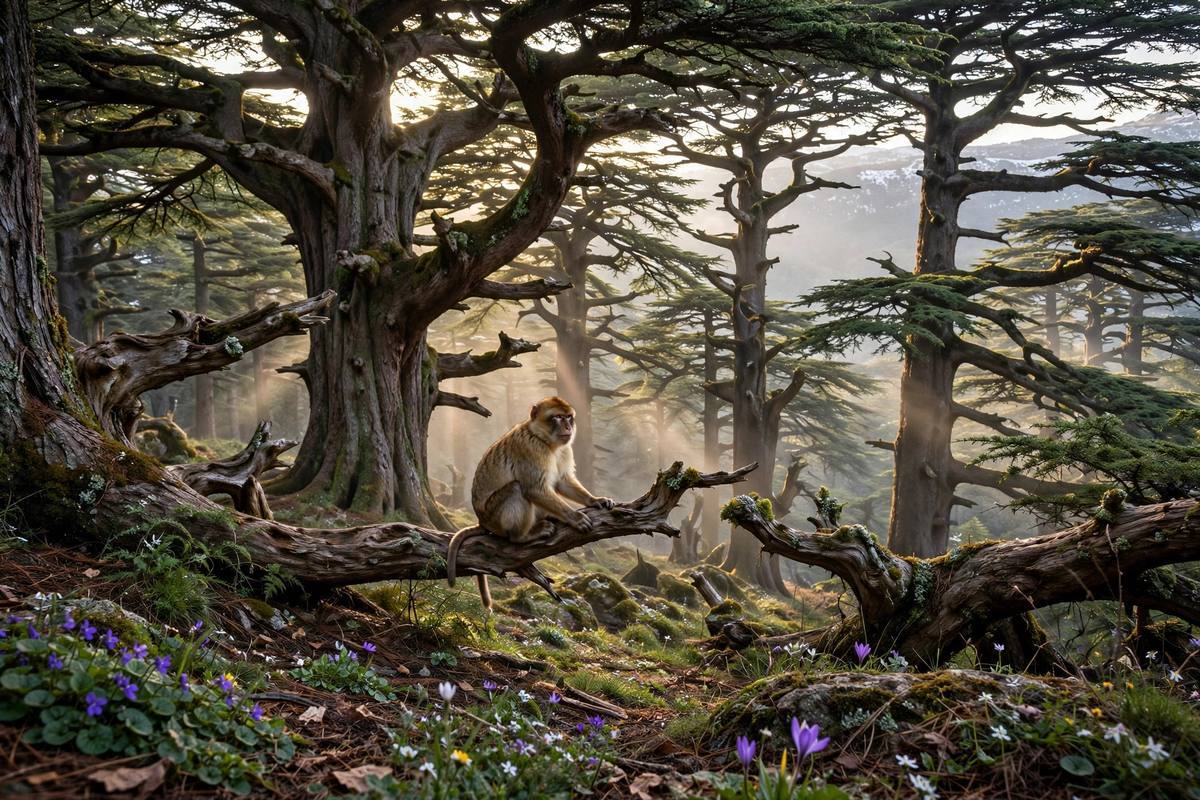
Twenty minutes southwest of Ifrane, Azrou — "the rock" in Tamazight — sits at the edge of the great Middle Atlas cedar forest. The star of the forest is the Cèdre Gouraud, an Atlas cedar said to be over 800 years old and more than 40 metres tall, named after a French general. A short forest walk from the parking area leads to it, past troops of Barbary macaques.
The Barbary macaque is the only monkey native to Africa north of the Sahara, and the Azrou forest is one of the best places on earth to see them truly wild — habituated to people, but not tame.
Keep at least 6–7 metres from the monkeys and never feed them — it makes them aggressive and sick. Keep snacks and bags zipped; macaques are expert pickpockets. Visit in the morning when the troops are most active, and bring a zoom lens rather than getting closer.
Local guides in Azrou offer half-day walks combining the big cedar, the monkeys and plateau viewpoints — and Azrou's Tuesday souk is one of the Middle Atlas's most authentic weekly markets.
The lakes of the Middle Atlas
Scattered across the plateau around Ifrane are a string of shallow mountain lakes. Dayet Aoua, about 15 minutes north of Ifrane, is the prettiest: in spring it's ringed with wildflowers and full of coots and grebes, and in cold winters it freezes solid enough to walk on. Nearby Dayet Ifrah is wilder and quieter, a favourite of birdwatchers.
Pack a picnic: on a clear day the water mirrors the cedar slopes so perfectly it doubles the landscape.
Winter in Ifrane: snow and skiing
Yes, it snows in Morocco — and Ifrane gets the most. Winter temperatures regularly drop below freezing, and the town has recorded some of Africa's coldest. When snow falls, Ifrane becomes Morocco's winter playground: sledging, snowshoe walks in the cedars and hot mint tea everywhere.
Serious skiers head 18 kilometres up the road to Michlifen, Morocco's oldest ski station, with a handful of drag lifts and gentle pistes ideal for beginners. The season is short and snow-dependent — typically January to March — so check conditions before you go.
Ifrane is 1,665 metres up, and nights are cold even in summer — bring a warm layer year-round. In winter, treat it like the Alps: thermal base layer, waterproof boots and gloves. Roads from Fes can ice over after snowfall, so winter drivers should carry chains or hire a local driver.
Ifrane Morocco Travel Guide: Getting to Ifrane and Azrou
From Fes: Ifrane is 65 kilometres south of Fes, about 1 hour 15 minutes by road. CTM and private-company buses run the route several times a day (expect to pay around 30–40 dirhams), and grand taxis leave when full from near the Fes bus stations. Azrou is another 20 minutes south of Ifrane on the same road.
From Meknes: about 60 kilometres, roughly an hour by grand taxi or bus via El Hajeb. Most visitors pair Ifrane with Fes or Meknes instead.
A rental car lets you hop between the lion, the lakes, the big cedar and Azrou's souk in a single day — the roads are good and driving is easy by Moroccan standards.
Where to stay and when to go
Ifrane offers chalet-style hotels, cosy guesthouses with fireplaces for winter, and a few upmarket options near Michlifen; Azrou is cheaper and more local, with family-run guesthouses by the forest. Book winter weekends ahead — this is where Moroccans themselves come to see snow.
When to go: April–June for wildflowers and ideal hiking; September–November for golden cedars and crisp air; December–March for snow and skiing. July and August are pleasantly cool — the classic Moroccan escape from lowland heat.
One full day covers the lion, the town, the big cedar and the monkeys; add a second for the lakes, Azrou's souk and a proper forest walk — and you'll see why this corner of the Middle Atlas is one of Morocco's best-kept secrets.
Plan your Morocco trip
Turn this guide into a booked trip: compare stays, flights and car rental across Morocco below.
Some links on this page are affiliate links. If you book through them, we may earn a commission at no extra cost to you — it keeps these guides free.
Frequently asked questions
Where are Ifrane and Azrou in Morocco?
Ifrane and Azrou sit in the Middle Atlas mountains of northern Morocco, about 65 km south of Fes. Ifrane (1,665 m altitude) is the alpine-style hill town famous for its chalets and stone lion; Azrou, 20 minutes further south, is the Berber market town at the edge of the great cedar forest.
Can you see Barbary macaques in the wild near Azrou?
Yes — the cedar forest around Azrou, especially near the Cèdre Gouraud, is one of the best places in the world to see wild Barbary macaques. Go in the morning, keep 6–7 m distance, never feed them, and keep food zipped away.
Does it snow in Ifrane, and can you ski in Morocco?
It snows regularly in Ifrane from December to March — the town has recorded some of Africa's coldest temperatures. You can ski at Michlifen, 18 km away, Morocco's oldest ski station, with beginner-friendly pistes served by drag lifts.
How do I get from Fes to Ifrane?
Buses (CTM and others) run several times daily from Fes to Ifrane (65 km, about 1h15, around 30–40 dirhams), and grand taxis depart when full. Azrou is 20 minutes further south on the same road.
How many days do I need in Ifrane and Azrou?
One day covers Ifrane's stone lion, the town, the Cèdre Gouraud and the macaques; two days lets you add Dayet Aoua lake, Azrou's Tuesday souk and a longer forest walk. Add a third in winter for skiing at Michlifen.