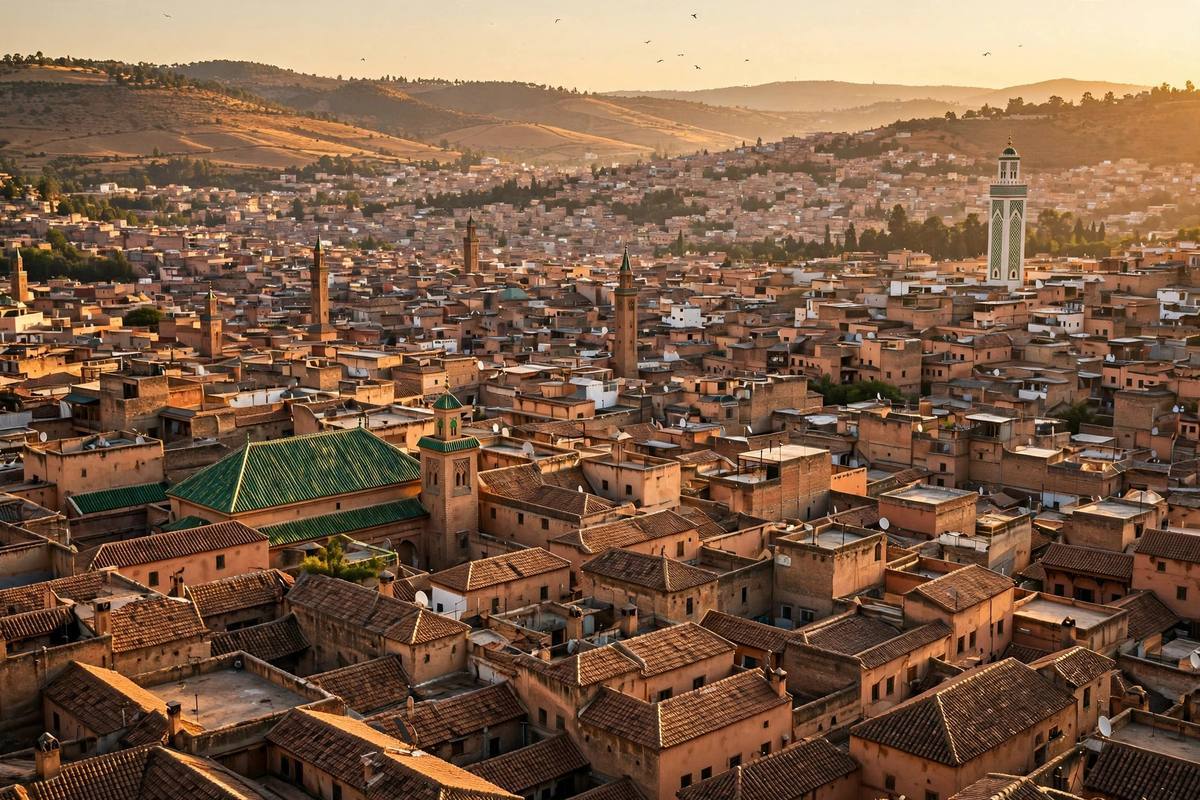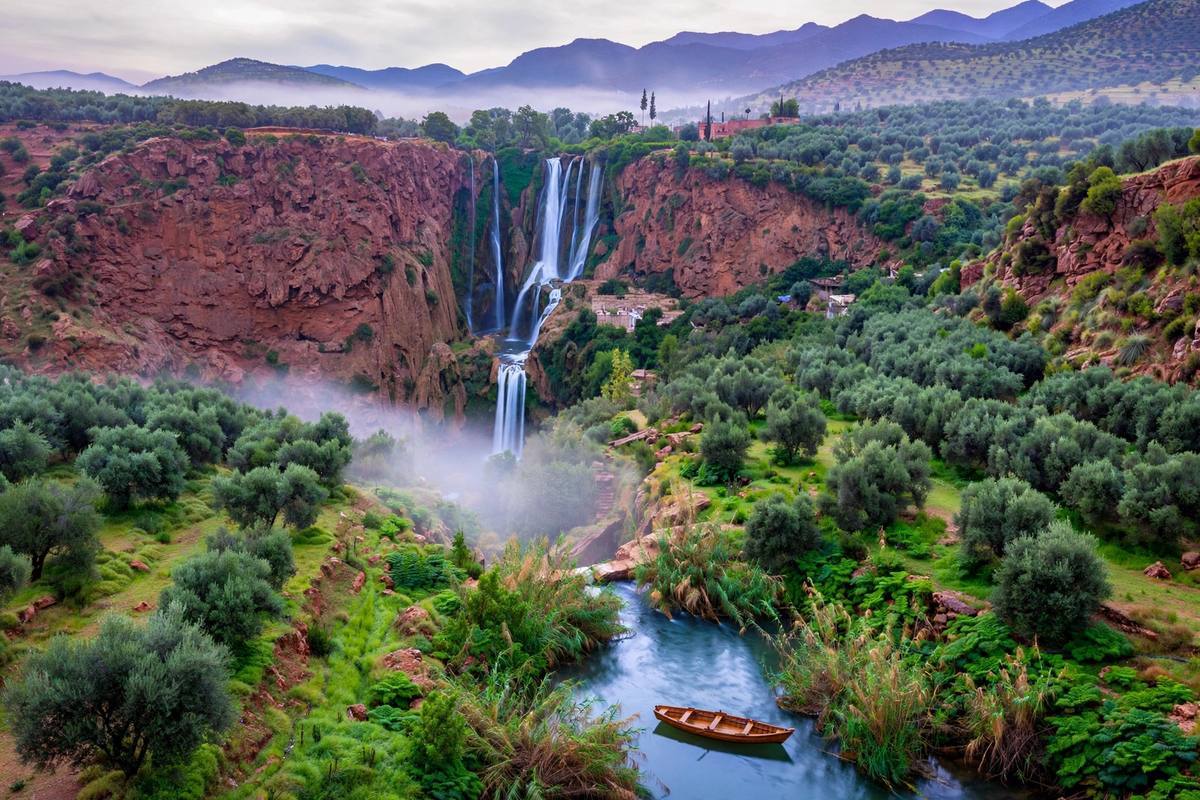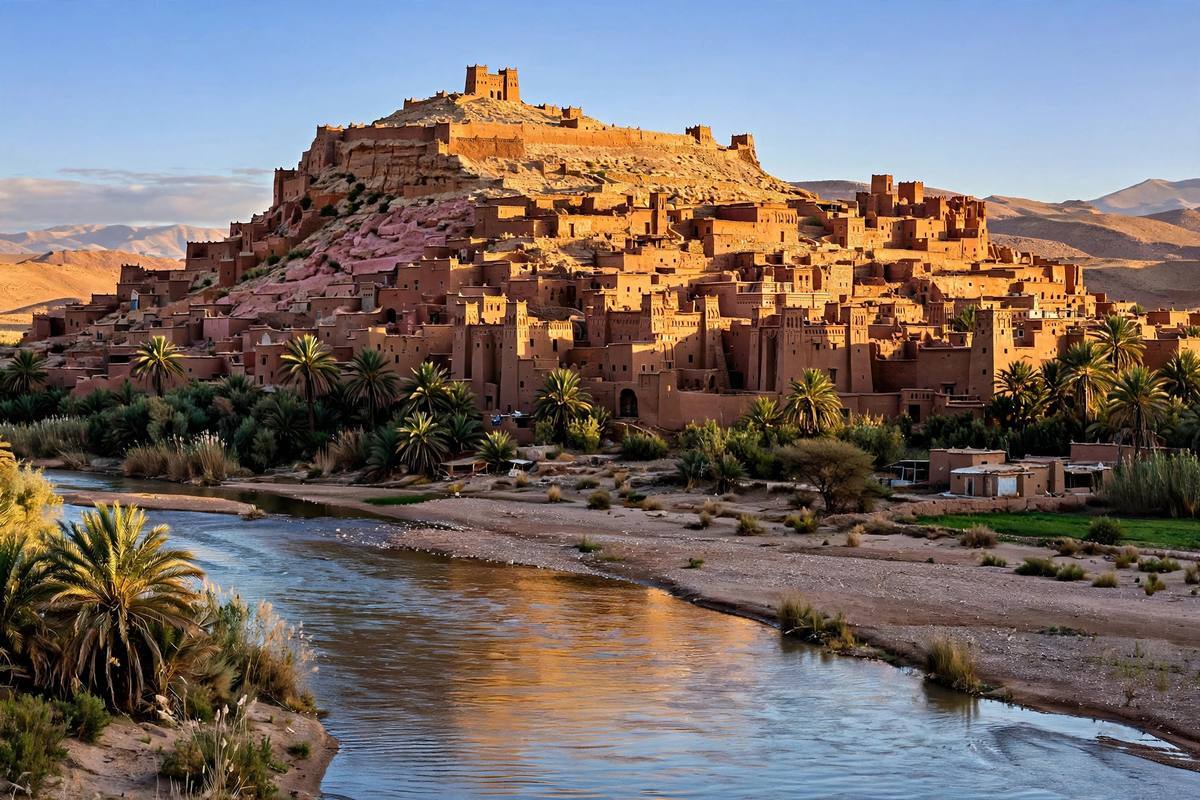
Some days in Morocco feel like two countries at once. Start the morning in Meknes — one of the country's four imperial cities, and the one Sultan Moulay Ismail rebuilt in the late 1600s on a scale meant to rival anything in Europe. By the afternoon you can be standing among Roman columns at Volubilis, reading 1,800-year-old mosaics of Orpheus charming the animals. The two sites sit only 30 kilometres apart, and together they make one of the best day trips in Morocco — especially if you are based in Fes.
Morning: Bab Mansour and the imperial city
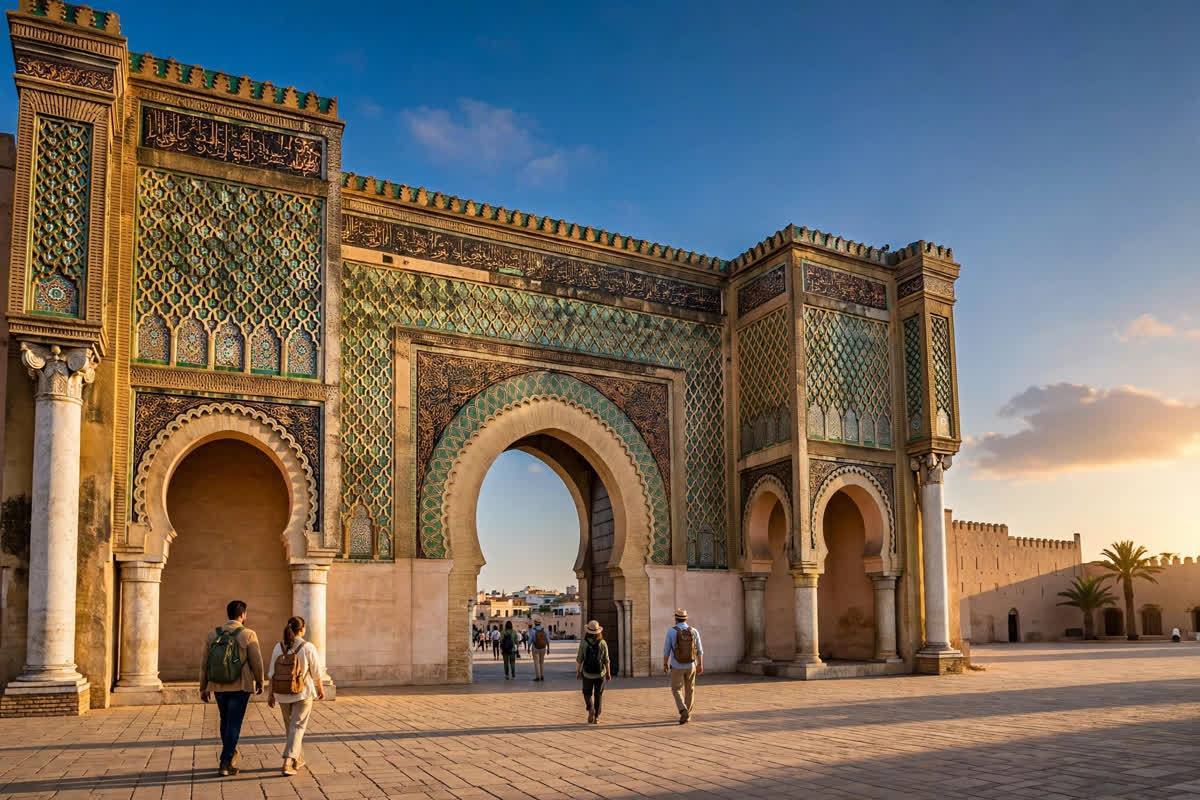
Begin at Place el-Hedim, the great square in front of the Bab Mansour — the grandest gate in Morocco, finished in 1732. Its green zellige tilework and carved marble columns (some pillaged from Volubilis itself) set the tone for everything Moulay Ismail built here. The square, whose name means "square of demolition and renewal", is a good place for breakfast at one of the rooftop cafés overlooking the gate.
From here, walk to the Mausoleum of Moulay Ismail. Unlike most Moroccan mosques and shrines, it is open to non-Muslims — dress modestly and keep your voice low inside the serene courtyard. A short walk further brings you to the Heri es-Souani, the sultan's enormous granaries and royal stables. The vaulted halls held grain and olive oil for the capital; the stables are said to have housed 12,000 horses. The scale still stops you in your tracks.
Midday: the holy town of Moulay Idriss Zerhoun
Half an hour by taxi north of Meknes sits Moulay Idriss Zerhoun, the holiest town in Morocco and the burial place of Moulay Idriss I, founder of the Idrisid dynasty and of Fes itself. For centuries the town was closed to non-Muslims — until 1912, in fact — and an air of reverence still hangs over its whitewashed lanes. The mausoleum itself is off-limits to non-Muslim visitors, but you can admire the extraordinary round minaret, covered in green tiles inscribed with Qur'anic verses — the only one of its kind in Morocco.
This is the classic lunch stop. Pick a rooftop restaurant on the main street, order a tagine, and look out across the valley: Volubilis glints on the plain below, 3 km away.
Friday is the holy day in Moulay Idriss — the town is at its liveliest, but some shops close. Visit on a Friday afternoon and the mausoleum quarter hums with pilgrims.
Afternoon: Volubilis, Rome in Africa
Volubilis was the capital of the Roman province of Mauretania Tingitana, and it is the best-preserved Roman site in Morocco. Walk in through the museum, then follow the Decumanus Maximus — the main colonnaded street — to the Triumphal Arch of Caracalla, the basilica, and the Capitoline Temple. The mosaics are the real prize: the House of Orpheus, the Labours of Hercules and the bathing Venus, still in place on the floors their owners walked 1,800 years ago.
Give the site a full two hours. Go in the late afternoon, when the crowds thin, the stone glows gold, and the Atlas foothills turn blue on the horizon. Entrance is around 70 dirhams, and the small museum at the gate tells the site's story well.
Doing it in one day: the practical plan
Most travellers do this trip from Fes, 65 km east. The train from Fes to Meknes takes about 45 minutes and runs several times an hour (roughly 50–60 MAD). From Meknes station, take a petit taxi into the centre, then a grand taxi to Moulay Idriss (about 30 minutes, 15–20 MAD per person in a shared taxi). From Moulay Idriss you can walk the 3 km to Volubilis in about 45 minutes, or haggle a taxi.
If that sounds like a lot of logistics, day tours from Fes bundle everything — transport, the Volubilis entrance and sometimes a guide — for roughly 400–600 MAD. Either way, aim to reach Volubilis by 3 pm: you want two unhurried hours before the site closes at sunset.
Rough budget for the day, per person (self-guided): train Fes–Meknes return ~110 MAD, taxis ~60 MAD, lunch ~70–100 MAD, Volubilis entrance 70 MAD. Call it 300–350 MAD — about €30 — for one of the richest historical days in the country.
Bring sun protection and more water than you think you need — Volubilis is almost entirely exposed, and the midday sun off the pale stone is fierce. Comfortable shoes matter too: you will walk several kilometres over uneven Roman paving.
Plan your Morocco trip
Turn this guide into a booked trip: compare stays, flights and car rental across Morocco below.
Some links on this page are affiliate links. If you book through them, we may earn a commission at no extra cost to you — it keeps these guides free.
Frequently asked questions
Can you visit Meknes and Volubilis in one day?
Yes — it is one of the classic Morocco day trips. Meknes takes a morning, Moulay Idriss makes the lunch stop, and Volubilis needs about two hours in the afternoon. Base yourself in Fes or Meknes to keep the transfers short.
How far is Volubilis from Meknes?
About 30 km, or 40 minutes by taxi. From Fes it is roughly 65 km and just under an hour by train to Meknes, plus the taxi leg. Moulay Idriss Zerhoun sits between the two, only 3 km from the ruins.
How much does it cost to visit Volubilis?
The entrance ticket is around 70 MAD for adults, which includes the on-site museum. Guides wait near the entrance and typically charge 150–250 MAD for a 1–2 hour tour — the price is negotiable.
Do I need a guide at Volubilis?
No — the site has good signage and an informative museum, and the route is easy to follow. A guide adds a lot of colour though: the mosaics, the basilica and the houses make much more sense with someone explaining who lived there.
What is the best way to get from Fes to Meknes?
The train: ONCF runs frequent services, the trip takes about 45 minutes and costs roughly 50–60 MAD each way. Meknes has two stations — get off at Meknes-Ville (Amir Abdelkader) for the city centre.