Morocco is one of those rare countries where dinner can be the main reason to book the flight. The kitchen sits at a crossroads of Berber, Arab, Andalusian and French influences, and it shows in every bowl: tagines that marry savoury and sweet, bread that arrives still warm from the communal oven, and spices ground daily rather than shaken from a jar. This guide covers what to eat in Morocco, where each dish tastes best, and the prices and customs worth knowing before you sit down.
The dishes you must try
You can eat well almost anywhere in the country, but start with these classics — they are the backbone of nearly every Moroccan menu:
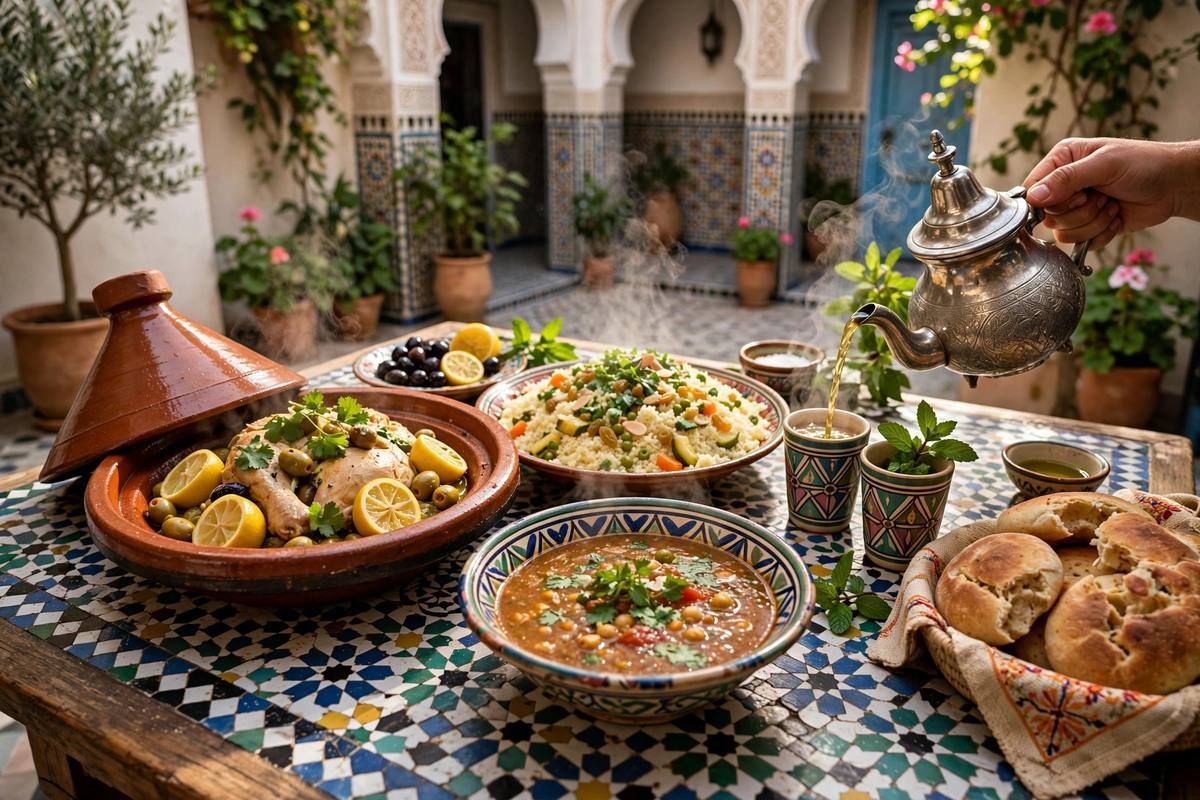
- Tagine — not just the clay pot but the slow-cooked stew inside it. Order the chicken with preserved lemon and olives, or the lamb with prunes and almonds; both appear on practically every menu and cost 40–70 MAD in a mid-range restaurant.
- Couscous — steamed semolina served with seven vegetables and meat, traditionally eaten on Fridays after the midday prayer. If you are visiting for a weekend, Friday lunch is your deadline.
- Pastilla — a flaky, sweet-savoury pie of pigeon or chicken dusted with cinnamon and icing sugar. Fes is its spiritual home, and it is the dish most first-time visitors remember longest.
- Harira — a rich tomato, chickpea and lentil soup, served to break the fast during Ramadan but eaten year-round. Expect to pay 10–15 MAD from a street vendor.
- Tangia — Marrakech's signature: beef sealed in a clay urn and slow-cooked for hours in the ashes of a hammam furnace. Order it a day ahead at a traditional grill house.
- Rfissa — shredded msemen flatbread soaked in a fenugreek and lentil broth with chicken — comfort food at its most unapologetic.
Breakfast and street food
Moroccan mornings are carb-forward and proud of it. In any medina you will find msemen (flaky square flatbread) and baghrir (spongy thousand-hole pancakes) fried to order for a few dirhams, served with honey, soft cheese or olives. Wash it down with mint tea and you have a breakfast for under 20 MAD.
For street food, follow the smoke and the crowds. Brochettes (grilled skewers) sizzle at every corner grill, bessara — a thick fava-bean soup — is the working person's breakfast in the north, and freshly squeezed orange juice costs around 7 MAD just about everywhere. In Marrakech, Jemaa el-Fnaa turns into an open-air food court at dusk: the numbered grills (stall 31 has a loyal following) serve skewers, grilled fish and harira at plastic tables. In Fes, look for the snail-soup vendors near the medina gates — peppery, warming, and a local cure-all.
What to drink (and what to skip)
Mint tea is poured from a height to make the foam, and refusing it is never an option. Coffee drinkers should order a nous nous — half coffee, half steamed milk. Fresh juices are everywhere: try the avocado juice (often blended with almonds and milk) or a panaché, a layered tower of fruit juices and smoothies.
Alcohol is available in tourist restaurants, bars and supermarkets like Carrefour, but much of the country drinks little or none — outside the big cities, simply assume a restaurant does not serve it. Tap water varies: bottled water is cheap and the safe default, especially in the south.
Where to eat: Morocco's best food cities
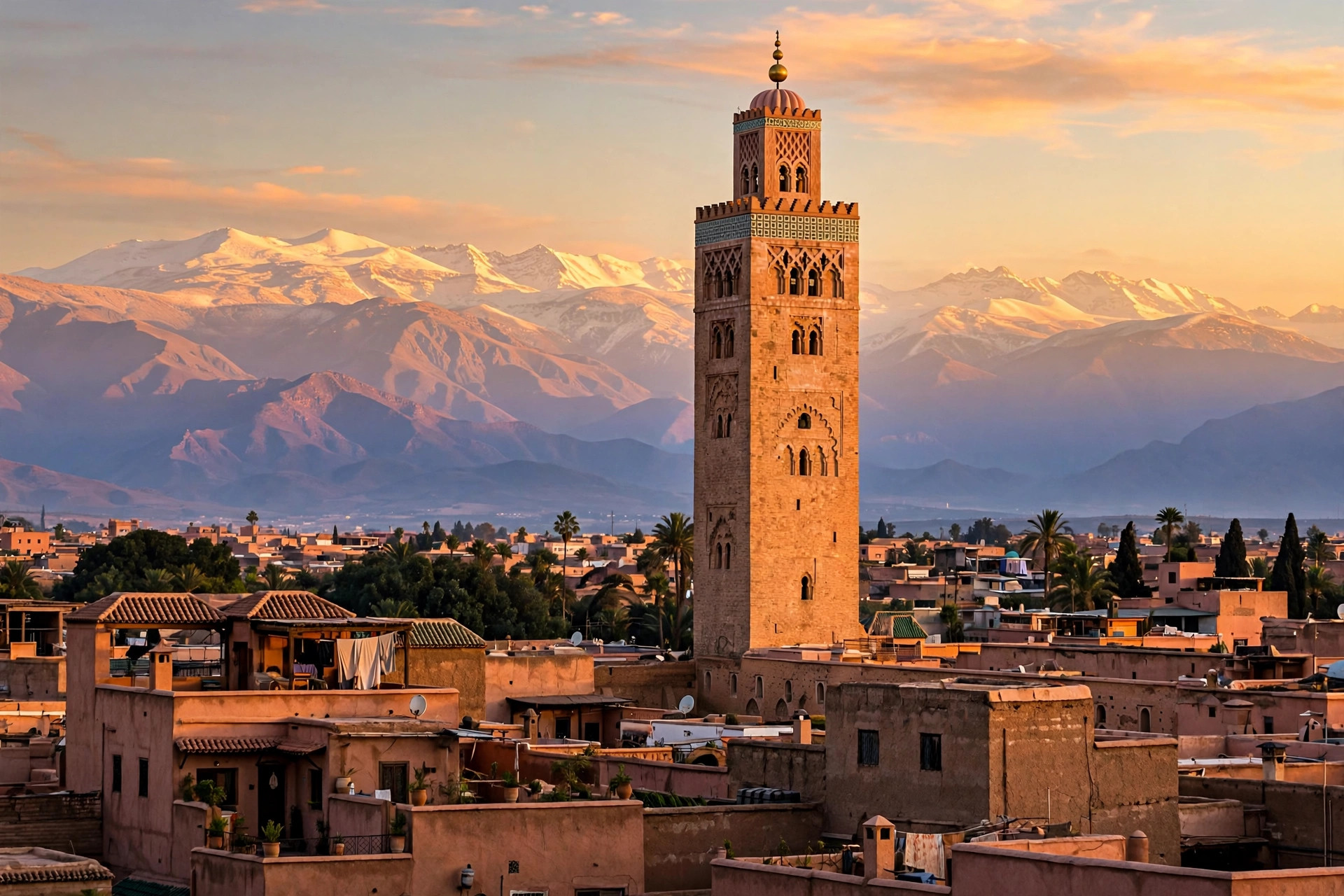
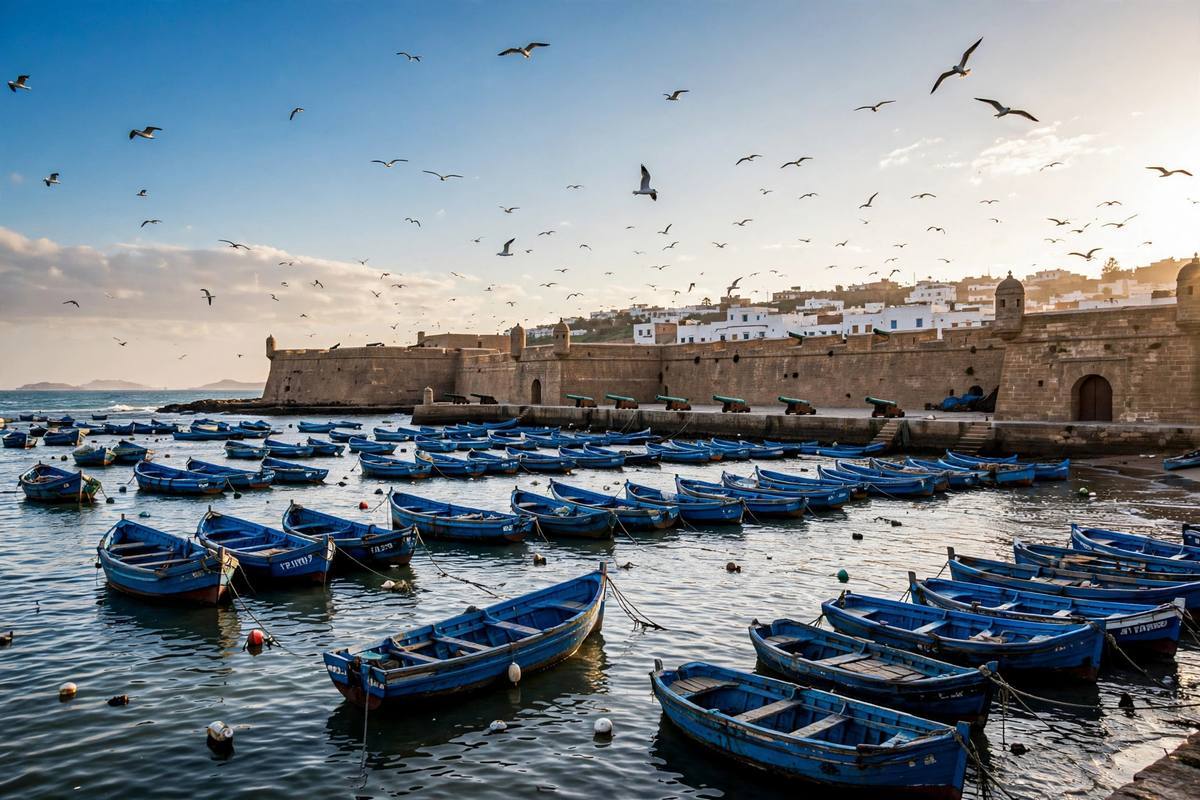
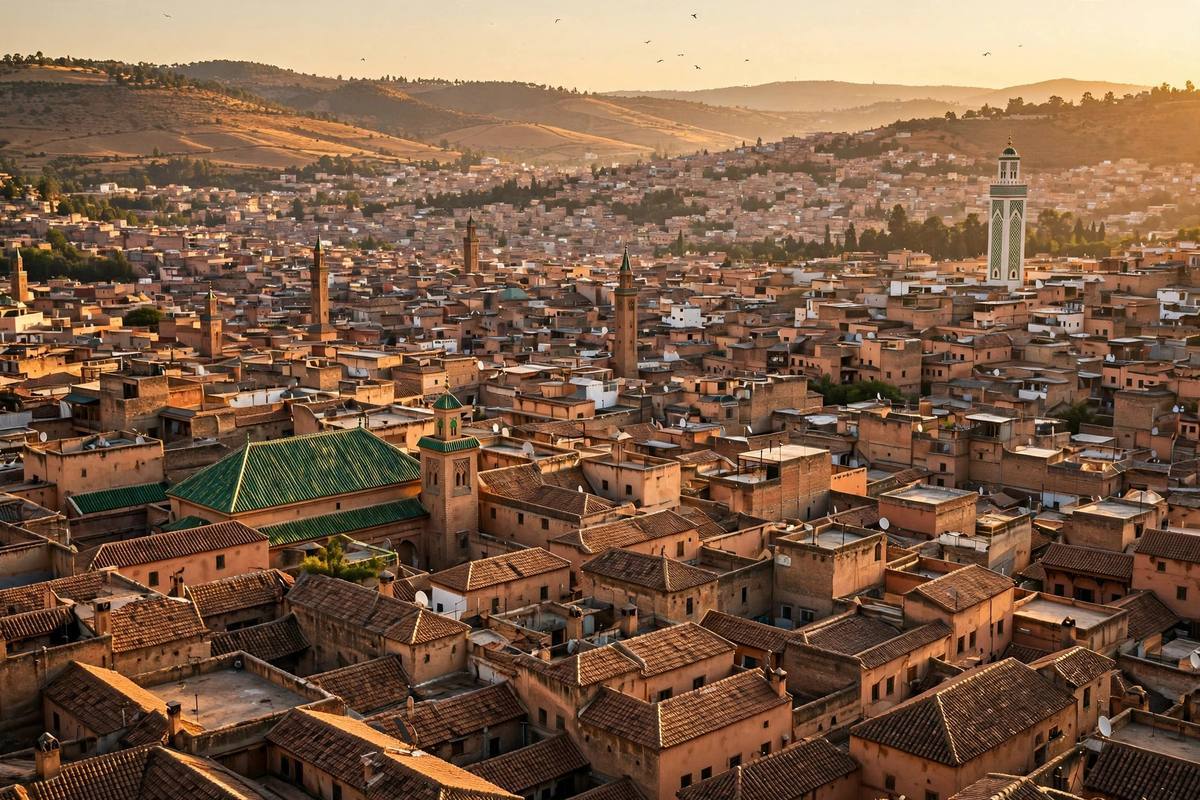
Fes is the culinary capital — its street-food alleys and old grill houses set the standard for pastilla and brochettes. Marrakech wins on spectacle: the night grills of Jemaa el-Fnaa plus a wave of excellent rooftop restaurants. Essaouira is where you eat fish: pick your catch at the port grills and have it weighed, grilled and brought to a plastic table within minutes. Chefchaouen adds mountain goat cheese (sold fresh in the medina) and some of the best breakfast terraces in the country.
Eat where the taxi drivers eat. The small grill houses and rotisseries a block or two off the main square serve the same tagines as the tourist restaurants for half the price — and the bread is always fresher.
Eating like a local: prices and etiquette
Bread arrives with every meal and doubles as your cutlery — tear, scoop, and don't be shy. Many Moroccans eat communally from a shared tagine with their right hand; washing your hands before eating is expected, and you'll often be offered a basin and soap. A street-food lunch costs 30–60 MAD, a sit-down restaurant meal 80–150 MAD, and tipping around 10% in sit-down places is appreciated but not mandatory.
Vegetarians do better than you'd think: couscous with seven vegetables, harira, loubia (white-bean stew) and zaalouk (smoky aubergine salad) are standard menu items, not afterthoughts. During Ramadan, daytime eating moves indoors out of respect — many cafés close until iftar, when the whole country eats at once.
Plan your Morocco trip
Turn this guide into a booked trip: compare stays, flights and car rental across Morocco below.
Some links on this page are affiliate links. If you book through them, we may earn a commission at no extra cost to you — it keeps these guides free.
Frequently asked questions
What is the most famous Moroccan dish?
The tagine — the slow-cooked stew served in the conical clay pot it shares its name with. Chicken with preserved lemon and olives is the classic order; lamb with prunes and almonds is the sweet-savoury runner-up. Couscous, traditionally eaten on Fridays, is the other national icon.
Is Moroccan food spicy?
Not usually. Moroccan cooking uses warm, aromatic spices — cumin, ginger, turmeric, cinnamon and saffron — rather than chilli heat. Harissa, a hot chilli paste, is sometimes offered on the side, so ask before assuming a dish is mild.
Is street food in Morocco safe to eat?
Generally yes, with one rule: eat where it is busy and freshly cooked. Sizzling brochettes, made-to-order msemen and steaming harira are all safe bets. Skip pre-cut fruit from quiet stalls, stick to bottled water, and you will eat street food happily for days.
What do Moroccans eat for breakfast?
A spread of breads — msemen, baghrir and khobz — with olive oil, olives, soft cheese and honey, plus mint tea or coffee. Heartier options include bessara, a fava-bean soup, in the north and harira soup just about everywhere. Expect to pay 15–25 MAD for a full café breakfast.
Can vegetarians eat well in Morocco?
Yes. Couscous with seven vegetables, harira soup, loubia (white-bean stew), zaalouk (smoky aubergine salad) and lentil tagines are staples, and most restaurants will happily make a vegetable tagine on request. Just note that vegetable couscous sometimes comes with meat broth — ask to be sure.