Morocco is one of the easiest countries in the world to eat well in — flavourful food, generous portions, and prices that make you want to order a second tagine. But there is a catch: in the big tourist cities, a whole industry exists to separate visitors from their dirhams at the table. This guide is the practical companion to our Moroccan food guide: not what to eat, but where to eat it, how to spot the traps, and how to dine like someone who knows the drill.
Know your eateries
Moroccan restaurants fall into a few clear types, and knowing which one you are walking into sets your expectations for price, quality and atmosphere.
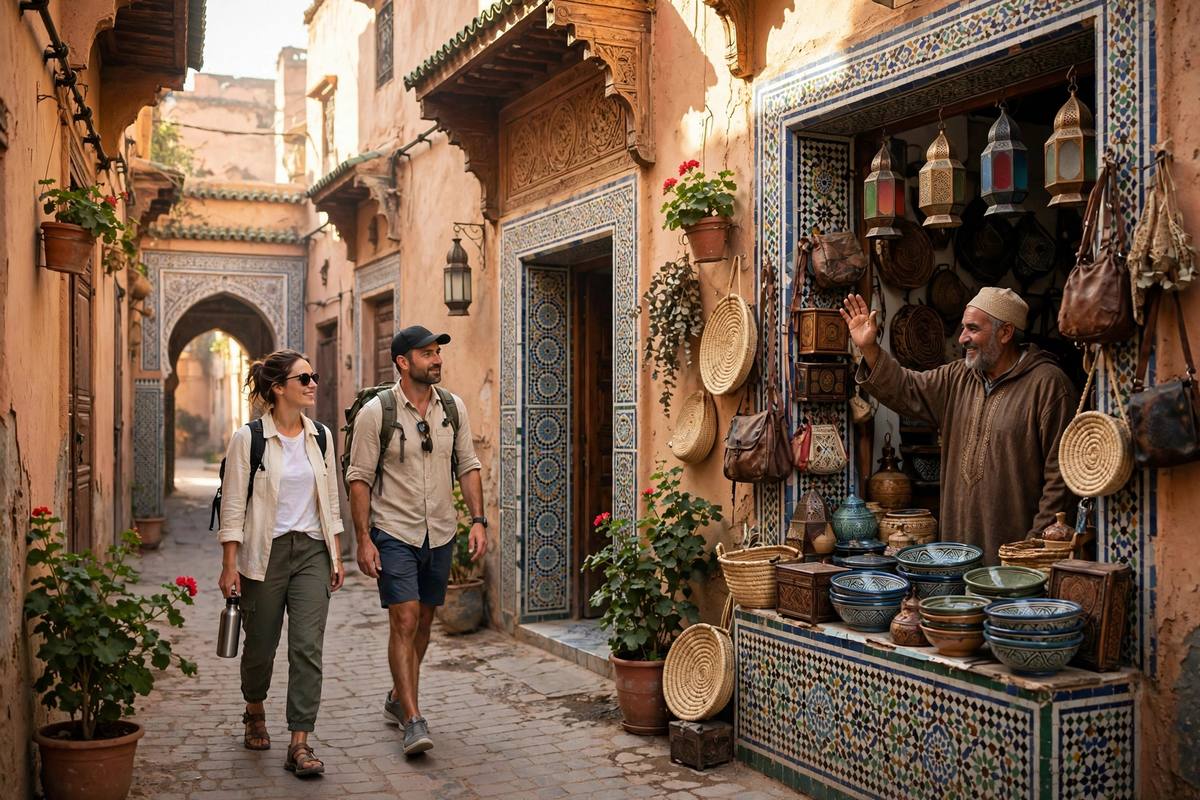
- Tourist restaurants cluster around the main squares and medina gates. Multilingual menus, touts outside, decent but rarely great food — fine in a pinch, never the highlight of your trip.
- Gargotes and snack bars are the local workhorses: counter seating, a short menu done well, and prices that make you double-check the bill. This is where taxi drivers eat, which tells you everything.
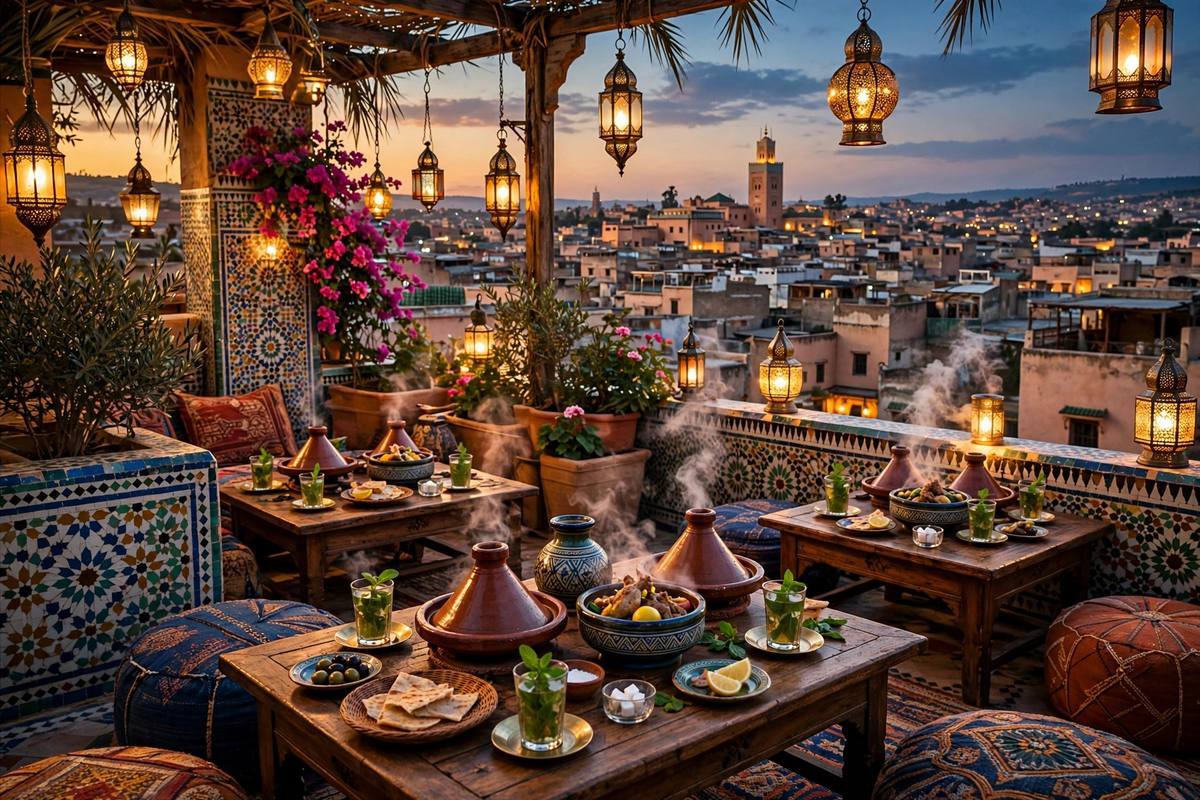
- Rooftop restaurants trade on the view. The sunset over the medina is genuinely spectacular, but food quality varies wildly — check recent reviews before committing to dinner.
- Hotel and riad restaurants are convenient and reliably hygienic. Perfect for your arrival night; less interesting once you find your feet.
- Market stalls and grill shops serve harira soup, brochettes and msemen pancakes for breakfast. Follow your nose and the queue.
How to spot a tourist trap
Learn these five warning signs and you will dodge 90% of bad meals in Morocco:
- A tout is pulling you in. Good restaurants in Morocco do not need someone on the street dragging customers through the door.
- A laminated photo menu with twelve cuisines. Pizza, sushi and tagine under one roof means none of them are done well.
- No prices on the menu. If you have to ask what things cost, you are about to pay the tourist price.
- Empty at 1pm. Moroccans eat lunch around midday; a restaurant that is dead at local lunch hour but packed with tour groups at 7pm is not cooking for locals.
- "Free" extras appear on the bill. The bread, olives or mint tea that arrived unasked-for are rarely actually free.
Walk one or two streets away from the main square and look for where locals are queuing at lunchtime. A short queue of Moroccans is the most reliable restaurant review in the country.
Tipping in Morocco
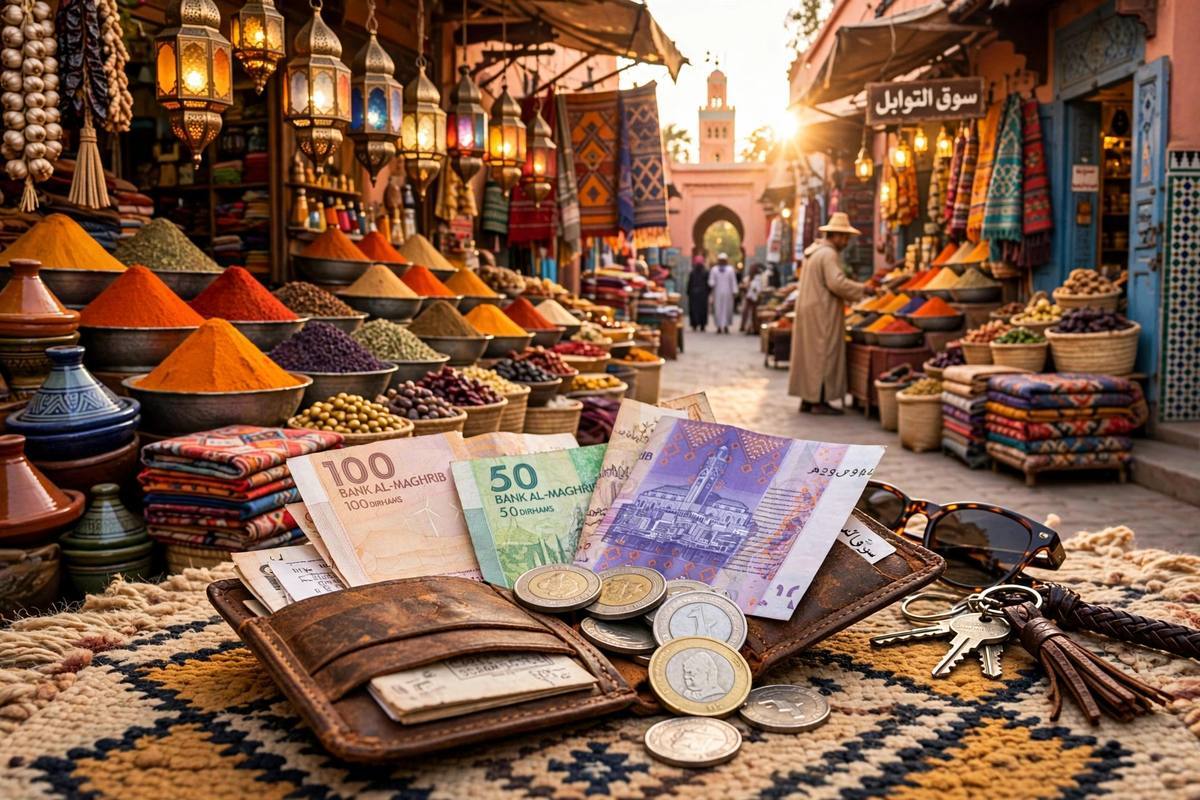
Tipping is not legally required, but it is firmly expected — hospitality wages are low, and a small tip goes a long way.
- Sit-down restaurants: around 10% of the bill, or simply round up. Check whether service is already included before adding more.
- Casual snack bars and gargotes: leave small coins — 5 to 10 dirhams is generous.
- Cafés: rounding up the change on a coffee or mint tea is standard.
Tip in cash, handed directly or left on the table — card machines are still rare outside upscale places.
Alcohol, water and hygiene
Alcohol: many traditional restaurants do not serve it at all. Tourist-oriented restaurants, hotel bars and some rooftop venues do — expect imported beer and Moroccan wine at tourist prices. Drinking in the street is frowned upon, so keep it to the table.
Water: drink bottled water everywhere. Ice in established restaurants is usually made from filtered water and is fine; at the most basic street stalls, skip it and the uncooked salads.
Hygiene cues: busy places with fast turnover are your safest bet. Food cooked to order in front of you — a grill, a sizzling tagine — beats anything sitting under a heat lamp. Clean tables and a visible kitchen are good signs; an army of flies is not.
Ordering tips and useful phrases
Lunch is the main meal of the day in Morocco, and many kitchens close between lunch and dinner. Dinner starts late — 8 or 9pm is normal, not fashionable. Ask for the plat du jour (dish of the day): it is the freshest thing in the kitchen and usually the best value.
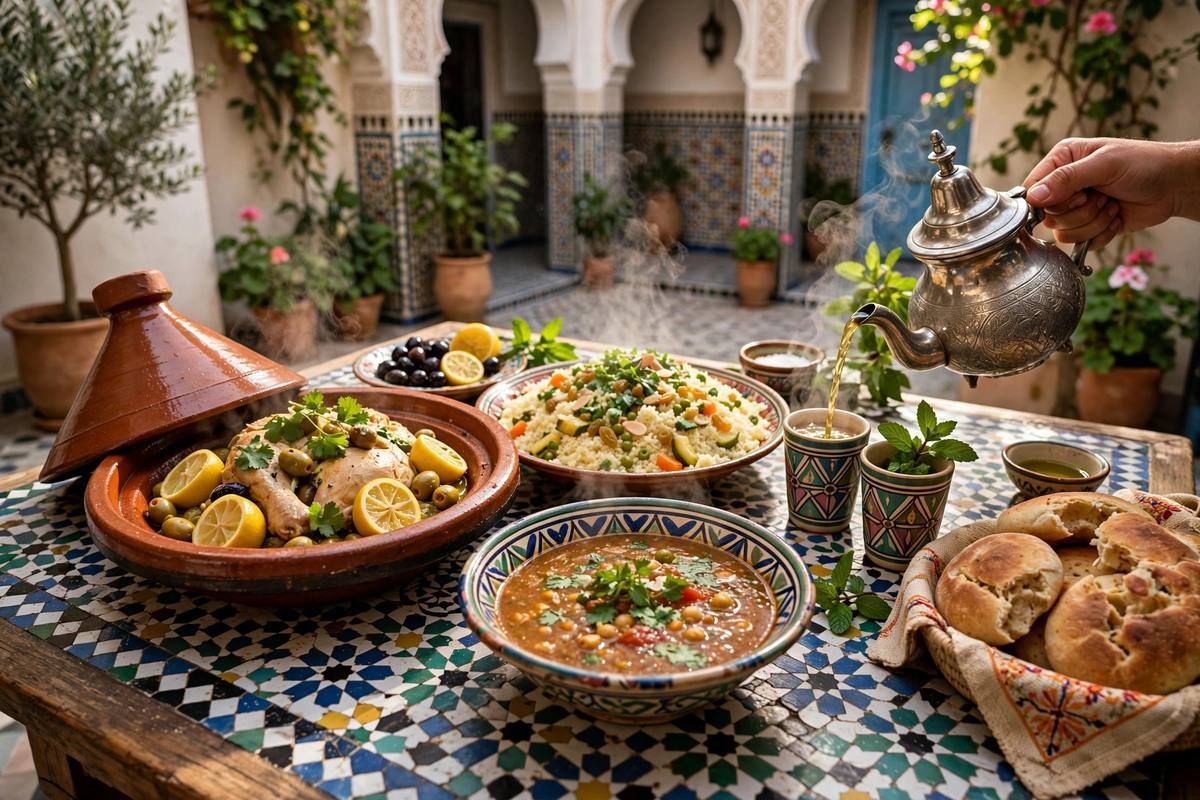
Eat breakfast like a local at least once: msemen flatbreads, baghrir pancakes with honey, olives and a bowl of harira. And if you are vegetarian, ask — most tagines can be made meat-free on request.
A few words go a long way:
- Shukran — thank you
- Bshhal? — how much?
- L'addition, s'il vous plaît — the bill, please
- Bnin! — delicious!
Menus are often in French first. "Brochettes" means skewers, "tanjia" is Marrakech's slow-cooked beef speciality, and "pastilla" is the famous sweet-savoury chicken pie — order it when you see it.
Plan your Morocco trip
Turn this guide into a booked trip: compare stays, flights and car rental across Morocco below.
Some links on this page are affiliate links. If you book through them, we may earn a commission at no extra cost to you — it keeps these guides free.
Frequently asked questions
Is street food safe to eat in Morocco?
Generally, yes — if you pick busy stalls with high turnover where food is cooked fresh in front of you. Stick to grilled items, soups like harira, and freshly baked bread. Skip uncooked salads and ice at the most basic stalls, and drink bottled water.
How much should I tip in a Moroccan restaurant?
About 10% at sit-down restaurants (or round up the bill), 5–10 dirhams at casual snack bars, and round up the change at cafés. Tipping isn't legally required, but it's expected and hospitality wages are low. Tip in cash.
Do restaurants in Morocco serve alcohol?
Many traditional restaurants don't. Tourist-oriented restaurants, hotel bars, and some rooftop venues do serve beer, wine, and spirits — at tourist prices. Drinking alcohol in public streets is frowned upon.
What time do Moroccans eat dinner?
Dinner is late in Morocco — 8 to 10pm is normal. Lunch is the main meal of the day, and many restaurant kitchens close between lunch and dinner, so plan accordingly.
Can I drink tap water in Moroccan restaurants?
No — stick to bottled water, which every restaurant sells. Ice in established restaurants is usually made from filtered water and is fine, but skip it at basic street stalls.