Tafraoute is not on most Morocco itineraries — which is exactly why it should be on yours. Set in a valley of pink granite boulders in the Anti-Atlas mountains, about three hours southeast of Agadir, this small market town is famous for two things: the surreal painted rocks on its outskirts and the almond blossoms that turn its valleys pink and white every February. Slow, strange and beautiful, it is Morocco almost entirely free of crowds.
The Painted Rocks: Les Rochers Peints
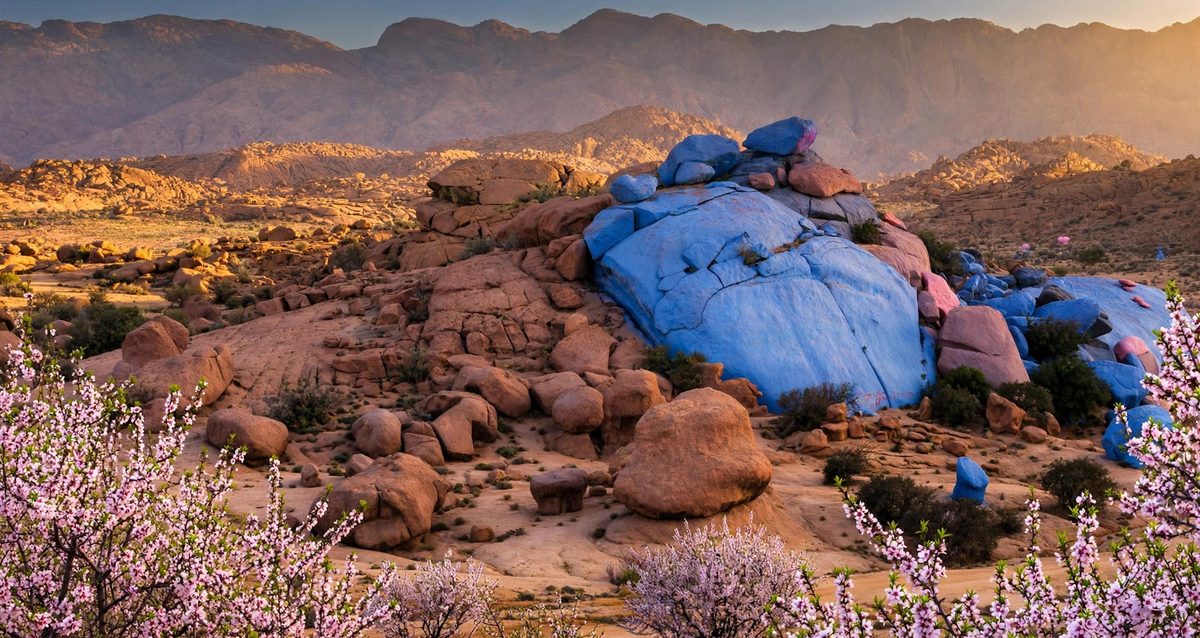
Outside the village of Aguerd Oudad, about 3 km from town, dozens of massive granite boulders wear coats of blue, red, mauve and violet paint. In 1984 the Belgian artist Jean Vérame, helped by Moroccan firefighters and some 18 tons of paint, covered them as a monumental land-art installation dedicated to his late wife — Les Rochers Peints, spread over about 1.5 hectares. It is one of the most photographed sites in the Anti-Atlas.
Forty years on, the colors have faded, so the rocks look less loud than old postcards suggest — but against the pink granite, the deep blue sky and the ochre peaks behind, the effect remains unmistakable and strange. Combine the visit with Napoleon's Hat, a nearby boulder uncannily shaped like the emperor's bicorne, and Lion's Head. Come in the late afternoon: the light is easier then and the granite glows.
The painted rocks are free and open at all times. You can walk there from town in about an hour or drive in ten minutes — but the walk, through almond groves and pink-granite corridors, is half the experience.
The Ameln Valley: 26 Berber villages
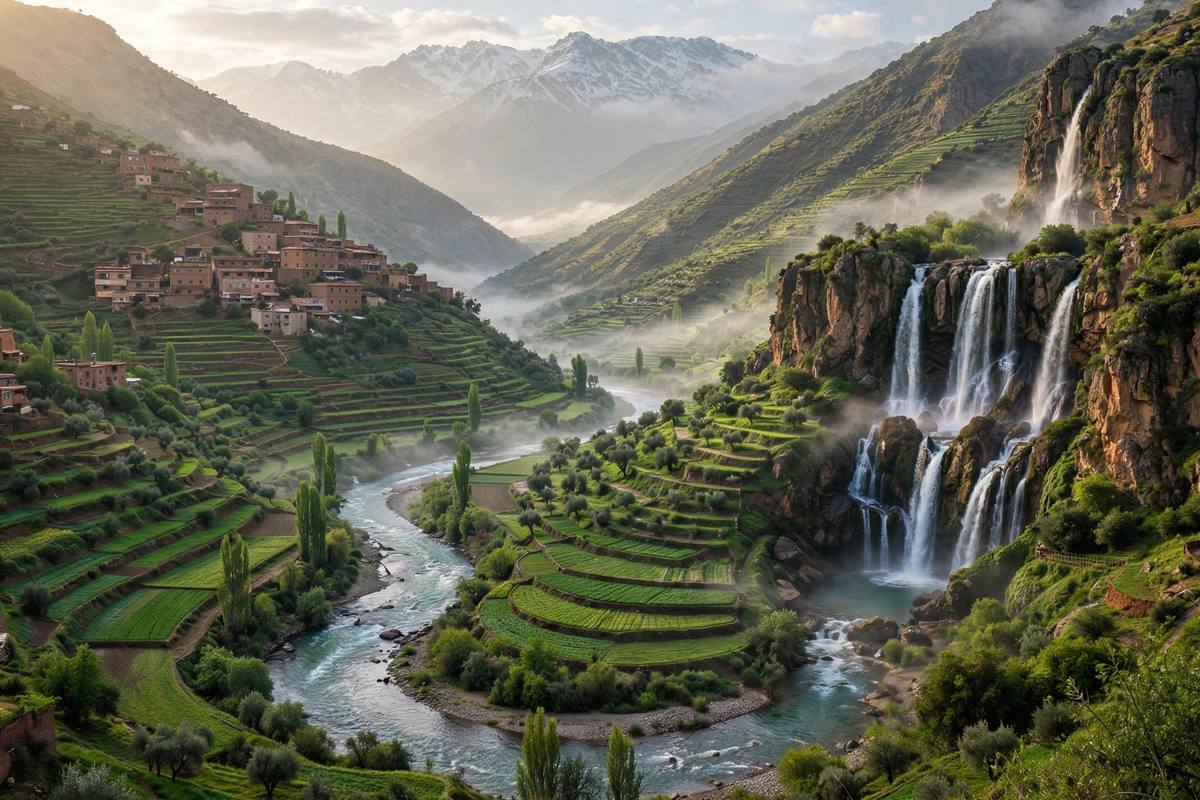
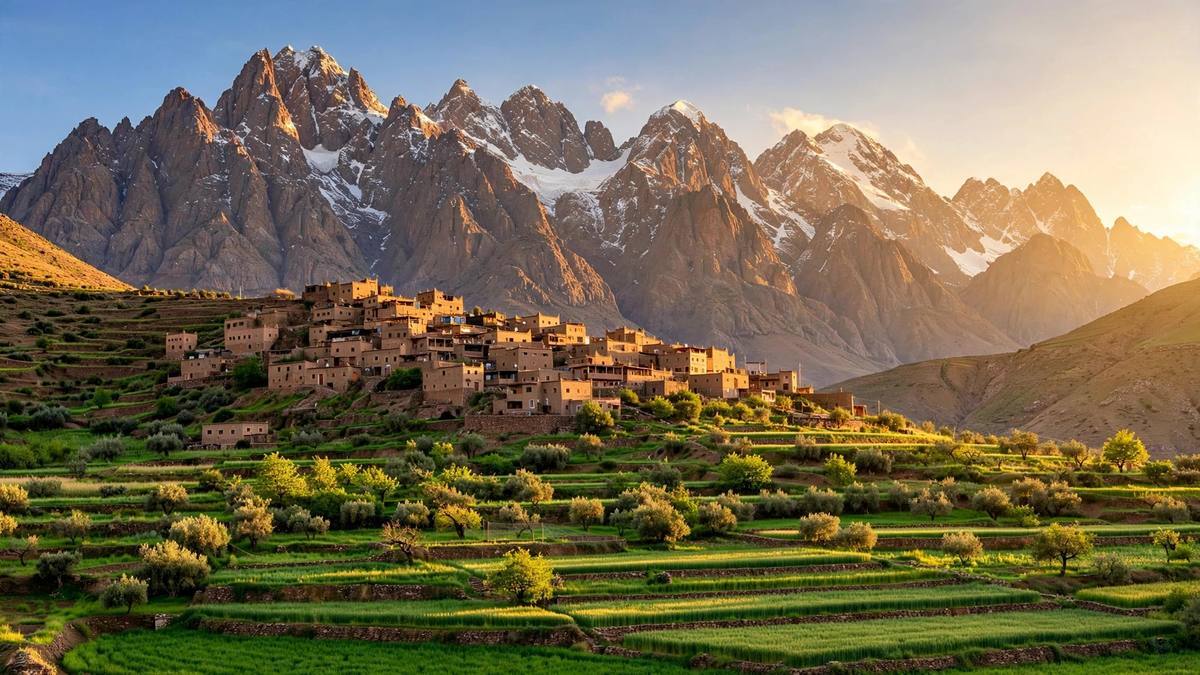
North of town, the Ameln Valley stretches beneath the sheer cliff of Jbel el Kest (2,359 m). Its 26 villages — ochre adobe houses, dry-stone terraces, palm groves and almond orchards — form one of Morocco's densest concentrations of traditional Berber architecture.
A car covers the valley loop in half a day; walking it properly takes two or three. Oumesnat is famous for its Traditional House, a small museum of Berber arts and traditions (entry around 20–30 dirhams). Tirnmatmat hides a spectacular palm grove on a pleasant trail, Anameur is the classic trailhead for climbs up Jbel el Kest, and near Tazka a one-hour walk reaches prehistoric rock engravings. Stay in a village guesthouse for the mornings: pale blossom against hard granite is worth slowing down for.
Aït Mansour Gorge: the green gorge
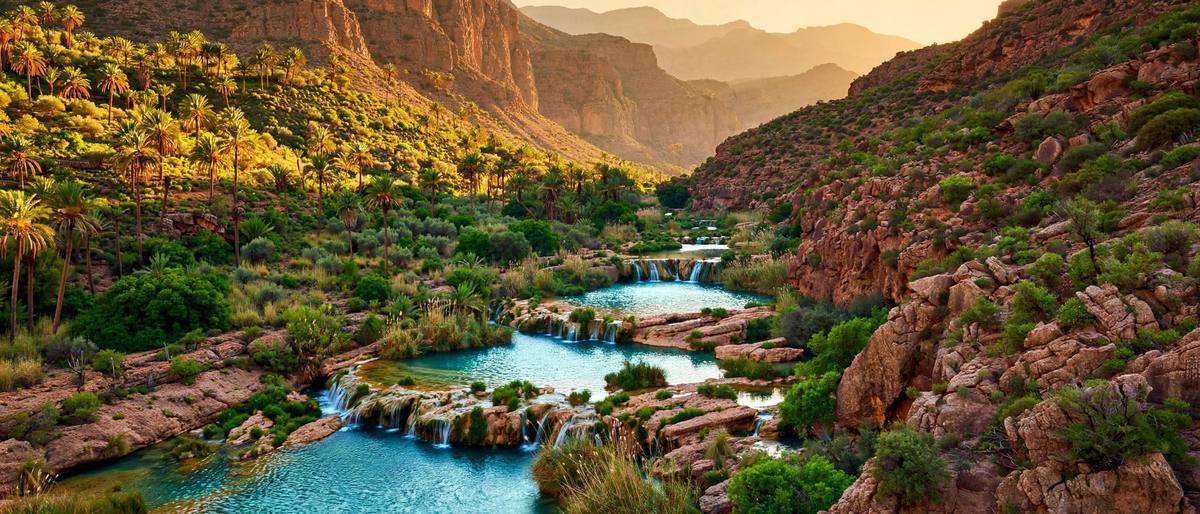
A short drive from Tafraoute, the Aït Mansour gorge is an oasis that feels impossible in the Anti-Atlas: palm trees crowding a seasonal river, small stone villages, and towering rock walls on both sides. It is one of the prettiest scenic drives in southern Morocco — walk a few kilometres into the gorge, then find a shady terrace for a tagine in one of the villages along the water.
Hiking, climbing and mountain biking
The pink granite that made Tafraoute famous also makes it one of Morocco's best playgrounds for rock climbing — the bouldering around town draws climbers every winter, with granite domes to suit all levels. Walkers are equally spoiled: trails thread the Ameln Valley between villages, climb toward Jbel el Kest and loop out to the painted rocks. Mountain bikes are easy to rent in town for a day of valley tracks.
When to visit Tafraoute
February is magic: almond trees bloom across the valleys, turning everything pink and white, and the Almond Blossom Festival fills the town with music, dance and craft stalls — book accommodation ahead for the festival. March to May and September to November are ideal for hiking: clear air, comfortable walking weather, quieter trails. Summer days are hot but the altitude keeps evenings pleasant; winter days are usually mild while nights can be cold.
Wednesday is market day — the weekly souk is the best moment to taste amlou, honey and local almonds, watch for hand-woven babouches (leather slippers), and see the town at its liveliest.
Where to stay in Tafraoute
Options are small-scale and charming. Hotel Les Amandiers is the comfortable classic, with mountain views and modern amenities; Auberge Kasbah Chez Amaliya is a traditional guesthouse with a genuinely Berber feel. Guesthouses across the Ameln Valley villages offer half-board rooms, often with rooftop terraces facing Jbel el Kest. Expect roughly 350–700 MAD a night for a comfortable room, less for simple guesthouses — Tafraoute remains one of the best-value bases in the south.
Getting to Tafraoute
The usual gateway is Agadir, about three hours by road: CTM and local buses connect the cities, and grand taxis run the route. Many visitors rent a car in Agadir — driving gives you the freedom to explore the Ameln Valley and Aït Mansour at your own pace, and the winding road through the Anti-Atlas is half the adventure.
Plan your Morocco trip
Turn this guide into a booked trip: compare stays, flights and car rental across Morocco below.
Some links on this page are affiliate links. If you book through them, we may earn a commission at no extra cost to you — it keeps these guides free.
Frequently asked questions
Where are the Painted Rocks of Tafraoute?
The painted rocks (Les Rochers Peints) sit near the village of Aguerd Oudad, about 3 km from Tafraoute. They are free, open at all times, and reachable on foot in about an hour or by car in ten minutes.
Can you still see the colors on the painted rocks?
Yes — but they have faded since the Belgian artist Jean Vérame painted them in 1984. Against the pink granite and deep blue sky, the blue, violet and pink pigments remain clearly visible and photogenic, especially in late-afternoon light.
What is the best time to visit Tafraoute?
February for the almond blossom and the Almond Blossom Festival; spring (March–May) and autumn (September–November) for hiking. Summer is hot but evenings stay pleasant at altitude; winter nights can be cold.
How many days do you need in Tafraoute?
Two to three days: one for the painted rocks, Napoleon's Hat and the town souk, one for the Ameln Valley villages, and half a day for the Aït Mansour gorge.
Is Tafraoute worth visiting?
If you want Morocco off the tourist trail — surreal granite landscapes, Berber village culture, climbing and hiking, at very fair prices — yes. It is not a nightlife or beach destination, so skip it if your trip is only Marrakech and the coast.