There comes a moment — usually around day two, when the smell of cumin and woodsmoke has worked its way into your clothes — when eating tagine in restaurants stops being enough. You want the skill, not just the memory. A cooking class in Morocco is how you get it: tagine on the menu, a guided tour of the souk's spice pyramids before lunch, and a chef who learned these recipes at their grandmother's stove.
It is also the most social half-day you can book in the country. Classes are small, hands stay busy, and by the time the tagine lid comes off, strangers are swapping travel stories over mint tea. If you do one hands-on activity in Morocco, make it this one.
Cooking class Morocco tagine: a typical day
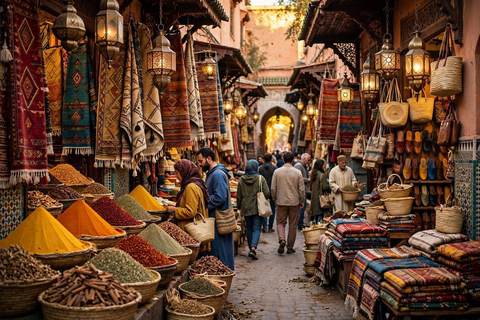
Most classes run three to five hours and follow the same delicious rhythm. You arrive to mint tea and a short introduction, then head out to the market — this is what makes a Moroccan cooking class different from any class back home. Your chef shows you how to pick ripe tomatoes for the tagine base, which olives are which, and how to buy saffron without paying the tourist price.
- A guided market or souk visit to buy the day's produce and spices
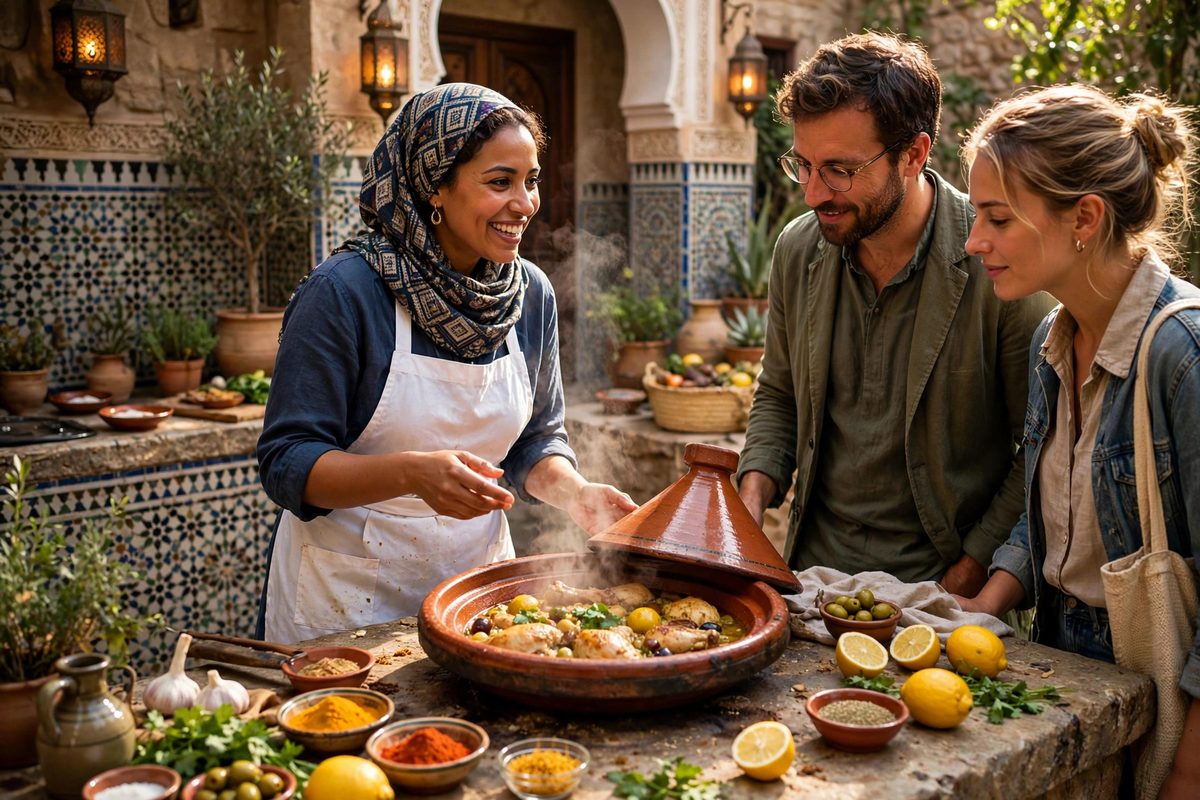
- Hands-on prep: chopping vegetables, layering the tagine, mixing spice blends like ras el hanout
- Baking khobz, the round Moroccan bread — sometimes in a communal wood-fired oven
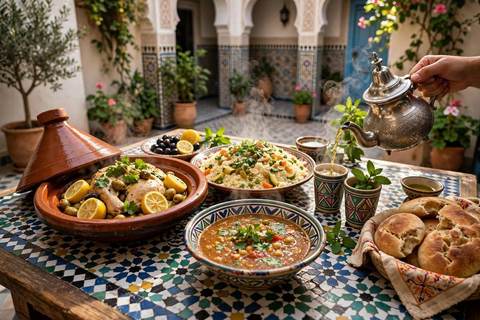
- The shared meal you cooked, eaten together the traditional way, with mint tea
- A written morocco tagine recipe to take home (many schools email a PDF after class)
Morning classes are the best pick: the markets are liveliest, the produce is freshest, and you finish in time for a long afternoon of sightseeing.
Where to take a Moroccan cooking class
You can find a tagine cooking class in Morocco almost anywhere travellers gather, but the experience changes with the city. Here is how the main spots compare.
Marrakech
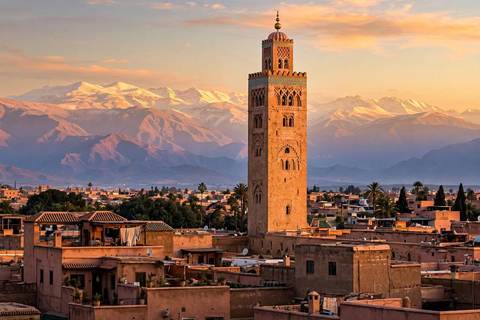
For sheer choice, nothing beats Marrakech — a cooking class Marrakech hosts daily runs in dozens of riads and cooking schools, many in beautiful courtyard kitchens. Sessions often start at the medina's spice stalls and end with lunch on a rooftop terrace. Book ahead in spring and autumn; the popular morning slots fill up fast.
Fes
For the deepest culinary tradition, Fes is the connoisseur's pick: a cooking class Fes chefs are proud of leans into slow, classic recipes — Friday couscous with seven vegetables, rich meat tagines, and delicate pastilla. Classes here tend to be smaller and more traditional.
Essaouira and the coast
On the Atlantic coast the menu changes: seafood tagines with chermoula, grilled sardines, and fish cooked the way the port's fishermen eat it. Essaouira's classes are relaxed, often in a riad a short walk from the harbour, and the sea air is a fine substitute for a rooftop.
The Sahara
Some desert camps fold bread-baking in the sand and a campfire tagine dinner into an overnight stay — less a formal class, more a delicious bonus to a night under the stars. Ask your riad or tour operator: many Merzouga and Zagora camps include it when you book a night.
Moroccan cooking class cost: prices and what's included
A Moroccan cooking class costs roughly $25–60 per person, with most group classes landing around $30–45. That almost always includes the market tour, all ingredients, an apron, the meal you cook, mint tea, and the recipe to take home. Private classes and luxury riad sessions run higher — sometimes $80–120. Remember the price covers lunch or dinner too: it is an activity and a meal in one. Compared with a restaurant dinner in a tourist medina, a class often costs barely more — and you leave with a skill.
Booking through your riad is the easiest route, but compare prices with booking direct — riads sometimes add a commission on top.
How to choose a good class
Not all classes are equal. Look for these signs of a good one:
- Small groups — twelve or fewer — so you actually cook instead of just watching
- A market or souk visit included: it is half the experience
- Instruction in English or French — confirm the language when you book
- Vegetarian and vegan-friendly options if you need them; most schools adapt easily with advance notice
- Recent reviews that praise the food, not just the fun
- A menu you actually want to eat — tagine, couscous, pastilla, harira — check what is on the day's plan
Bringing a tagine home: buying a tagine in Morocco
After your class, the souvenir you will actually use is the pot itself. Buying a tagine in Morocco is easy — every souk sells them — but buy smart. Unglazed clay tagines (the rustic brown ones) are made for cooking over fire; painted, glazed tagines are mostly for serving, and only some are food-safe for cooking.
- Choose unglazed or plain food-safe glazed clay for cooking; treat brightly painted ones as serving dishes
- Tap the base and the lid — a clear ring means no hidden cracks
- Sizes run from single-serving to family feasts; a medium tagine (about 25–30 cm) suits most home cooks
- Bargaining is expected: start around half the asking price and meet somewhere in the middle
Before the first use, soak an unglazed tagine in water for several hours (overnight is traditional), let it dry, rub it with olive oil, and warm it gently the first time you cook. This curing stops the clay from cracking — and it is exactly what your chef will tell you to do.
To get it home in one piece, wrap the base and lid separately in clothes in the middle of your suitcase and stuff socks inside the pot. Small tagines can even fly as carry-on.
Plan your Morocco trip
Turn this guide into a booked trip: compare stays, flights and car rental across Morocco below.
Some links on this page are affiliate links. If you book through them, we may earn a commission at no extra cost to you — it keeps these guides free.
Frequently asked questions
How much does a cooking class in Morocco cost?
Most group classes cost $25–60 per person — typically $30–45 — including the market tour, all ingredients, the meal you cook, mint tea, and a recipe to take home. Private classes and luxury riad sessions run higher, around $80–120.
How long does a Moroccan cooking class last?
Most classes run three to five hours. Morning sessions are the best choice: markets are at their liveliest, produce is freshest, and you finish with lunch in time for an afternoon of sightseeing.
Should I take a cooking class in Marrakech or Fes?
Marrakech offers the most choice, with daily classes in riad courtyards and rooftop lunches. Fes is the more traditional pick, with smaller classes focused on classic slow-cooked recipes. Head to Essaouira if you want seafood tagines by the Atlantic.
Do I need cooking experience? Are classes vegetarian-friendly?
No experience is needed — classes are designed for beginners, and the chef guides every step. Most schools are vegetarian- and vegan-friendly; just mention it when you book so they can plan the menu.
How much does a tagine cost in Morocco?
In the souks, small decorative tagines start around $5–10, while a medium cooking-quality unglazed tagine is roughly $15–30. Bargaining is expected — start around half the asking price. If you plan to cook in it, cure it first: soak it in water for several hours, rub with olive oil, and heat it gently the first time.