Morocco's big cities are spread far apart — Tangier to Marrakech is over 500 kilometers — and while the motorways are modern, the train is often faster, calmer and cheaper once you add up tolls and fuel. The national railway, ONCF, links the entire northern half of the country, and the Al Boraq high-speed line has made rail travel genuinely exciting. If your itinerary stays north of the Atlas — Tangier, Rabat, Casablanca, Fes, Meknes, Marrakech — you may never need a car at all.
Al Boraq: Africa's first high-speed train
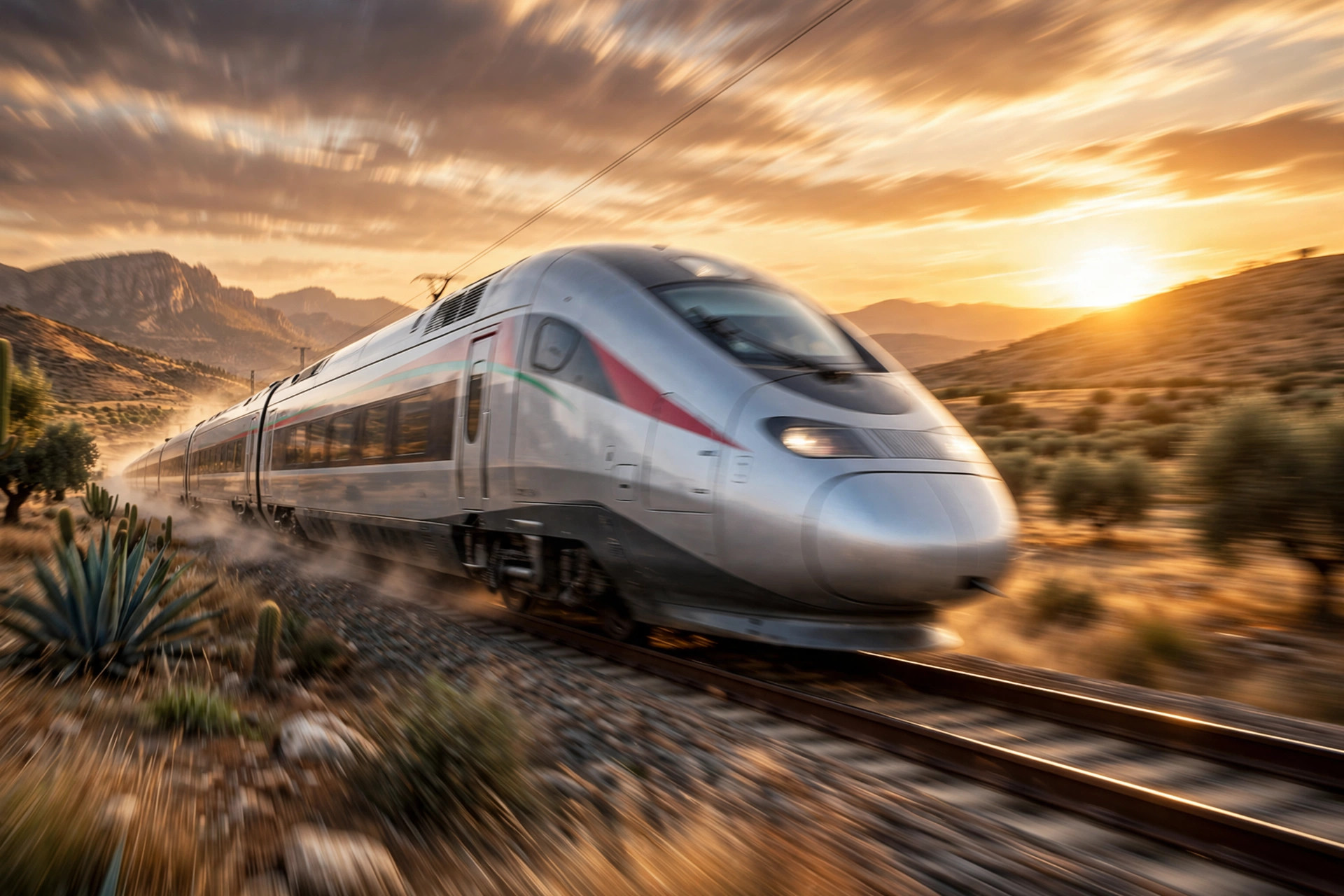
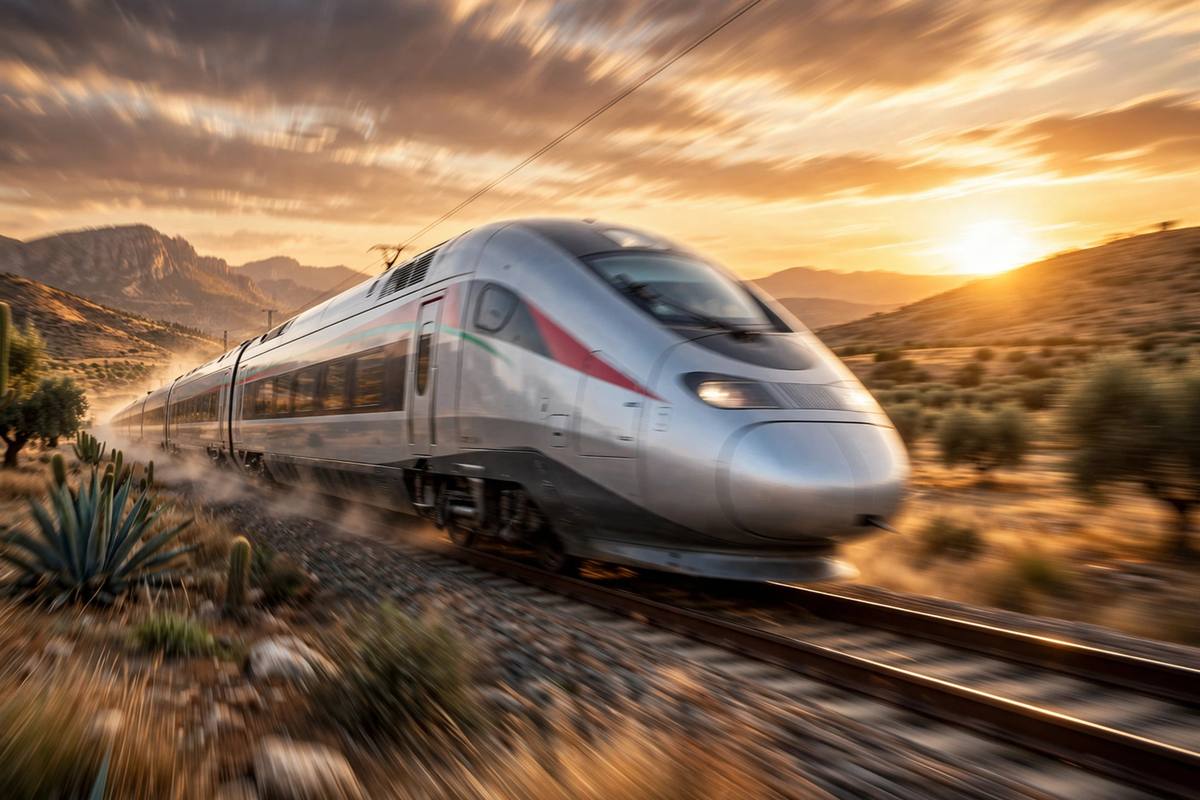
Launched in 2018, Al Boraq was the first high-speed rail service in Africa. The red-and-silver double-decker trains run at up to 320 km/h between Tangier and Casablanca, calling at Kenitra, Rabat-Agdal and Casa Voyageurs. The headline journey — Tangier to Casablanca in about 2 hours 10 minutes — takes less than half the old travel time and has turned a grueling day trip into an easy hop.
Fares work like airline tickets: the earlier you book, the less you pay. A second-class seat bought well in advance typically starts at around 149 dirhams, rising toward 224 dirhams closer to departure; first class runs roughly 244 to 364 dirhams. Seats are assigned in both classes, and trains on the busy Friday-to-Sunday corridor can sell out, so book a few days ahead for weekend travel.
Al Boraq's cheapest "promo" fares are released in limited numbers per train — midweek trains out of Tangier and Casablanca are where the bargains hide, while Sunday-evening trains back into Casablanca are the priciest seats in the country.
Key ONCF routes and travel times
Beyond the high-speed line, ONCF's conventional trains cover the north comfortably. The most useful routes for visitors:
- Tangier – Casablanca: about 2h10 on Al Boraq — the fastest rail link in the country.
- Tangier – Rabat: about 1h20 on Al Boraq.
- Casablanca – Rabat: about 1h on the TNR shuttle, which runs up to twice an hour at peak times.
- Casablanca – Marrakech: about 3h, with several departures a day.
- Casablanca – Fes: about 4h via Rabat and Sidi Kacem.
- Tangier – Fes: about 4h30, a handy cross-country link.
- Casablanca – Oujda: about 10h, with day trains and overnight options toward the east.
Note that the rail network ends at Marrakech — there are no trains to Agadir, Essaouira or the Sahara. ONCF's Supratours coaches continue from the stations to those destinations and can be bought as a combined train-plus-coach ticket (Marrakech–Essaouira is the classic pairing). A high-speed extension from Kenitra toward Marrakech is under construction ahead of the 2030 World Cup.
Tickets: classes, prices and where to buy
ONCF runs two classes. First class (Première) means wider seats and a reserved spot on every train. Second class (Seconde) is comfortable, but on conventional trains seating is open — on a packed Friday-afternoon service you could end up standing in the corridor. On Al Boraq both classes have assigned seats, so the difference is mainly comfort and quiet.
Buy tickets at any station counter, on the ONCF Voyageurs website, or in the ONCF app, which issues e-tickets with a QR code — no printing needed, and international cards are accepted online. ONCF also sells youth, senior and loyalty discount cards that pay for themselves within a couple of long trips if you qualify.
Keep your ticket until you leave the station. Tickets are checked at the gates in Al Boraq stations, and inspectors on board can ask to see them at any point in the journey.
Stations: which one do you need?
Morocco's big cities have more than one station, and it matters which you choose. In Casablanca, long-distance and high-speed trains use Casa Voyageurs; the TNR shuttles to Rabat also depart from Casa Port, right in the city center. In Rabat, Al Boraq stops at Rabat-Agdal, while Rabat-Ville is closer to the medina and the Kasbah. The Mohammed V International Airport has its own rail station with shuttle trains into Casablanca. Tangier Ville, Marrakech and Fes each have one main station, all central and easy to reach by petit taxi.
Plan your Morocco trip
Turn this guide into a booked trip: compare stays, flights and car rental across Morocco below.
Some links on this page are affiliate links. If you book through them, we may earn a commission at no extra cost to you — it keeps these guides free.
Frequently asked questions
How fast is the Al Boraq high-speed train?
Al Boraq runs at up to 320 km/h between Tangier and Casablanca, cutting the journey to about 2 hours 10 minutes — less than half the previous 4 hours 45 minutes. It is the fastest way to move between Morocco's northern cities.
Can I buy ONCF train tickets online in English?
Yes. The ONCF Voyageurs website and the ONCF mobile app sell e-tickets with a QR code, and international cards are accepted. You can also buy at any station counter, where staff in the larger cities usually speak English and French.
Is first class on Moroccan trains worth it?
On Al Boraq, the difference is mostly seat width and quiet — second class is already comfortable. On conventional trains, first class guarantees a reserved seat, which matters on busy weekend and holiday services when second class can be standing-room only.
Are there trains to Agadir, Essaouira or the Sahara?
No — Morocco's rail network ends at Marrakech. ONCF's Supratours coaches continue from the stations to Essaouira, Agadir, Tetouan and other destinations, and you can buy the train-plus-coach combination as a single ticket.
Do Moroccan trains run overnight?
Yes, on longer routes such as Casablanca–Oujda there are night trains with couchette options. Al Boraq and the main intercity services run from early morning to late evening.