Visiting Morocco during Ramadan is one of the most atmospheric ways to experience the country — and one of the most misunderstood. For roughly 29 or 30 days, the daily rhythm of Morocco shifts: afternoons grow quiet and contemplative while the nights explode with food, gatherings and celebration. Tourist life goes on almost as normal, but the country you see in Ramadan is a deeper, more intimate version of Morocco.
This guide answers the questions every traveler asks before traveling to Morocco in Ramadan: what actually closes, what stays open, how to handle meals, the etiquette rules tourists should know, and how to catch iftar — the sunset meal that is the social highlight of the holy month.
Should You Visit Morocco During Ramadan?
Honestly? Yes — with the right expectations. Many travelers report that their Ramadan trips were their most memorable Moroccan experiences, precisely because the country slows down and opens up socially. Here is the honest balance sheet:
- The magic: streets decorated with lights, nightly food markets, strangers inviting you to share iftar, and a rare glimpse into Moroccan family life.
- The calm: fewer crowds at major sights, lower hotel prices in some cities, and a peaceful, reflective daytime atmosphere.
- The trade-offs: most restaurants close during daylight hours, alcohol becomes harder to find, and some businesses keep shorter hours.
Morocco is one of the most relaxed places in the Muslim world to experience Ramadan as a visitor. The tourism infrastructure — hotels, riads, tour operators — runs normally, and Moroccans are famously tolerant of non-fasting guests.
What Changes During Ramadan in Morocco
Morocco tourism during Ramadan keeps moving, but the schedule bends. Here is what to expect day to day:
- Restaurants: the biggest change. Most Moroccan restaurants and street-food stalls close during daylight and reopen at or after iftar (sunset). Hotels and upscale restaurants in tourist areas often still serve lunch, sometimes discreetly. Your riad will typically serve you breakfast and meals normally.
- Cafés: neighborhood cafés close by day and reopen around iftar, staying packed until late at night. Coffee culture moves to the evening.
- Alcohol: many bars and some liquor-serving restaurants close for the month. Supermarkets like Carrefour often suspend alcohol sales. International hotels and a few tourist-focused spots in Marrakech, Agadir and Casablanca may still serve — but expect fewer options.
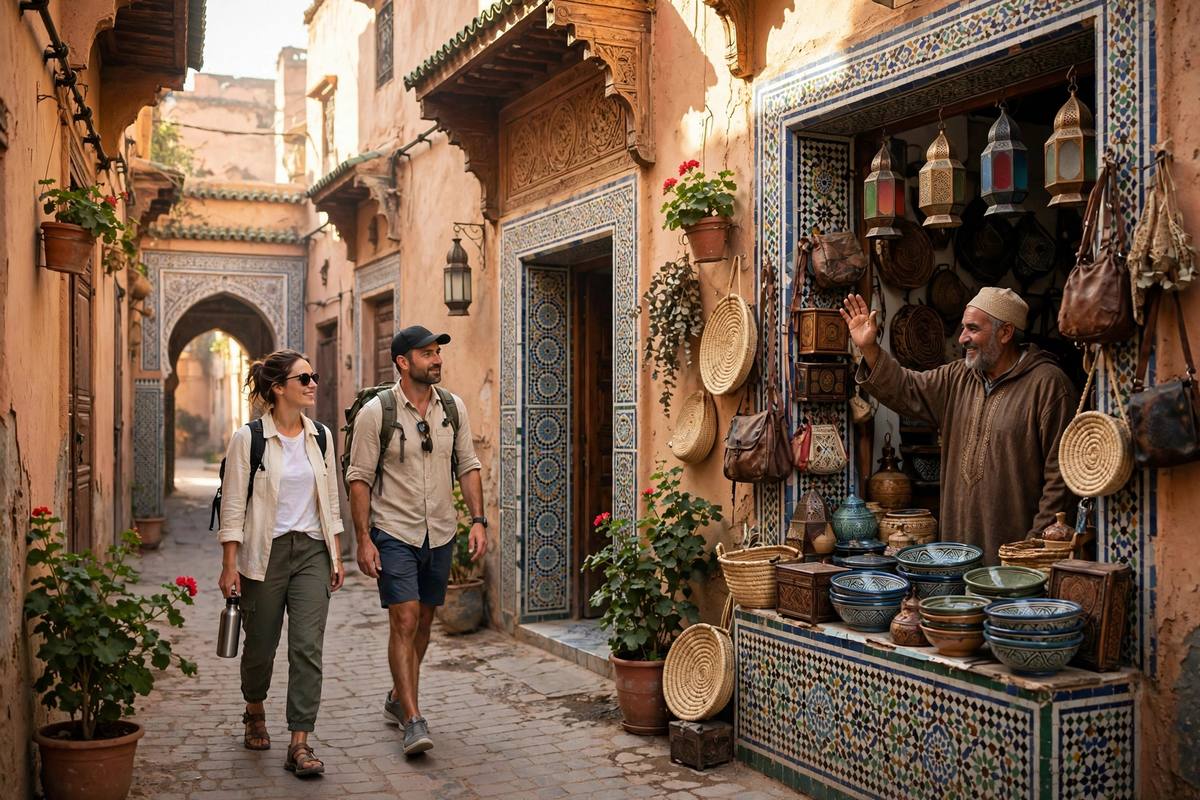
- Souks and shops: generally open, though some close for a long afternoon break and reopen in the evening. The last hour before iftar is quiet — everyone heads home to eat.
- Museums and monuments: stay open but often shift to shorter or split schedules (for example, 9am–3pm). Check timings the day before.
- Transport: trains, buses (CTM, Supratours) and grand taxis run normally. Traffic dips in the afternoon and surges right after iftar.
- Banks and offices: government and many businesses switch to reduced hours, roughly 9am–3pm.
Eating, Drinking and Etiquette: The Real Rules for Visitors
Non-Muslims are not required to fast in Morocco, and nobody will demand it of you. But public respect matters enormously. Going to Morocco during Ramadan as a tourist means adapting a few small behaviors:
- Don't eat, drink or smoke openly on the street during the day. Step inside your hotel, a tourist restaurant or a quiet corner. Eating in front of fasting people is considered rude — and in Morocco, unlike some countries, it can genuinely offend.
- Be discreet with water. Carry a bottle in your bag rather than sipping from it on a busy medina street.
- Dress a little more modestly than usual. Cover shoulders and knees, especially outside the big resort towns. Ramadan is a reflective month and conservative dress is noticed and appreciated.
- Be patient in the late afternoon. By 4 or 5pm, many Moroccans are tired and hungry. Service can be slower and tempers shorter — smile and give people grace.
- Accept iftar invitations. If a local invites you to break fast with them, say yes. It is one of the most generous experiences in Moroccan culture.
Inside your hotel or riad, everything is normal — breakfast is served, meals are available, and nobody minds if you eat. The etiquette rules apply to public streets, markets and shared spaces.
Iftar: The Sunset Meal You Must Not Miss
Iftar — the fast-breaking meal at sunset — is the beating heart of Ramadan in Morocco, and the best part of travel to Morocco in Ramadan. At the call to prayer that marks sunset, the country sits down to eat together, and the evening unfolds in waves.
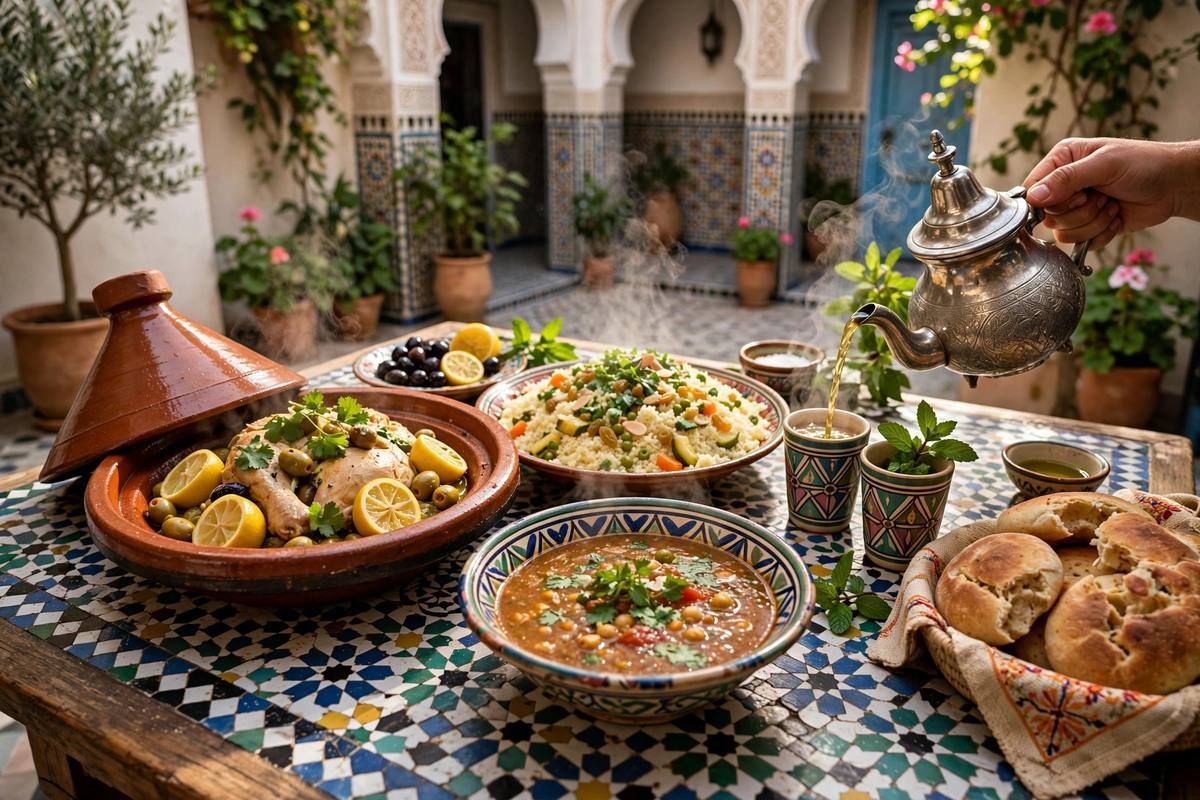
The classic Moroccan iftar table is a feast: harira (the rich tomato-and-lentil soup), dates and milk to break the fast, chebakia (honeyed sesame cookies), msemen flatbreads, boiled eggs with cumin, and sweet mint tea. Many cities set up iftar tents and street stalls where you can buy a full iftar spread cheaply — follow the crowds just before sunset.
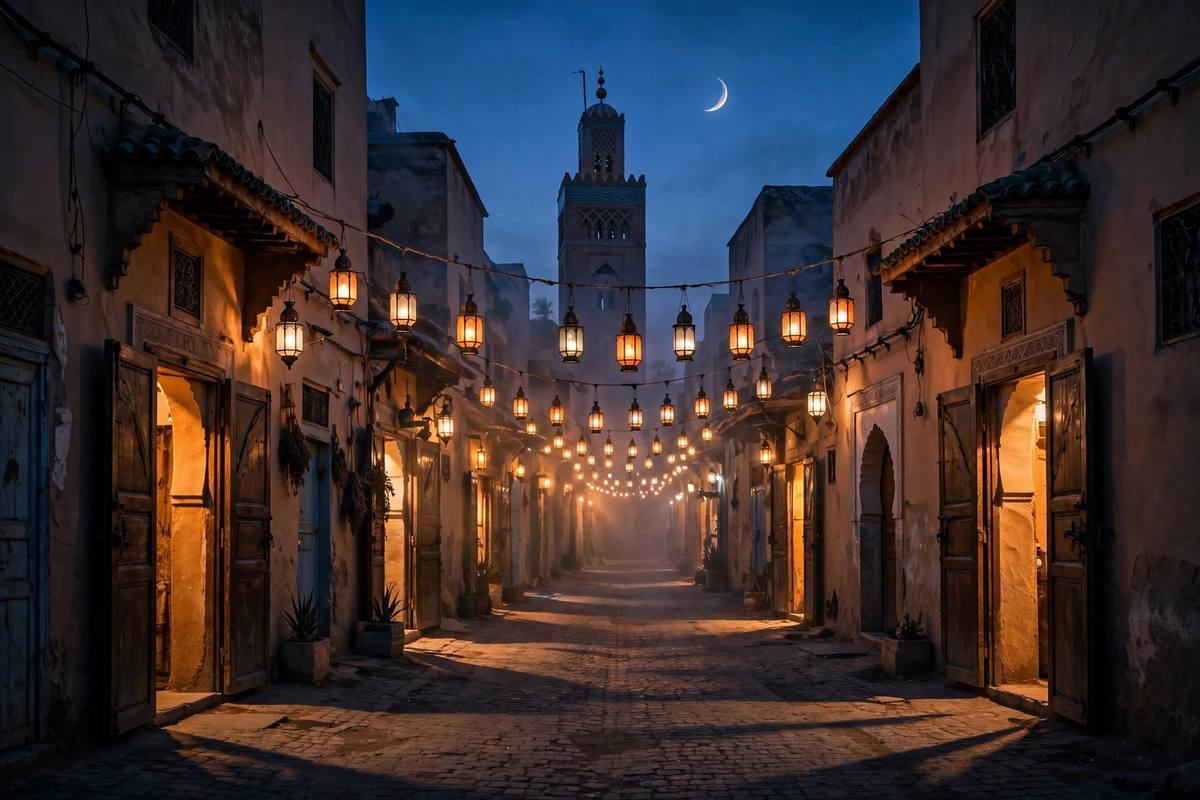
After iftar, Moroccan cities transform. Night markets buzz, families promenade along the corniche, cafés fill until 1 or 2am, and the streets feel festive every single night. Tourists are welcome at every iftar tent and night market — just arrive hungry and a little before sunset to get a table.
Ramadan Dates: Planning Your Trip
Ramadan follows the Islamic lunar calendar, so it moves about 11 days earlier every year. Ramadan 2026 fell in February–March 2026; Ramadan 2027 is expected around early February 2027, though the exact start is confirmed by moon sighting — dates can shift by a day or two, so check closer to your trip.
Plan around Eid al-Fitr, the three-day festival that ends Ramadan: many shops and some restaurants close, transport fills up as Moroccans travel to family, and hotels in popular cities book out. If your trip covers Eid, reserve accommodation and transport well in advance — and enjoy it: the celebrations, new clothes and family feasts are wonderful to witness.
Practical Tips for a Tourist in Morocco During Ramadan
- Do your sightseeing in the morning. Energy, opening hours and light are all best before noon. Plan the medina, museums and day trips early, then rest in the afternoon like the locals do.
- Book riads with evening meals. Many riads offer special Ramadan iftar menus — ask when booking. Desert camps and kasbah hotels also serve iftar and suhoor (the pre-dawn meal).
- Stock snacks for daytime. Keep dates, nuts and water in your daypack so you can eat discreetly between sights.
- Join a food tour after iftar. Ramadan night food tours in Marrakech and Fes are among the best culinary experiences in Morocco — book ahead, as they sell out.
- Respect the suhoor silence. In medinas, drummers (msaharati) wake neighborhoods for the pre-dawn meal — charming the first night, less so the third. Pack earplugs if you sleep lightly.
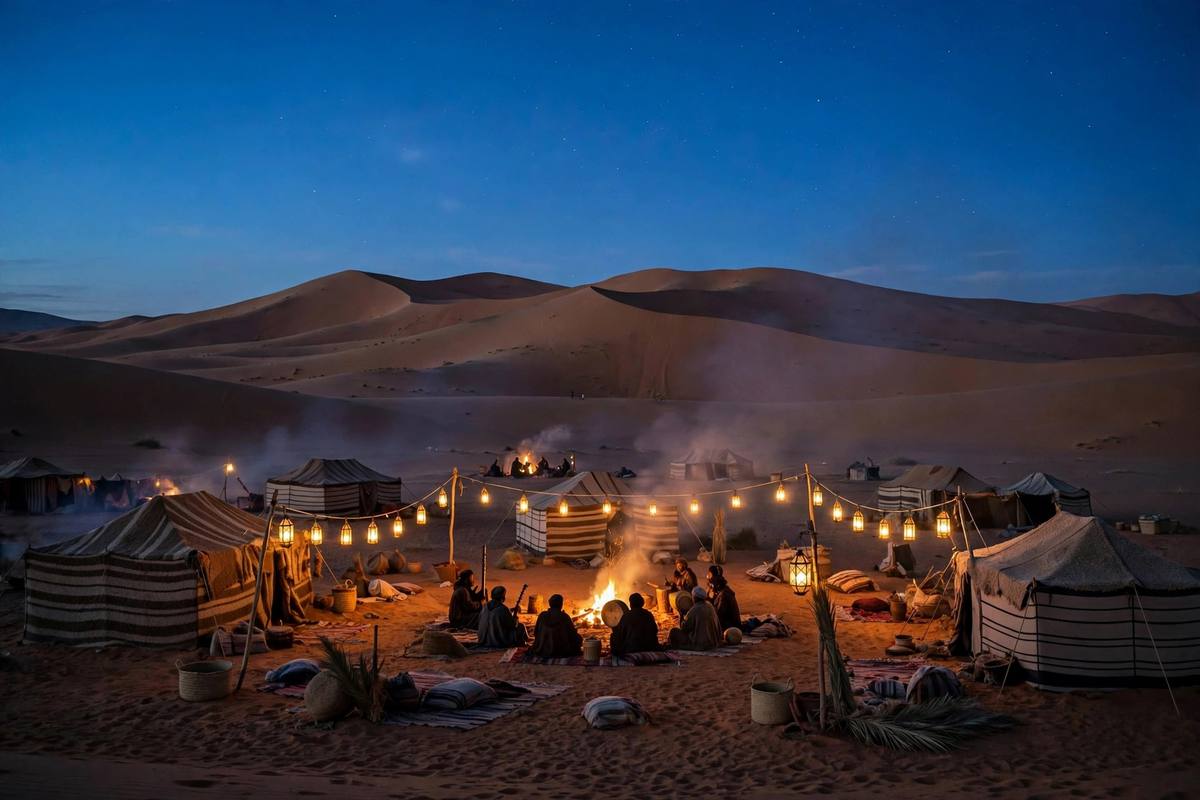
- Ramadan and the desert: Sahara trips run normally, and breaking fast under desert stars at a luxury camp is unforgettable. Camps adjust meal timing for fasting guests and staff.
- Ask before photographing. People are happy to be photographed at festive night markets, but always ask first — especially during prayer times.
Bottom line: traveling to Morocco during Ramadan asks a little flexibility and gives back something no ordinary month can — Morocco at its most communal, generous and alive after dark. Plan around the rhythm instead of fighting it, and Ramadan may become the trip you talk about for years.
Plan your Morocco trip
Turn this guide into a booked trip: compare stays, flights and car rental across Morocco below.
Some links on this page are affiliate links. If you book through them, we may earn a commission at no extra cost to you — it keeps these guides free.
Frequently asked questions
Can you visit Morocco during Ramadan?
Yes. Tourists are fully welcome during Ramadan in Morocco. Most tourist services — hotels, riads, trains, buses, tour operators — run normally. The main differences are restaurant hours (most close by day, reopen at sunset) and a quieter, more reflective daytime atmosphere.
Should I visit Morocco during Ramadan?
If you can adapt to daytime restaurant closures and limited alcohol, Ramadan can be magical: festive nights, night markets, iftar feasts, fewer crowds and a rare window into Moroccan family life. If nonstop dining and nightlife are your priority, travel just before or after the month instead.
Do restaurants stay open during Ramadan in Morocco?
Most Moroccan restaurants close during daylight hours and reopen at or after iftar (sunset), staying open late into the night. Hotels, upscale tourist restaurants and your riad usually still serve meals — breakfast is served normally inside accommodations. Street-food stalls and iftar tents open up again in the evening.
Is it safe to visit Morocco during Ramadan?
Yes — Ramadan does not make Morocco unsafe for tourists. Crime and safety conditions are the same as any other month. Be respectful (avoid eating openly in public during the day, dress modestly, stay patient in the late afternoon) and you will find Moroccans exceptionally welcoming during the holy month.
What is it like visiting Morocco during Ramadan?
Days are quiet and slow — empty streets at midday, closed cafés — then at sunset the country wakes up: iftar feasts, buzzing night markets, decorated streets and cafés full until 2am. It is Morocco at its most communal, and many travelers call it their most memorable trip to the country.