Welcome to the quiet corner of the Atlantic. This Sidi Ifni Legzira travel guide is your companion to Morocco's slowest coastline: a whitewashed port town of art-deco streets left behind by the Spanish, and ten kilometres of red sandstone cliffs hiding one of the most photographed beaches in Africa.
Sidi Ifni and Legzira sit about 170 kilometres south of Agadir, far enough from the holiday crowds to feel like a discovery. Life runs on ocean time here — fishermen mending nets at the port, surfers waxing boards at dawn, and some of the most cinematic sunsets on the Moroccan coast.
Sidi Ifni Legzira Travel Guide: Getting There and Around
The usual starting point is Agadir, with its international airport (Agadir–Al Massira) and big bus stations. From there you have three good options:
- Bus: CTM and Supratours buses reach Sidi Ifni daily in about 4 hours, for a very reasonable fare.
- Grand taxi: shared grands taxis leave Inezgane, just south of Agadir, when full and get you there faster.
- Rental car: the best choice for Mirleft, Plage Blanche and the beaches in between. The N1 coastal highway south is in good condition; the drive takes about 3.5 hours.
Sidi Ifni itself is walkable. Legzira beach lies about 10 kilometres north of town — grands taxis and buses shuttle between them all day, and with your own car you can stop at the cliff viewpoints en route. Mirleft, another laid-back surf town, sits about 10 kilometres further north.
The Legzira Arches: Red Giants of the Atlantic
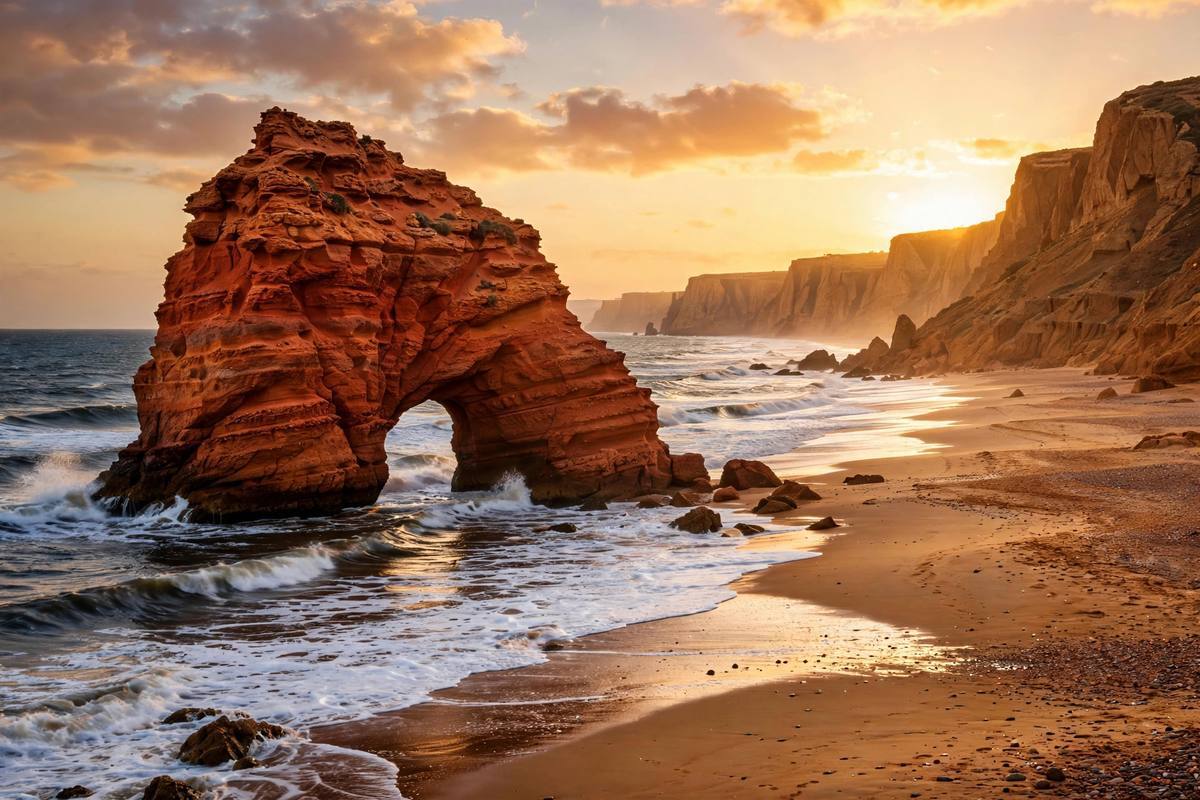
Legzira's fame rests on its natural red sandstone arches, carved by Atlantic waves over thousands of years. For decades two great arches framed this beach — until 23 September 2016, when the larger one collapsed overnight.
The good news: the second, northern arch still stands and is every bit as spectacular. At low tide you can walk the sand right beneath it. Time your visit for low tide and arrive an hour or two before sunset, when the rock glows ember-red — the shot that made this beach famous.
The cliffs here are fragile — never climb on the remaining arch or stand directly beneath overhanging rock. Rockfalls are a real and documented hazard on this beach.
Things to Do in Sidi Ifni and Legzira
Beyond the arches, the Sidi Ifni coast rewards slow days:
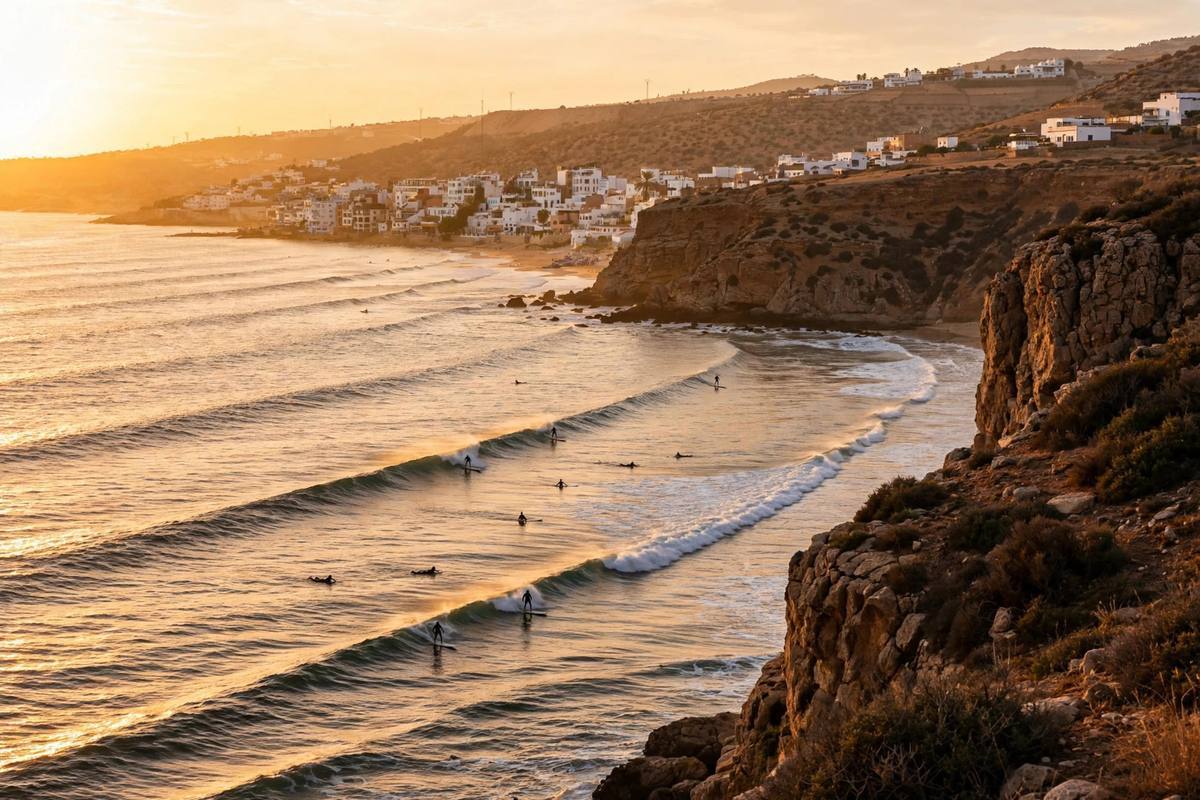
- Surf: consistent beach breaks at Legzira and Sidi Ifni suit beginners and intermediates, with surf schools, board rental and refreshingly thin line-ups compared with Taghazout.
- Walk the Spanish quarter: capital of Spanish Ifni from 1934 to 1969 — its art-deco facades, former church (now a cultural centre) and seafront Place Hassan II still carry that era's elegant geometry.
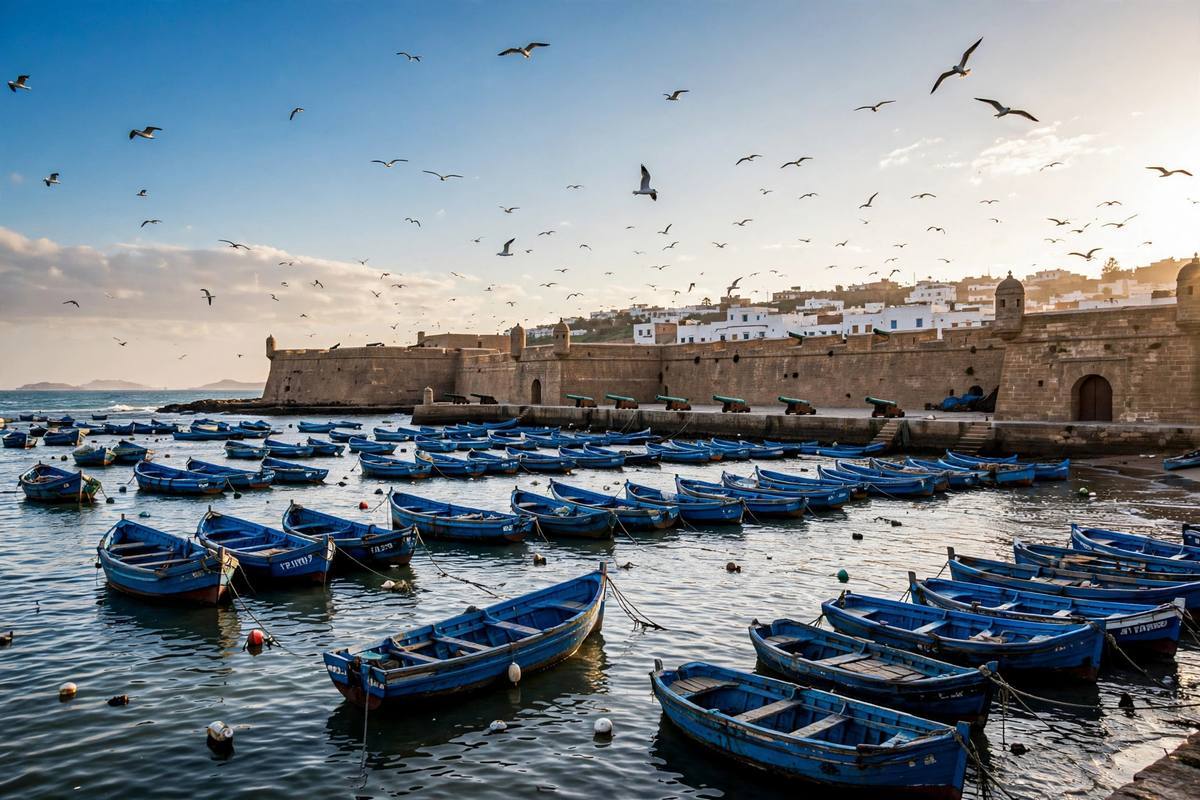
- The fishing port: watch blue wooden boats unload the morning catch, then eat it grilled at a simple restaurant above the harbour.
- Paragliding: tandem flights launch from the cliffs above Legzira — the red coastline from the air is unforgettable.
- Mirleft day trip: twenty minutes north, a village of half a dozen wild beaches (try Imin Tourga) and a mellow café scene.
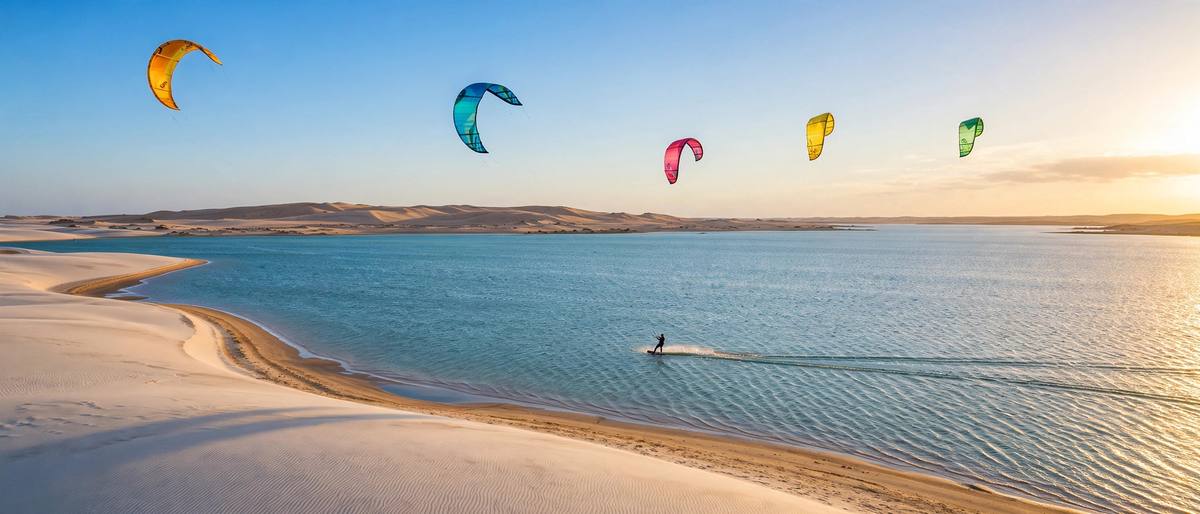
- Plage Blanche: forty kilometres south, an enormous empty beach reachable by 4x4 — a favourite of kitesurfers and solitude-seekers.
Where to Stay
Sidi Ifni has a good spread of hotels and guesthouses for a town its size: the art-deco Hotel Bellevue Vue above the ocean with the town's best-known terrace, Spanish-run Hotel Suerte Loca with its rooftop and restaurant, and smaller hotels like Hotel Safa for tighter budgets. Family-run riads in the old town start at very modest prices, often with breakfast.
Above Legzira beach, a handful of small hotels and surf camps put you first on the sand at low tide. Book ahead in July, August and over Christmas and New Year, when Moroccan families and European surfers fill the town.
The Best Time to Visit Sidi Ifni and Legzira
The climate is mild year-round: daytime temperatures usually between 18 and 26°C, the ocean around 18–21°C. Summer stays pleasantly cool here while inland Morocco bakes. September to November brings the warmest ocean and calm, sunny beach days; winter is quiet with the biggest Atlantic swells, which surfers love. Spring dusts the cliffs with wildflowers. Rain is rare, but ocean evenings are breezy in every season — pack a layer.
Bring cash: Sidi Ifni has ATMs, but small shops, cafés and grand taxis are cash-only. French gets you everywhere, and older residents often speak Spanish too — a legacy of the colonial years. The ocean is always chilly, so rent a wetsuit for surfing and never swim alone on an empty beach.
Plan your Morocco trip
Turn this guide into a booked trip: compare stays, flights and car rental across Morocco below.
Some links on this page are affiliate links. If you book through them, we may earn a commission at no extra cost to you — it keeps these guides free.
Frequently asked questions
Did the Legzira arch really collapse?
Yes. The larger of Legzira's two famous red sandstone arches collapsed on 23 September 2016, making news around the world. The second, northern arch still stands and remains one of Morocco's most photographed natural wonders. Visit at low tide and never climb on the remaining arch — the cliffs are fragile.
How do I get to Sidi Ifni from Agadir?
Take a direct CTM or Supratours bus (about 4 hours, cheap), a faster shared grand taxi from Inezgane, or a rental car (about 170 km on the N1 highway). A car is the best option if you also want to visit Mirleft and Plage Blanche.
How many days do I need in Sidi Ifni and Legzira?
Two full days is the sweet spot: one for Sidi Ifni's old town, Spanish quarter and fishing port, and one for Legzira's arches plus a surf session. Add a third day for Mirleft, or a fourth for a 4x4 trip to Plage Blanche.
Is Sidi Ifni good for surfing?
Yes. Consistent beach breaks at Legzira and Sidi Ifni suit beginners and intermediates, surf schools offer lessons and board rental, and the line-ups are much thinner than in Taghazout. The water demands a wetsuit year-round (18–21°C).
When is the best time to visit Sidi Ifni?
September to November brings the warmest ocean and calm, sunny beach days. Summer stays pleasantly cool while inland Morocco bakes; winter is quiet with the biggest swells, which surfers love. It rarely rains, but ocean evenings are always breezy — pack a layer.