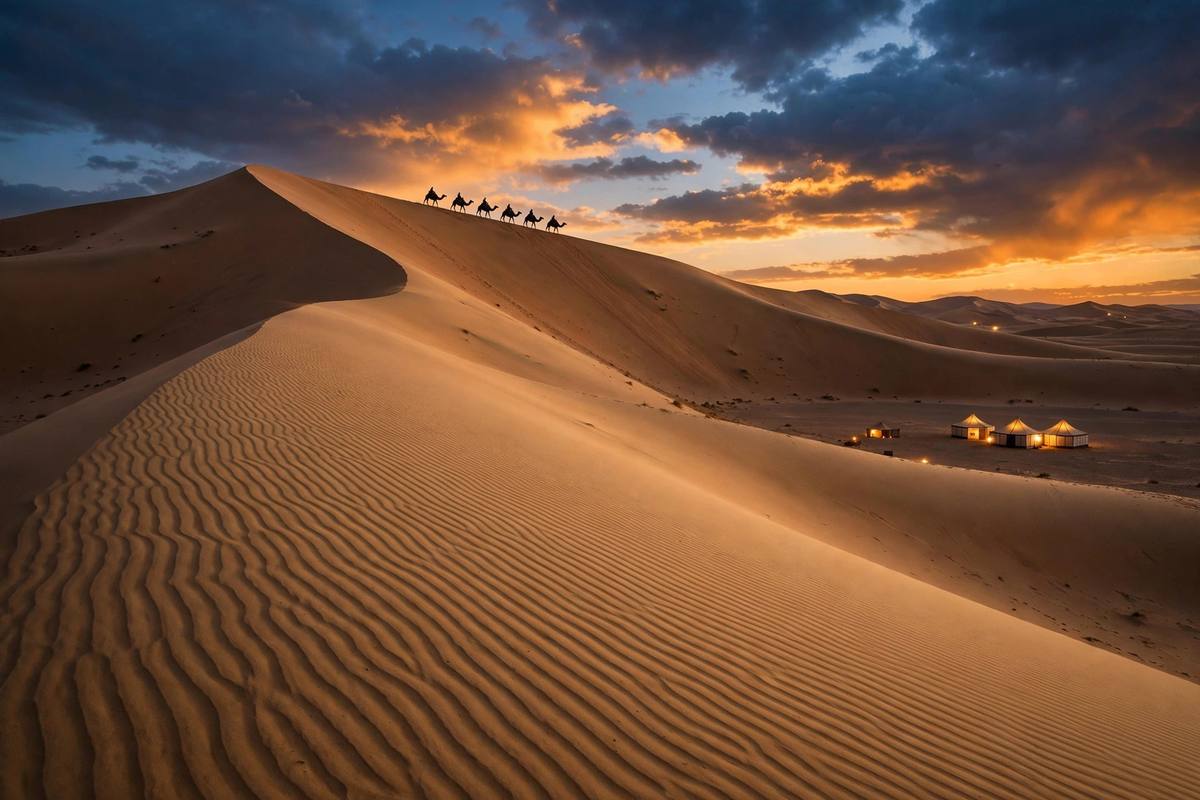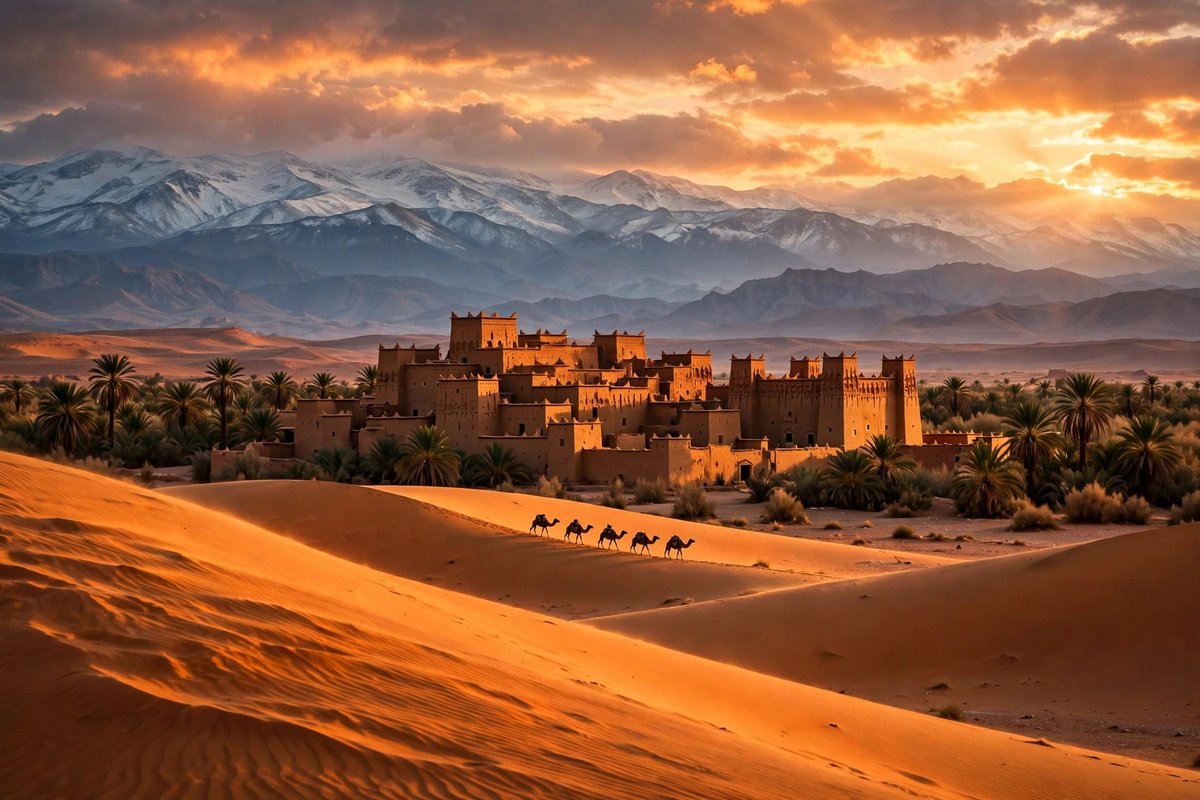
Six days is the sweet spot for southern Morocco. This 6-day south Morocco itinerary runs from Marrakech to the edge of the Sahara and back — a loop through the High Atlas, past thousand-year-old kasbahs, down the gorges of the Dades and Todra valleys, and into the great orange dunes of Erg Chebbi near Merzouga for a night under the stars.
The full loop covers roughly 1,500 km (930 miles), and every day balances driving with something worth stopping for: a UNESCO-listed ksar here, a palm-filled valley there, a camel trek at sunset to close the trip's biggest day. Most travellers drive it themselves or hire a private driver — both options are covered below. If you have just one week in Morocco, this is the route that delivers the Morocco of the postcards.
Your 6-day south Morocco itinerary at a glance
The classic southern loop, clockwise from Marrakech — no backtracking, no wasted kilometres:
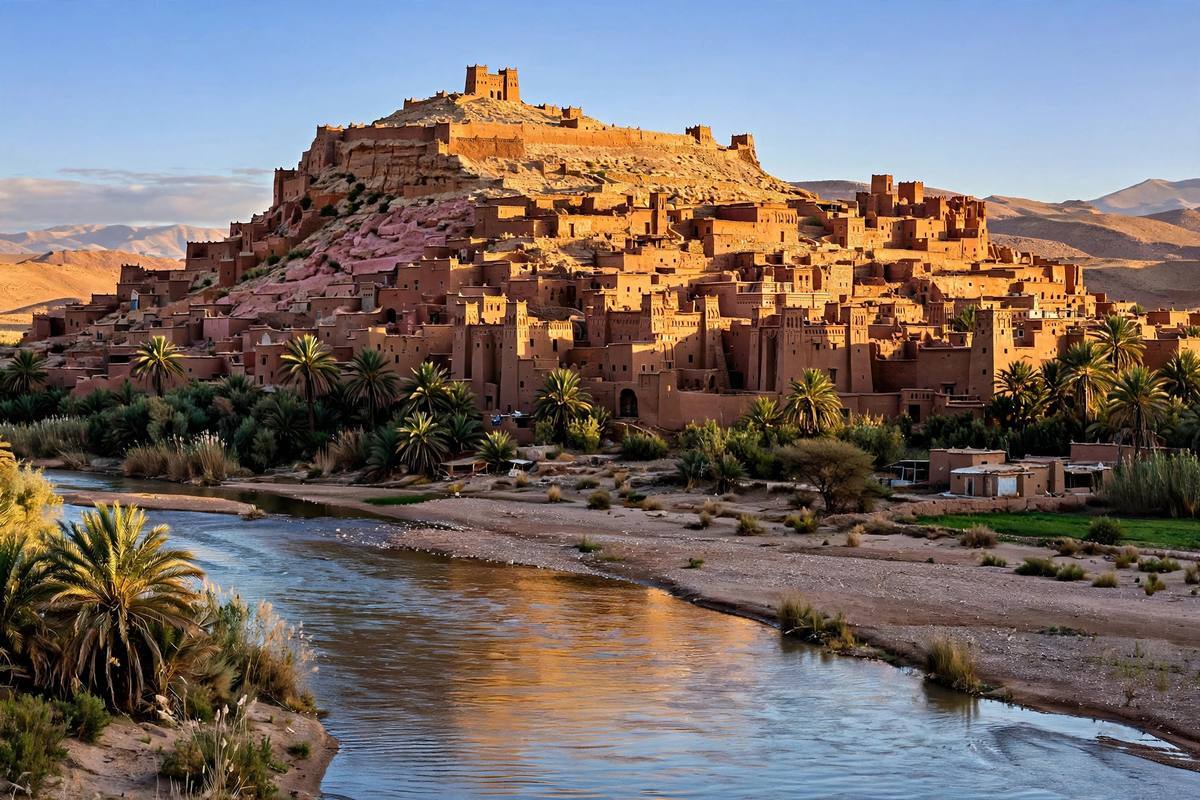
- Day 1 — Marrakech → Ait Ben Haddou, over the Tizi n'Tichka pass (190 km)
- Day 2 — Ait Ben Haddou → Ouarzazate → Dades Valley, the Road of a Thousand Kasbahs (200 km)
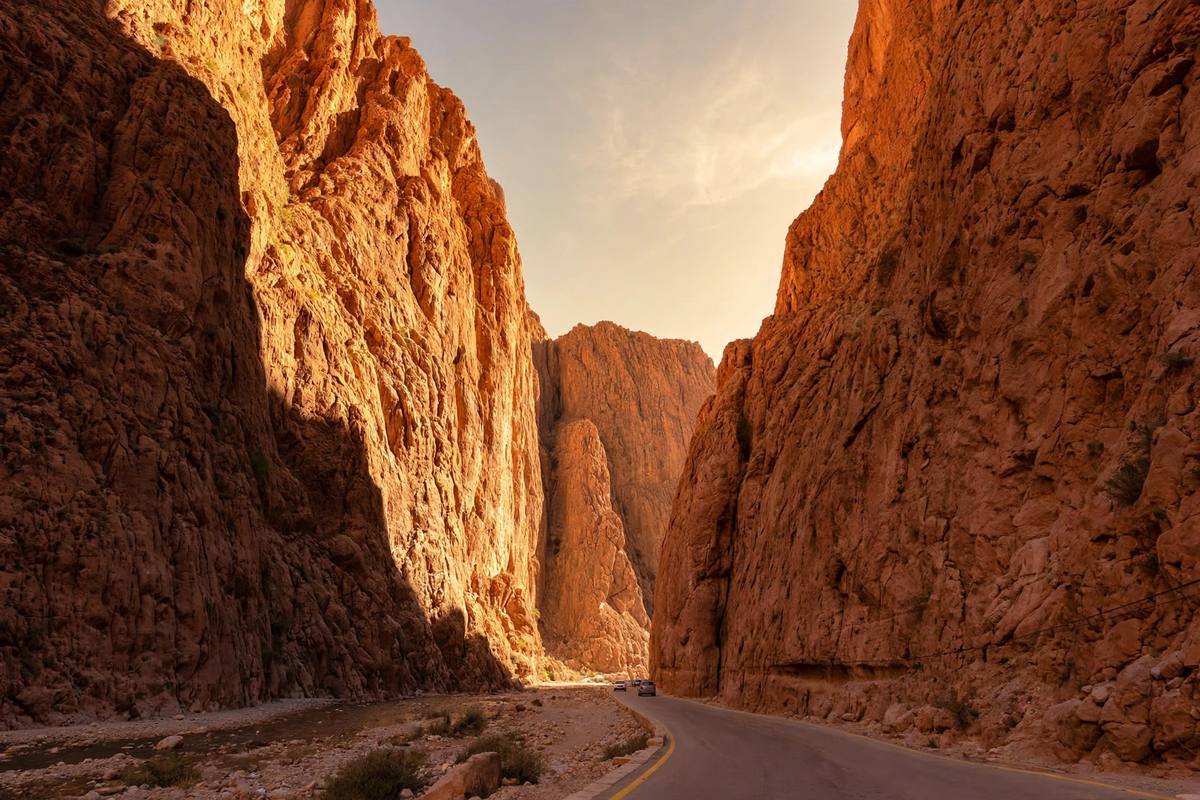
- Day 3 — Dades Valley → Todra Gorges → Merzouga, gateway to the Sahara (270 km)
- Day 4 — Merzouga & the Erg Chebbi dunes: sunrise, sandboarding, desert camp
- Day 5 — Merzouga → Draa Valley (Nkob or Agdz), Morocco's palm-grove highway (280 km)
- Day 6 — Draa Valley → Marrakech via Ouarzazate (350 km)
Day by day: the 6-day south Morocco itinerary
Day 1: Marrakech to Ait Ben Haddou
Leave Marrakech by 8am — the N9 climbs the Tizi n'Tichka pass (2,260 m) through Berber villages and endless switchbacks, about 3.5 hours to Ouarzazate. Stretch your legs at the Atlas film studios or the Taourirt kasbah, then continue 30 minutes to Ait Ben Haddou. Arrive by late afternoon: the UNESCO-listed ksar glows red-gold at sunset, and climbing to the hilltop granary at dusk is the single best photograph of the trip. Sleep in the village itself or across the river in the newer town.
Day 2: Ait Ben Haddou to the Dades Valley
Welcome to the famous Road of a Thousand Kasbahs. Head east through Ouarzazate and Skoura — stop at the Amridil kasbah, one of Morocco's best-preserved, set in a vast palm grove. Continue through the Valley of the Roses (Kelaat M'Gouna; spectacular in April and May when the roses bloom) to Boumalne Dades, then up into the Dades gorges, where the road loops back on itself in hairpins made for postcards. Overnight in a kasbah hotel in the gorge.
Day 3: Dades Valley to Merzouga via the Todra Gorges
The longest driving day — around 270 km, five to six hours. First stop: the Todra Gorges near Tinghir, where 300-metre orange cliffs narrow to a corridor you can walk in twenty minutes. Continue through Erfoud, the fossil capital, and Rissani, whose covered souk is worth a wander, then reach Merzouga by late afternoon. Camels wait at the edge of the Erg Chebbi dunes: the sunset trek into camp takes about 90 minutes and is the emotional peak of the whole itinerary.
Day 4: The Sahara — a full day in Merzouga
Wake for sunrise over the dunes — quieter and more beautiful than sunset. The day is yours: sandboard down the big dune, visit the village of Khamlia for Gnawa music, or take a 4x4 loop around the Erg Chebbi. Spend the night in your desert camp (dinner, drumming and stargazing included) or upgrade to an auberge in the village for a proper shower — many travellers do the camp on night one and an auberge on night two.
Day 5: Merzouga to the Draa Valley
Head west along the N12 through Tazzarine to the Draa Valley — a 200-km ribbon of date palms and crumbling kasbahs, Morocco's longest oasis. Stop at Tamnougalt, one of the valley's most atmospheric kasbahs, and overnight in Nkob or Agdz in a family-run kasbah guesthouse. After the desert's drama, the Draa feels like a deep exhale.
Day 6: Draa Valley back to Marrakech
The return leg is about 350 km and six to seven hours via Ouarzazate and the Tizi n'Tichka pass again — start early. Break it at the Fint oasis near Ouarzazate, or with a final mint tea in Ait Ben Haddou if you rushed it on day one. Aim to reach Marrakech by late afternoon, in time for dinner in the medina and a very satisfied collapse.
Best time for this 6-day south Morocco itinerary
October–November and March–April are ideal: warm days, cool nights, clear skies. December–February brings freezing desert nights (camps provide heavy blankets, but pack layers) and possible snow on the Tizi n'Tichka. July–August is brutal — Merzouga regularly passes 45°C (113°F) — though the gorges stay pleasant. If you can choose, travel in October.
Self-drive, private driver or guided tour?
A rental car (around $30–45 a day from Marrakech) gives total freedom and is the cheapest way to do this loop; roads are paved and well signposted. A private driver costs roughly $150–200 a day all-in and removes every worry about navigation and parking — split between four, it is barely more than renting. Organised 3-day desert tours from Marrakech exist, but they rush the gorges; for this 6-day version, self-drive or a private driver wins.
Where to stay on the 6-day route
Nights one, two, five and six are kasbah-hotel territory: family-run places in Ait Ben Haddou, the Dades gorges and the Draa Valley run $40–80 for a double with breakfast. The desert night is the splurge: luxury camps ($80–150 per person, dinner, breakfast and camel trek included) have real beds and en-suite bathrooms; standard camps ($40–60) are simpler but the stars are identical. Book the camp at least two weeks ahead in spring and autumn.
How much does a 6-day south Morocco trip cost?
Per person, sharing costs: budget travellers manage $50–70 a day (hostels, standard camp, simple lunches); midrange runs $90–140 a day (kasbah hotels, luxury camp, restaurant dinners); private-driver luxury starts around $250 a day. Fuel for the loop is roughly $90–110, and most kasbahs and the desert camp include dinner or breakfast — always confirm what's included before you book.
Fill the tank in Ouarzazate or Erfoud — stations thin out toward Merzouga. ATMs are scarce between the big towns, so carry cash for lunches and tips. Download offline maps: mobile signal drops in the gorges and the deep Draa. And at the desert camp, dinner is a fixed menu — flag dietary needs a day ahead.
Plan your Morocco trip
Turn this guide into a booked trip: compare stays, flights and car rental across Morocco below.
Some links on this page are affiliate links. If you book through them, we may earn a commission at no extra cost to you — it keeps these guides free.
Frequently asked questions
Is 6 days enough for southern Morocco?
Yes — six days is the classic length for the Marrakech–Sahara loop. Four days forces you to skip the gorges or the Draa Valley; seven or eight lets you add a rest day in Merzouga or a night in Zagora. This 6-day south Morocco itinerary hits every highlight without a single rushed morning.
Is it safe to drive in southern Morocco?
Yes. The N9, N10, N12 and N13 are paved, well signposted and busy with tourist traffic. Drive in daylight, watch for speed bumps at village entrances, and never drive desert tracks beyond your camp without a guide. Grand taxis and buses also connect every stop if you'd rather not drive.
Merzouga or Zagora for the desert night?
With six days, choose Merzouga. Its Erg Chebbi dunes rise 150 metres — the tall, orange Sahara of the films — while Zagora's dunes are smaller and greyer. Zagora only wins if you're short on time, since it's a day closer to Marrakech.
What is the best month for a south Morocco itinerary?
October is the sweet spot: warm days around 28°C, cool nights and clear desert skies. April is a close second, with roses blooming in the Valley of the Roses. Avoid July and August, when Merzouga regularly tops 45°C.
Can I do this itinerary without renting a car?
Absolutely. A private driver (about $150–200 a day, easily split between travellers) follows this exact loop with zero navigation stress, and several operators sell this 6-day south Morocco itinerary as a private tour from Marrakech. Public CTM and Supratours buses connect the towns, but the schedule is too slow for six days.