Most travellers cross the Atlas heading south and keep going toward the desert dunes. But halfway between the mountains and the Sahara, the rivers cut sideways through the rock. The result is Morocco's answer to the Grand Canyon: the Todra Gorges and the Dades Valley, one continuous drive of ochre cliffs, palm oases and looping switchbacks from Tinghir to Boumalne Dades.
This is not a single viewpoint you photograph and leave. It is a full day's drive — a string of gorges, valleys and Berber villages that rewards going slowly. Below is the route, the highlights, and everything you need to drive it yourself.
The Todra Gorges: a 300-metre crack in the rock
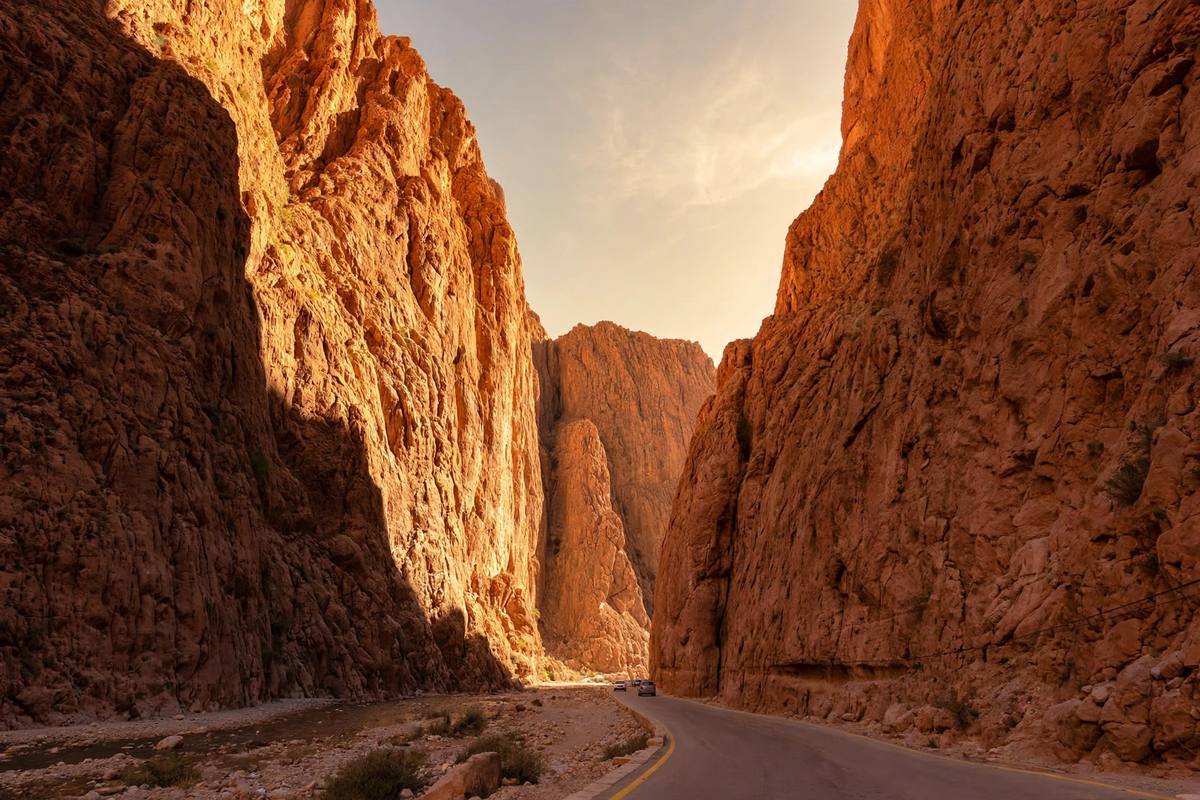
The Todra Gorges begin about 15 kilometres north of Tinghir, where the river carved a canyon so narrow that in places the walls are only ten metres apart — and rise nearly 300 metres straight up on both sides. You drive in along the riverbed road, the light dimming as the cliffs close in, until you reach the famous narrowest stretch. Park and walk: at that point the rock feels like it could close over your head.
Todra is one of North Africa's top climbing destinations, with hundreds of bolted routes up the limestone. You do not need to climb to enjoy it — the canyon floor walk follows the river upstream between the cliffs, one of the great easy rambles in Morocco.
The gorges are quietest early in the morning, before the tour groups arrive — come at opening light for the empty road and the best photography — the low sun rakes across the eastern wall first.
The canyon road: Tinghir to Boumalne Dades
From Tinghir, the Todra road runs east through a green valley of palms and mud-brick villages before the Dades route turns south toward Boumalne Dades. Together the two valleys form a loose loop of roughly 120 kilometres — two and a half to three hours of actual driving, though you will want the whole day for stops.
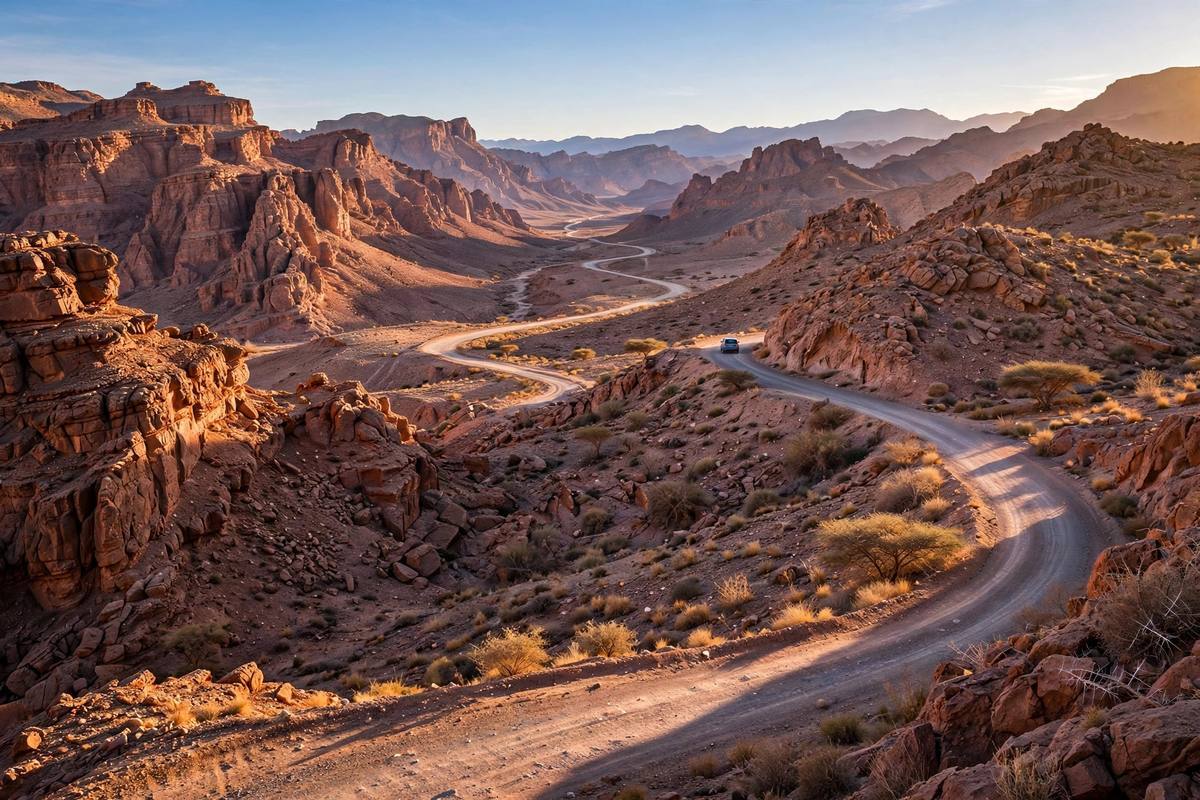
The Dades side is the famous part for drivers. Past Boumalne Dades the road climbs into a red-rock valley lined with monkey fingers — eroded rock formations like knuckles frozen in the cliffs. From there the road to the Msemrir turn-off writhes through Morocco's most photographed switchbacks: a ribbon of asphalt looping back on itself, with a viewpoint at the top that turns the whole road into a postcard.
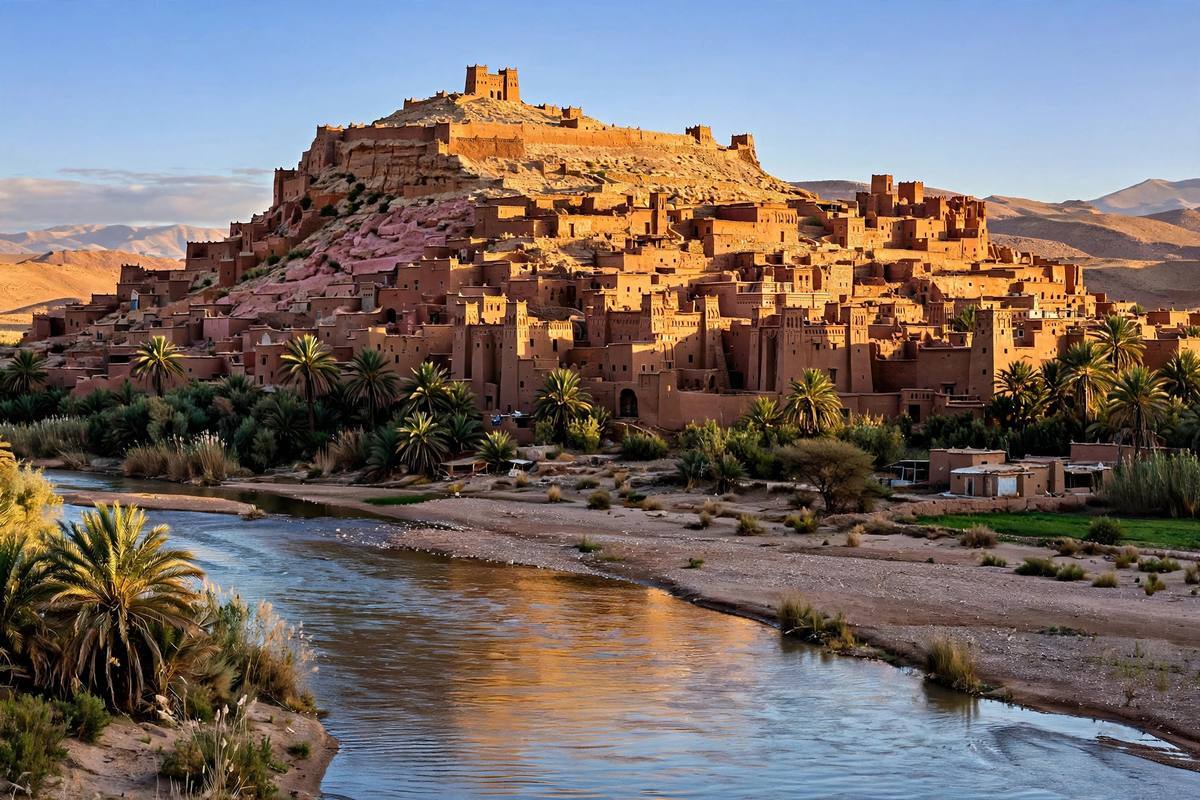
Villages dot the route, built into the hillsides: fortified ksour with square towers, garden plots terraced along the river, and riverside restaurants for tagine and mint tea with the cliffs as your backdrop.
Hiking, climbing and the river walk
Walking is the best way to feel the scale of the gorges. Options include:
- Todra canyon floor walk — an easy out-and-back along the riverbed through the narrowest stretch; no guide needed, allow one to two hours.
- Tinghir to the gorges — the 15-kilometre walk from town along the palmeraie; a half-day among the palms.
- Dades Valley hikes — guesthouses around Boumalne Dades and the village of Aït Youl can arrange guided walks into side canyons and up to nomad pastures.
- Rock climbing — Todra's limestone walls hold hundreds of sport routes. Local climbing guides and gear rental operate from the village at the gorge entrance.
Take water, a hat and sun protection: there is little shade inside the gorges at midday, and summer temperatures can be punishing.
Where to stay: Tinghir and Boumalne Dades
The practical split is simple: Tinghir for the Todra Gorges, Boumalne Dades for the Dades Valley. Tinghir is the larger town, with the most guesthouses, restaurants and a proper souk — and the gorge entrance is a short taxi or car ride away.
Boumalne Dades is smaller and quieter, set where the valley opens into the rose-growing plains. Its hotels and kasbah-style guesthouses make a natural overnight before you tackle the switchbacks and the Valley of Roses road toward Kelaat M'Gouna.
Sleep inside or beside the Todra Gorges rather than back in Tinghir if you can. The gorge entrance has a string of auberges and small hotels, and watching the light die on the cliffs from a rooftop terrace — then waking up before the buses arrive — is the single best upgrade to this trip.
Driving the route yourself
A rental car is the way to do this road: public transport links Tinghir and Boumalne Dades, but only a car reaches the best pull-offs in between. The road is fully paved and fine for a normal car in dry weather — the switchbacks are dramatic but well-built. Fill up in Tinghir or Boumalne Dades; stations thin out in the middle.
Most drivers combine the gorges with a larger loop: Marrakech to Ouarzazate, through the Dades and Todra, then on to Merzouga and the Sahara dunes — the classic three- or four-day desert circuit. Short on time? The gorges also work as a long day trip from Ouarzazate, though an overnight lets you see the canyons at the hours they deserve.
March to May and September to November are the sweet spot: warm days, cool nights, and the rivers still running. Summer brings fierce heat in the valleys, and winter nights can drop below freezing — though winter days are often brilliantly clear and the crowds vanish.
Plan your Morocco trip
Turn this guide into a booked trip: compare stays, flights and car rental across Morocco below.
Some links on this page are affiliate links. If you book through them, we may earn a commission at no extra cost to you — it keeps these guides free.
Frequently asked questions
How many days do I need for the Todra Gorges and Dades Valley?
One full day covers the highlights: the Todra Gorges in the morning and the Dades switchbacks and monkey fingers in the afternoon. Two days is ideal — sleep in or near the Todra Gorges one night and in Boumalne Dades or the Dades Valley the next, so you see both canyons in the best light.
How long does it take to drive from Todra to the Dades Valley?
The road from Tinghir through the Todra Gorges to Boumalne Dades is roughly 120 kilometres, about two and a half to three hours of pure driving. Plan a full day: you will stop at the gorge narrows, the river villages, the monkey fingers rock formations and the Dades switchback viewpoint.
Can you visit the Todra Gorges on a day trip from Marrakech?
Not comfortably. It is around 400 kilometres each way — seven to eight hours of driving. The gorges are best done from Ouarzazate, or as part of a multi-day desert circuit via Marrakech, Ouarzazate, the Dades Valley, the Todra Gorges and Merzouga.
What are the monkey fingers in the Dades Valley?
They are eroded rock formations in the upper Dades Valley — pillars and knuckles of red rock sculpted by wind and water that look like a giant's fingers. You pass them on the road from Boumalne Dades toward Msemrir, a few kilometres before the famous Dades switchbacks.
Is the road to the Todra Gorges safe to drive?
Yes — the road is paved and well maintained for normal cars in dry weather. The Dades switchbacks are dramatic but engineered for traffic. Take it slowly, use the viewpoints, and avoid driving after heavy rain, when mountain roads in the Atlas can wash out.
When is the best month to visit the Todra Gorges?
April, May, September and October are the best months: warm days around 25 to 30°C, cool nights, and water in the river. Summer is very hot in the valleys and winter nights can freeze, though winter days are often clear and crowd-free.