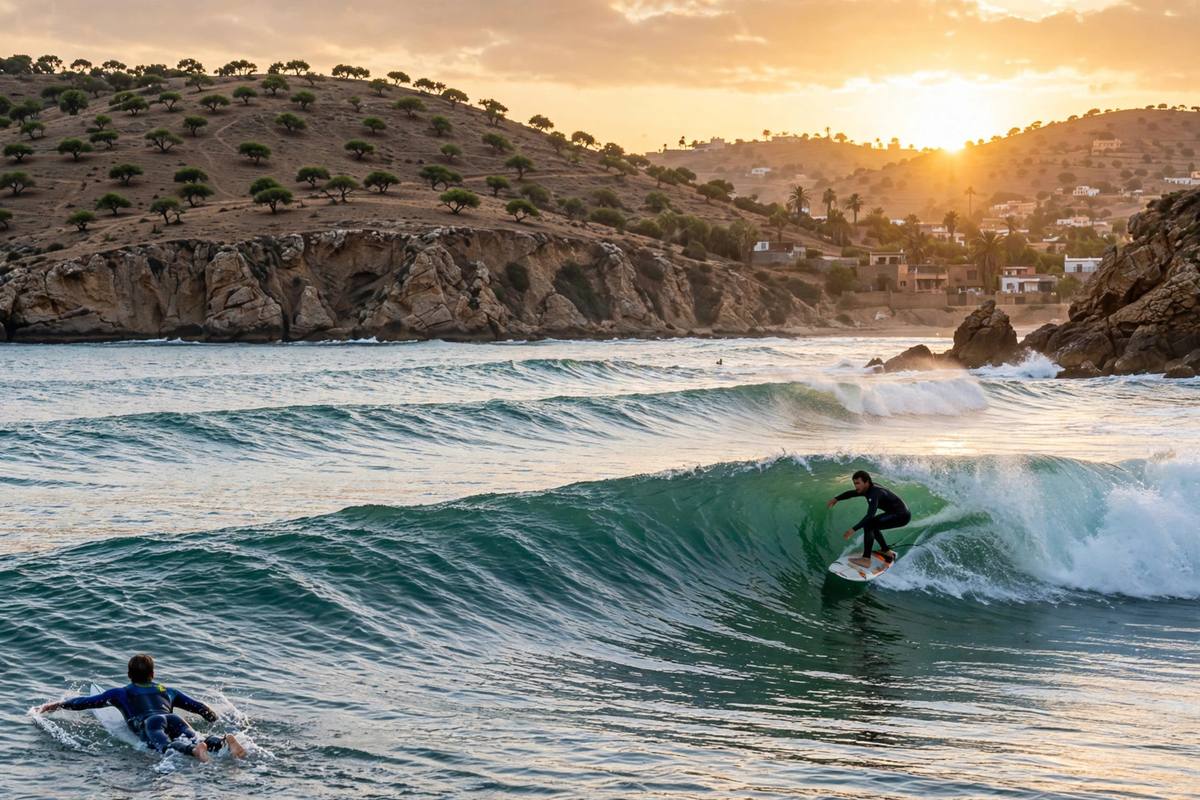
Few surf destinations squeeze as much into one coastline as Morocco. Surfing Morocco means paddling into long, peeling point breaks under ochre cliffs, learning to pop up on gentle beach breaks a short walk from budget guesthouses, and finishing the day with tagine as the sun drops into the Atlantic. A week of waves here costs a fraction of a comparable trip to Hawaii or Portugal — and the surf is genuinely world-class. This complete guide to surfing in Morocco covers the best surf spots in Morocco, the seasons that shape them, surf camps and lesson prices, what to pack, and the local tips that save first-timers money and frustration.
Surfing Morocco: the best spots, north to south
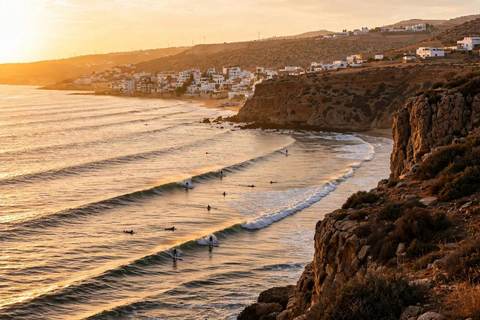
Pin a hand-drawn surf spots map of Morocco to the wall of almost any Taghazout camp and the same names come up again and again. The country’s best surf sits along roughly 1,000 kilometres of Atlantic coast, from the mellow beach breaks of the Souss to the desert point breaks of the deep south. Here are the spots that matter:
- Taghazout and Tamraght — Morocco’s surf capital. Anchor Point, just north of the village, is a world-class right-hand point break that needs a solid winter swell; Hash Point in front of the village is the classic beginner beach break; and Killer Point is a shallow, powerful reef wave for experts only. Ten minutes south, Tamraght’s Devil’s Rock is another forgiving learner spot.
- Imsouane — about 90 minutes north of Taghazout, home to The Bay, one of the longest rideable waves in Africa. On a good day beginners ride for minutes, not seconds. The village itself is a sleepy fishing port with legendary grilled fish.
- Essaouira — windier and wilder, with consistent beach breaks that suit improvers and a serious kitesurf scene on the main bay. Ideal if you’re travelling with a non-surfer: medina, seafood, Gnaoua music.
- Safi and Mirleft — Safi’s Ras Lafaa is a heavy, barreling reef break for confident surfers; Mirleft, further south, offers quieter beach and point breaks with far fewer people in the water.
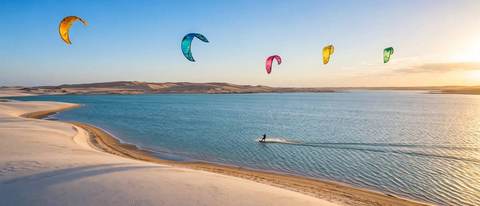
- Dakhla — at the southern end of Morocco’s surf map, the lagoon’s flat water made Dakhla famous for kitesurfing, but the ocean side hides real surf: Foum El Bouir and a string of desert point breaks that work on big swells. It’s an expedition trip, not a weekend one.
One honesty note: the further south you go, the thinner the crowd and the stronger the sense of discovery — but the more self-sufficient you need to be. Taghazout is the easy week; Dakhla is the expedition.
When to go: the Morocco surf seasons
The main surf season in Morocco runs from September to April, when Atlantic swells are biggest and most consistent. December to February is the peak: head-high-plus waves on the points, water around 16–18 °C (a 4/3mm wetsuit, usually included with lessons) and lively, fully-booked surf camps.
Don’t dismiss the warmer months. Surfing Morocco in May and through the summer means smaller, friendlier waves, 19–21 °C water, thinner lineups and lower prices in camps and guesthouses. For beginners, late spring can honestly be better than midwinter — the waves are more forgiving and instructors have more time for you. September is a local favourite: the first autumn swells arrive while the ocean is still warm.
Surf camps, lessons and what they cost
Picking the best Morocco surf camp is mostly about vibe: a boutique rooftop camp above Taghazout village, a big social camp in Tamraght with a pool and yoga deck, or a family-run guesthouse that keeps groups tiny. Most sell surf-and-stay packages that bundle accommodation, daily guided sessions, equipment, breakfast and airport transfers — the simplest way to book a week.
Indicative 2026 prices: a group lesson (two hours, board and wetsuit included) costs €30–40 per person; a private lesson is €60–80; and a week of surf and accommodation runs €350–600 depending on the room and season. Most camps include video analysis of your surfing, which speeds up progress enormously. Book lessons for your first two or three days, then rent a board and practise — your instructor will tell you when you’re ready to go solo.
Before you book, ask the camp which spots it surfs and whether transport is included. A cheap camp that leaves you walking to one beach break is worse value than a slightly pricier one with a 4x4 and a guide who reads the coast daily.
Board rental, packing and getting around
Leave your board at home. Surfboard rental in Morocco is everywhere: expect €10–15 a day for a foamie or funboard and €15–25 for a fibreglass shortboard or longboard, with weekly rates cheaper. Wetsuit hire is about €5–8 a day. Village surf shops sell wax, leashes, fins and quick ding repairs — usually back overnight for a few euros.
The surf trip packing list is short: reef-safe sunscreen and zinc, earplugs if you’ll surf rocky reefs, a rash guard for summer, cash in dirhams (many cafés and taxis don’t take cards), and a dry bag for boat-free beach days. Fly into Agadir Al Massira (AGA) for Taghazout and Tamraght — about 45 minutes by pre-booked transfer (€20–30). Between spots, camps run their own 4x4s, and shared surf buses link Taghazout with Imsouane and Paradise Valley.
Beyond the waves
Surf towns are good towns even on flat days. In Taghazout, mornings start with rooftop yoga facing the Atlantic, afternoons stretch out in beach cafés serving tagine, grilled fish and some of the best avocado toast on the continent, and evenings end at the rocks of Anchor Point where the whole village seems to gather for sunset. The Thursday souk at Aourir — locals call it Banana Village — is a glorious chaos of fruit, olives, spices and cheap clothes.
Two excursions earn their reputation. Paradise Valley, 40 minutes inland, is a gorge of natural pools and palm groves — swimming, careful cliff-jumping and riverside tagine. Imsouane, 90 minutes north, pairs the long Bay wave with arguably the best grilled fish on this coast. Both are easy by grand taxi or on camp-organised trips.
Plan your Morocco trip
Turn this guide into a booked trip: compare stays, flights and car rental across Morocco below.
Some links on this page are affiliate links. If you book through them, we may earn a commission at no extra cost to you — it keeps these guides free.
Frequently asked questions
Where can you go surfing in Morocco?
The main surfing areas in Morocco are Taghazout and Tamraght near Agadir (Anchor Point, Hash Point, Killer Point), Imsouane to the north (The Bay), Essaouira, Safi, Mirleft and Dakhla in the south. Most first-timers base themselves in Taghazout, where beginner beach breaks and expert point breaks sit within a 15-minute drive of each other.
When is the best time to surf in Morocco?
September to April is the main surf season, with the biggest and most consistent swells from December to February. May to August brings smaller, gentler waves, warmer water (19–21 °C), fewer crowds and lower prices — often better for beginners.
Is Morocco good for surfing?
Yes — Morocco has some of the most consistent and affordable surfing in the world. Taghazout’s point breaks rank with the best in Africa, there are waves for every level, the water stays warm enough for a wetsuit year-round, and a week of surf and accommodation typically costs €350–600.
How much does surfing in Morocco cost?
A two-hour group lesson with board and wetsuit costs €30–40, a private lesson €60–80, and board rental €10–15 a day. A week-long surf camp including accommodation usually runs €350–600 depending on the room and season.
Is surfing in Morocco safe?
Morocco is generally safe for surfers, but respect the ocean: some point breaks sit over shallow reef (Killer Point is experts-only), currents can be strong, and winter waves are powerful. Surf with a camp or local guide, wear booties on rocky entries, and follow local etiquette in the lineup.