This Casablanca 2030 World Cup fan guide covers everything a travelling supporter needs for football's biggest tournament in Morocco's largest city. Casablanca is one of six Moroccan host cities for the 2030 FIFA World Cup — alongside Marrakech, Rabat, Tangier, Agadir and Fes — and it is the one that matters most: the city set to stage the final at the 115,000-seat Grand Stade Hassan II, planned to become the largest football stadium on the planet.
Casablanca is also Morocco's most modern World Cup base: an Atlantic city with the country's deepest hotel stock, high-speed rail to Tangier and Rabat, a major international airport, and a matchday plan built around a brand-new high-speed station. The trade-offs: the stadium sits 40 kilometres outside the city, so matchdays need planning, and accommodation will tighten as 2030 approaches. Plan around both and the White City gives you the tournament's biggest night — the final itself.
Casablanca 2030 World Cup fan guide: the Grand Stade Hassan II
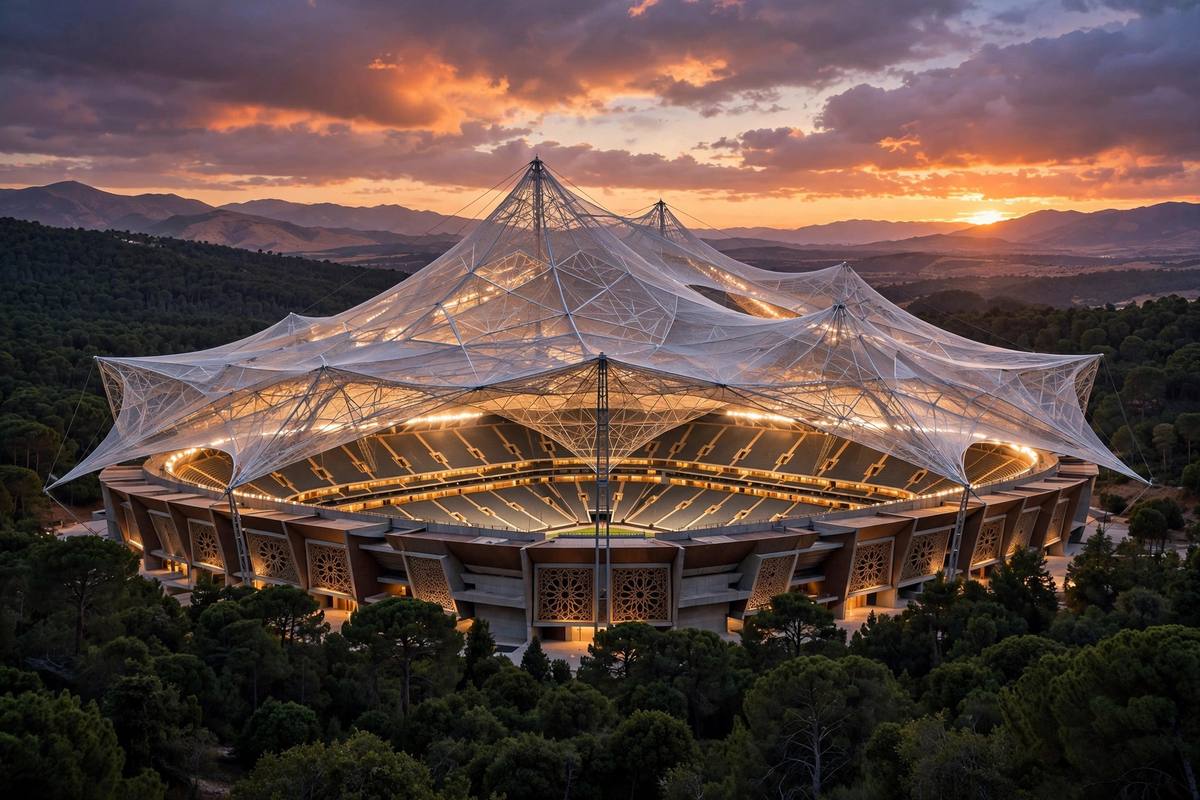
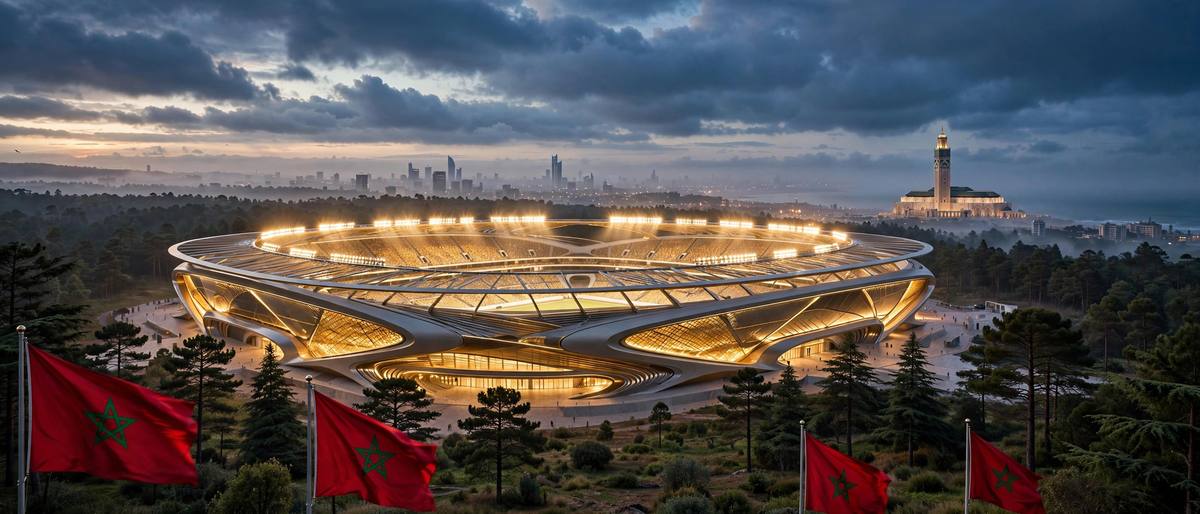
Matches in Casablanca will be played at the Grand Stade Hassan II, rising on a 100-hectare site at El Mansouria in Benslimane province — about 40 kilometres northeast of central Casablanca, in a forested area chosen for space and scale. With 115,000 seats it is designed to become the world's largest football stadium, the centrepiece of Morocco's bid to host the 2030 World Cup final, and the future home of Raja CA, Wydad AC and the Morocco national team.
Construction is well under way: roughly 40% complete in 2026, with the opening targeted for the end of 2027. Architects Oualalou + Choi, working with Populous, have drawn an arena wrapped in landscape, with fan zones and more than 10,000 parking spaces. The race for the final pits it against Spain's great stadiums; FIFA will decide. For the full story, see our Grand Stade Hassan II stadium guide.
The new Casablanca–Rabat motorway passes right beside the site, and a dedicated high-speed rail station is planned on the high-speed line, putting the ground about 15 minutes from central Casablanca. Expect FIFA-style security perimeters, fan walks and shuttles from the city centre — and book accommodation near a Casa Voyageurs rail connection for the simplest journey to the ground.
Fan zones and Casablanca's matchday atmosphere
The official FIFA Fan Festival location in Casablanca has not been announced yet — venues are usually confirmed around a year before the tournament — but the city reads like a shortlist: the sweeping esplanade around Place Mohammed V in the Art Deco centre, and the Ain Diab Corniche, the beachfront strip of cafés, beach clubs and restaurants where Casablanca already gathers on big match nights. Wherever it lands, expect the FIFA formula: giant screens, live music, food and drink stalls, and free entry for fans without tickets.
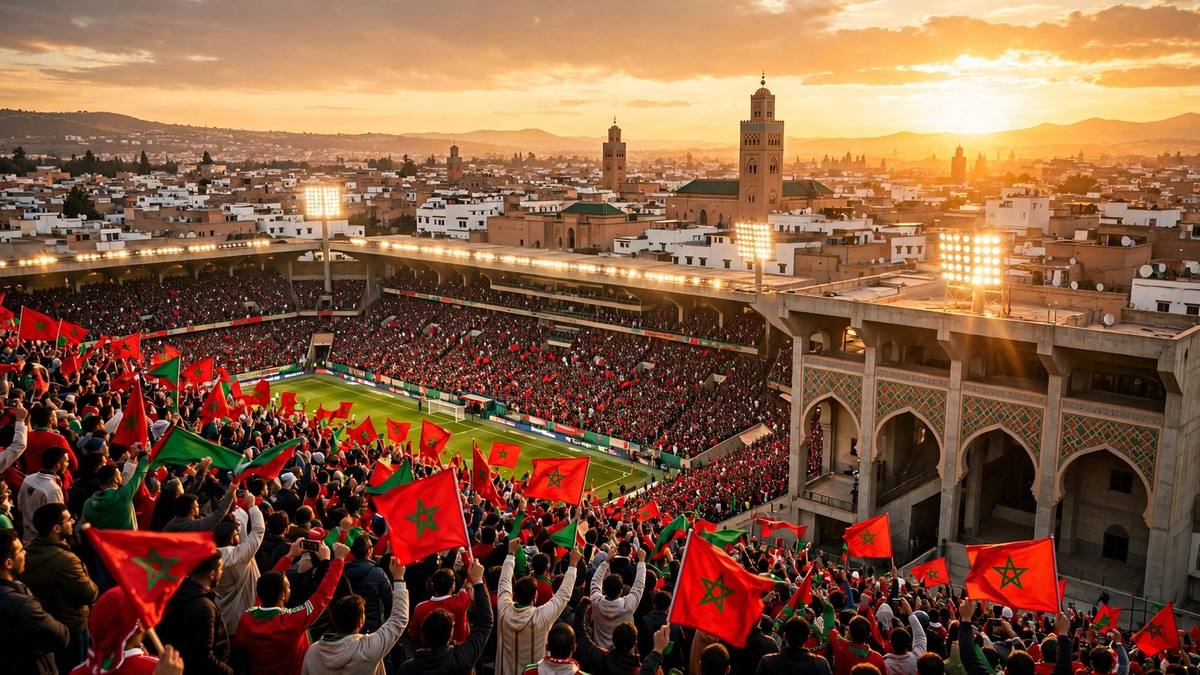
Beyond the official zone, Casablanca watches football like nowhere else in Morocco — this is the home of the Raja–Wydad derby, one of the loudest rivalries in world football. The cafés of Maarif, the bars of the Corniche and the screens of Morocco Mall will all be showing matches.
Getting to Casablanca: airport, high-speed rail and the stadium link
By air: Mohammed V International Airport (CMN) is Morocco's busiest airport, about 30 kilometres southeast of the city — roughly 30–40 minutes by taxi or 45 minutes on the airport rail shuttle into Casa Voyageurs. Direct flights run from most major European cities.
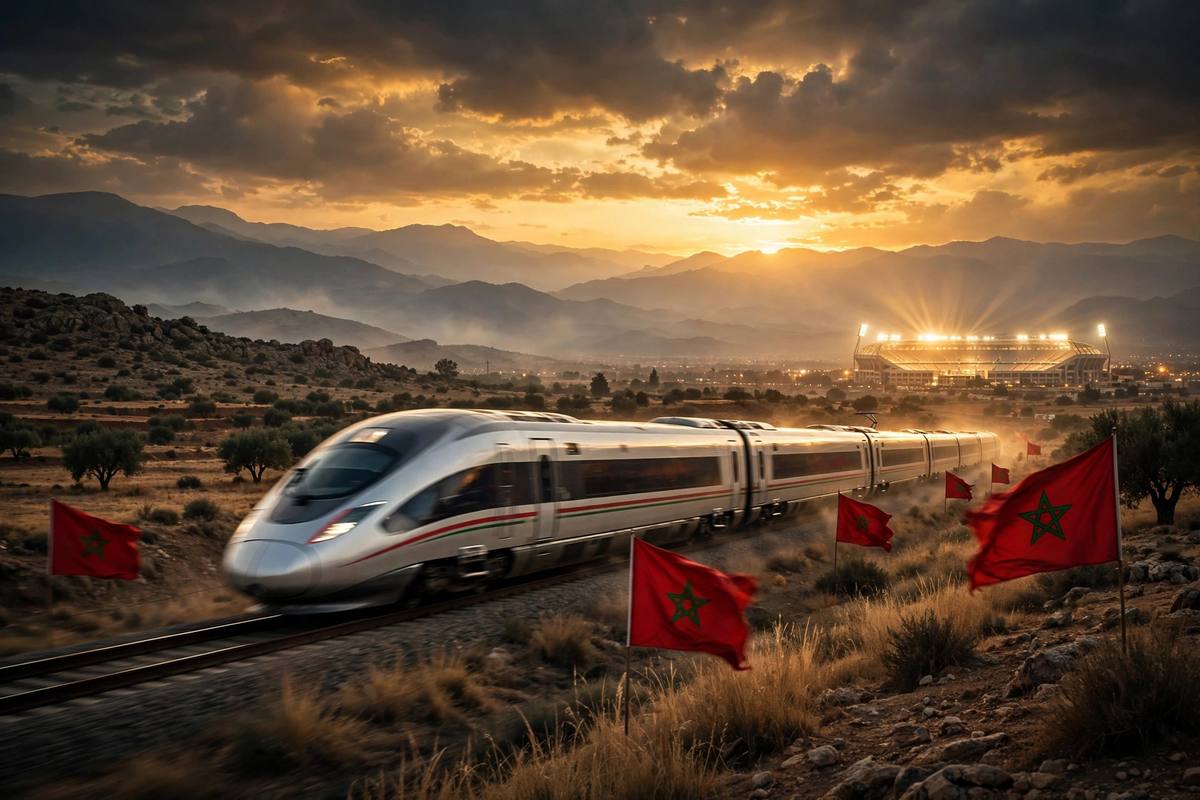
By train: Casablanca is the hub of Morocco's rail network. The Al Boraq high-speed line already connects Casablanca to Rabat in under an hour and Tangier in a little over two hours — ideal for following your team between host cities — while ONCF trains run south to Marrakech. See our guide to travelling between the 2030 host cities.
On matchdays, the plan centres on the dedicated high-speed station at the stadium — about 15 minutes from the city — plus shuttles from the centre, supporter buses and 10,000-plus parking spaces. Book near a tram or rail connection — the centre, Maarif or Ain Diab — and you will reach the fan walks without a car.
Where to stay in Casablanca for the World Cup
Casablanca has Morocco's deepest hotel inventory. For the World Cup, three areas make the most sense:
- Ain Diab and the Corniche — beachfront hotels and apartments closest to the nightlife and the likeliest fan-zone sites. The most fun option for travelling supporters.
- The city centre — Art Deco hotels around Place Mohammed V and Boulevard Mohammed V; walkable, and closest to the Casa Voyageurs rail hub and the tram lines.
- Anfa and Maarif — calmer, upmarket residential districts with good hotels, restaurants and easy tram access to the centre and the Corniche.
Book as early as you can: World Cup demand will push prices multiples above normal. Our 2030 World Cup accommodation guide covers what to expect on prices and when to book.
2030 World Cup tickets: the basics for Casablanca matches
Tickets are not on sale yet — FIFA runs its sales in phases, and the official match schedule follows the tournament draw. For Casablanca the stakes are highest: if the Grand Stade Hassan II wins the final, its tickets will be the most sought-after of the tournament. Buy only through FIFA's official channels, never resale sites, which FIFA does not guarantee. Our World Cup 2030 tickets guide explains the sales phases in full.
Between matches: what to do in Casablanca
Casablanca fills rest days on the Atlantic. The essentials: the Hassan II Mosque — the second-largest functioning mosque in Africa, and one of the few in Morocco open to non-Muslims on guided tours — the Art Deco streets around Boulevard Mohammed V, the Habous quarter, and the Ain Diab Corniche at sunset. With a free day, Rabat is under an hour by high-speed train. For the full city plan, see our two-day Casablanca guide and the overview of all six Moroccan host cities.
Flights six to nine months out, accommodation as early as possible, tickets through FIFA's official sale only. Casablanca's advantage is scale — more rooms than any other Moroccan host city — but the final, if it lands here, will swallow that advantage in a weekend. Book before the draw if you can.
Plan your Morocco trip
Turn this guide into a booked trip: compare stays, flights and car rental across Morocco below.
Some links on this page are affiliate links. If you book through them, we may earn a commission at no extra cost to you — it keeps these guides free.
Frequently asked questions
Where will the 2030 World Cup matches be played in Casablanca?
At the Grand Stade Hassan II, rising on a 100-hectare site at El Mansouria in Benslimane province — about 40 kilometres northeast of central Casablanca. With 115,000 seats it is designed to become the world's largest football stadium, is targeted to open at the end of 2027, and is in the race to host the 2030 World Cup final.
How do I get to the Grand Stade Hassan II on matchday?
A dedicated high-speed rail station is planned at the stadium — about 15 minutes from central Casablanca — and the new Casablanca–Rabat motorway passes right beside the site, with more than 10,000 parking spaces. Expect special shuttles, supporter buses and fan walks from the city centre on matchdays.
Where are Casablanca's 2030 World Cup fan zones?
The official FIFA Fan Festival location has not been announced yet — venues are usually confirmed around a year before the tournament. The likely sites are the esplanade around Place Mohammed V and the Ain Diab Corniche. Expect free entry, giant screens and live music — plus match screenings in the city's cafés, bars and Morocco Mall.
Where should I stay in Casablanca for the World Cup?
Ain Diab and the Corniche put you closest to the nightlife and the likeliest fan zones; the city centre offers Art Deco hotels near the Casa Voyageurs rail hub and tram lines; Anfa and Maarif are calmer upmarket options with easy tram access. Book early — prices will rise sharply as 2030 approaches.
When do 2030 World Cup tickets go on sale?
Not yet. FIFA sells tickets in phases, and the official match schedule is published after the tournament draw. Buy only through FIFA's official channels — see our World Cup 2030 tickets guide for the sales phases and categories.